
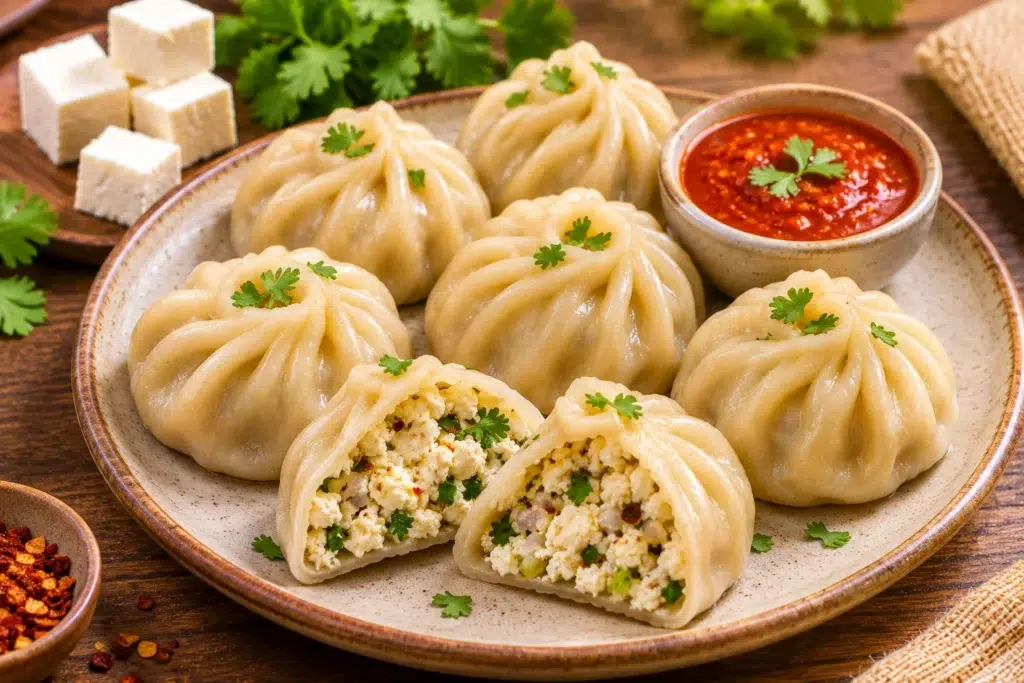
Want soft, juicy paneer momos at home without watery filling or thick, chewy wrappers? This paneer momos recipe explains the dough, spiced paneer filling, folding technique, steaming cues and the mistakes that often cause a soggy centre. It uses everyday Indian kitchen ingredients rather than a specialized momo machine.
On this page
Quick answer: Knead a firm but pliable flour dough, rest it covered, combine freshly grated paneer with finely chopped onion, capsicum, coriander and mild seasonings, roll thin wrappers, fill without overpacking, seal and steam until the dough is fully cooked. Keeping the filling fairly dry and the wrappers covered is as important as the steaming time.
Paneer Momos Recipe: Ingredients and Quick Method
Style: Steamed paneer-filled wheat dumplings. Planning time: Roughly 45–65 minutes including resting and steaming; actual timing varies. Yield: Approximately 12–16 small momos depending on size and filling; a size-dependent estimate. Equipment: Mixing bowl, rolling pin, knife, steamer or safe raised steaming tray.
Dough ingredients
- 150 g plain all-purpose flour (maida)
- About 70–85 ml room-temperature water, added gradually as needed
- ¼ teaspoon salt
- ½ teaspoon neutral oil, optional
Paneer filling ingredients
- 200 g fresh, refrigerated paneer, grated or finely crumbled
- 3 tablespoons very finely chopped onion
- 3 tablespoons finely chopped capsicum
- 1 tablespoon chopped coriander leaves
- ½ teaspoon finely grated ginger
- ½ finely chopped green chilli, optional
- ¼ teaspoon crushed black pepper
- Salt to taste, start with a small pinch
- 1 teaspoon neutral oil for briefly sautéing vegetables, optional
Short method
- Mix flour, salt and enough water to create a smooth, firm yet pliable dough. Cover and rest 20–30 minutes.
- Finely chop and, if desired, briefly sauté the onion, capsicum, ginger and chilli; cool before combining with paneer, coriander, pepper and salt.
- Portion dough and roll small discs with thin edges and a slightly sturdier centre. Keep unused dough covered.
- Place a modest spoonful of paneer filling in each wrapper, pleat or fold and seal completely.
- Steam on a lightly greased tray above boiling water. Start checking around 10–12 minutes for small momos in a typical steamer; actual time depends on equipment and thickness.
- Cut one open to check the wrapper and filling are fully cooked and hot. Serve immediately with a preferred dip.
Important: This recipe contains wheat and milk. Paneer is a dairy ingredient. Use hygienically prepared paneer that has been kept refrigerated.
What Makes Paneer Momos Different from Vegetable Momos?
Paneer is a fresh Indian cheese that can provide a soft, crumbly centre. Compared with a cabbage-heavy vegetable filling, paneer changes both moisture behaviour and texture; finely grated paneer tends to pack more densely, while larger cubes create distinct bites. The rest of the ingredients should support rather than overwhelm it.
Paneer momo styles differ. Dassana’s Veg Recipes documents a mostly uncooked grated-paneer filling with onion, herbs and pepper, while Hebbars Kitchen uses sautéed aromatics and vegetables before steaming. This guide uses a restrained filling and explains both approaches. There is no single universally required street-style formulation.
How to Choose Paneer for Momos

Fresh, moist paneer versus dry or rubbery paneer
Fresh paneer that crumbles easily is usually easier to mix into a filling than very firm, dried-out blocks. If a block has released a lot of liquid, drain it before adding to the mixture. Do not assume paneer is safe based only on smell: follow its date, refrigeration and package-handling instructions.
Should paneer be grated or cubed?
Grated paneer distributes through every bite and helps make small momo shapes. Cubes can be used, but they create a chunkier centre and may make delicate pleating harder. For a beginner recipe, finely crumble or grate it.
Can I use frozen paneer?
Use it only if stored and thawed according to its package directions, ideally in the refrigerator. Some paneer becomes more crumbly after freezing and thawing. Squeeze or drain free water before filling wrappers, and avoid leaving thawing dairy at room temperature.
The Wrapper: Firm, Rested and Thin at the Edges
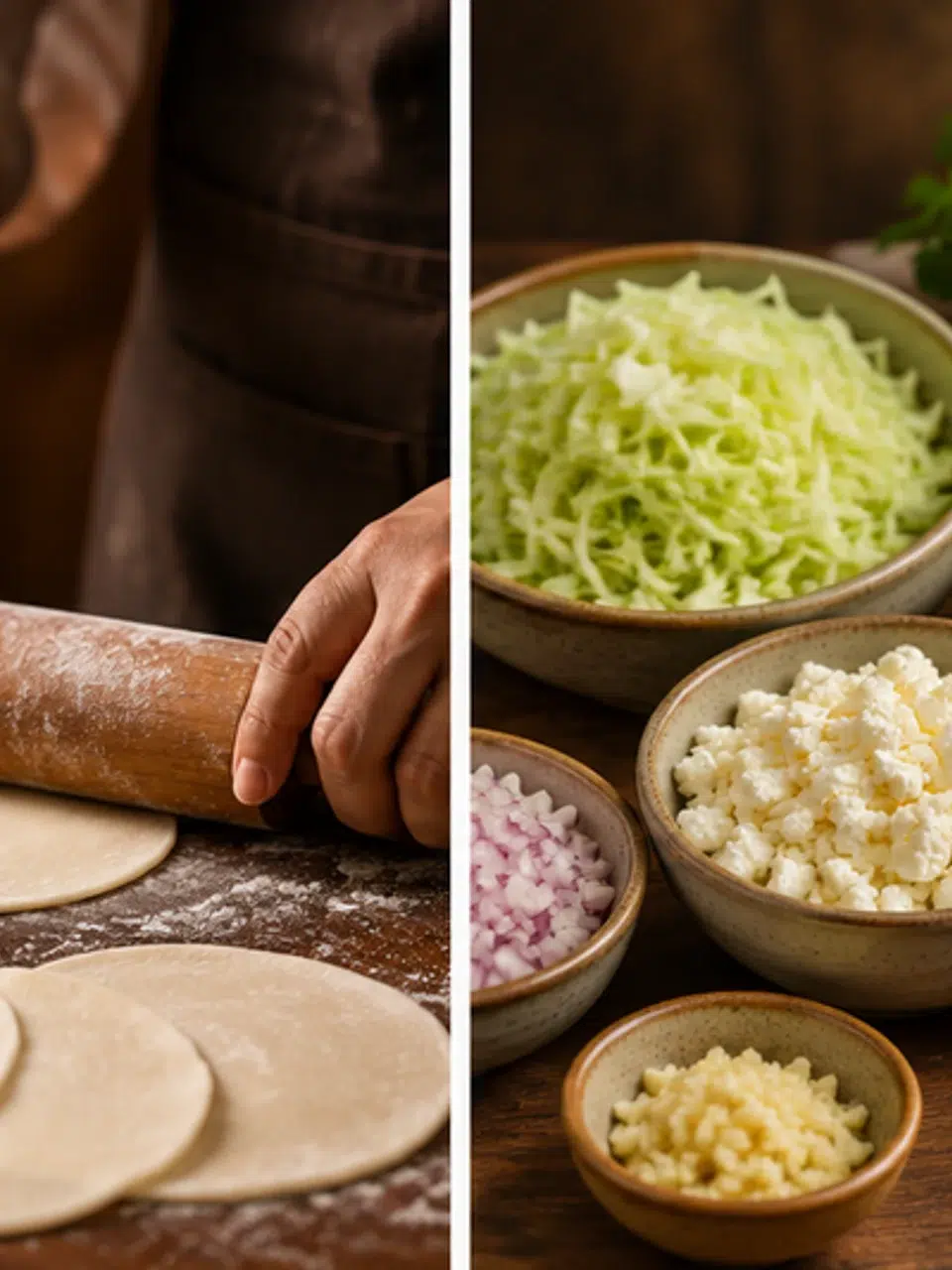
The wrapper should hold a paneer filling without splitting. Start with measured flour, add water little by little, and knead until smooth. Different brands of flour absorb water differently, so the stated quantity is a range, not a fixed target. A 20–30 minute covered rest often helps the dough roll with less snap-back.
When rolling, aim for an even disc: a very thick pleated crown can stay doughy while the rest cooks. A little extra thickness in the middle supports the filling, but excessive flour-dusting can prevent the edge from sealing. Cover the remaining dough and unused discs so they do not dry out.
How to Make Paneer Momos Step by Step
1. Knead and rest the momo dough
Mix flour and salt; add water gradually. Press and fold until it forms a smooth, manageable dough rather than a wet paste. Lightly oil the surface only if needed for handling. Cover completely and rest approximately 20–30 minutes. If it cracks, knead in a few drops of water; if sticky, use a little flour and allow a short rest.
2. Prepare the paneer filling without excess liquid
Grate paneer, finely chop vegetables and remove obvious surface moisture. You may mix raw onion and capsicum directly with paneer, as in some recipes, or sauté the vegetables briefly and cool them first. This version suggests a brief sauté for a mellow flavour, but the choice is yours. Do not add steaming-hot vegetables to cold paneer and then leave the mixture unrefrigerated. Season just before filling: salt can draw moisture from chopped vegetables over time.
3. Roll wrappers and keep them covered
Divide the rested dough into small portions. Roll each to a thin, roughly circular wrapper, aiming for even thickness and slightly thinner edges. If a wrapper repeatedly shrinks, cover it and rest the dough for a few extra minutes. Keep the unrolled portions covered between batches.
4. Add paneer and seal carefully
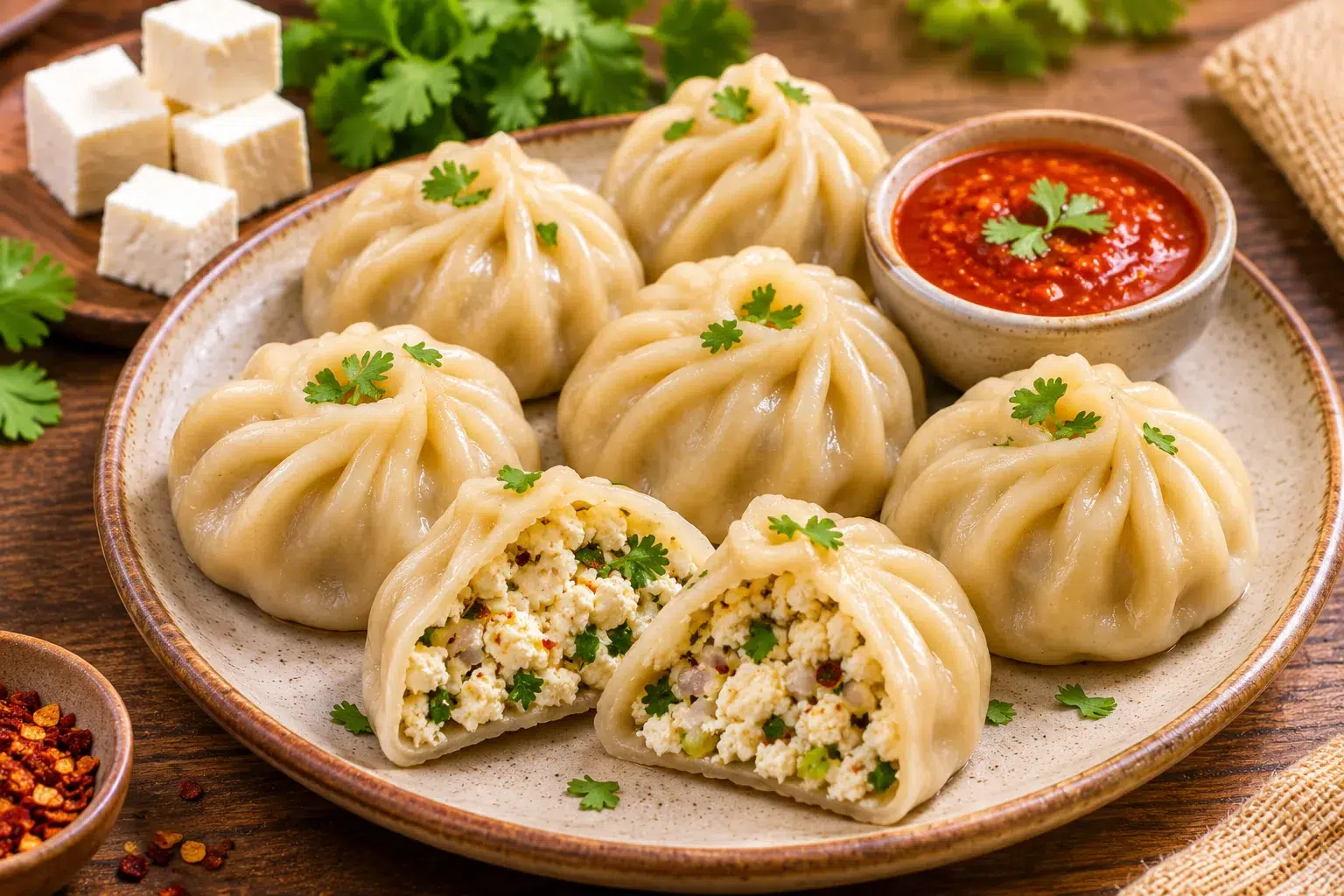
Place a small spoonful in the centre, leaving a clean border. Fold into a half-moon and pinch along the seam, or gather small pleats around the top. Both are valid home shapes. Push out large air gaps and close the seam so filling does not escape. Avoid filling so heavily that the dough stretches thin and splits.
5. Steam the shaped paneer momos
Heat water in a compatible steamer; set an elevated, lightly greased tray above the water and space momos apart. Cover and steam until the wrapper is fully cooked. In Dassana’s tested kitchen setup, paneer momos take approximately 10–12 minutes; the figure is not universal. Check the pleated base and centre, particularly with thicker wrappers or crowded trays.
6. Serve and handle leftovers safely
Lift momos carefully using a spatula or tongs, and serve hot. Place chutney in a separate bowl rather than contaminating stored sauce with a used dipping spoon. Refrigerate perishable leftovers promptly at 4°C or below; do not leave them on the counter for longer than two hours (one hour above 32°C).
Troubleshooting Paneer Momos
| Problem | Likely cause | What to try |
|---|---|---|
| Wet filling breaks the wrapper | Salted vegetables released water, or paneer was not drained | Remove excess moisture and season closer to assembly |
| Wrapper tears during pleating | Too much filling, dry edges or overly thin spots | Use less filling, keep dough covered and roll more evenly |
| Pleated top stays thick and raw | Too much dough gathered at one point | Use smaller pleats and verify doneness before serving |
| Paneer filling feels bland | Too little salt, pepper or aromatics | Season the filling in small increments before wrapping |
| Momos stick to the tray | Ungreased steaming surface or pieces touching | Grease lightly and leave gaps for steam circulation |
| Finished momos feel hard | Thick wrappers, dried dough or too much cooking | Rest, cover and roll dough appropriately; check cooking time |
Variations Without Turning Every Filling into a Separate Recipe
Paneer momos without cabbage
This recipe already excludes cabbage. Paneer, a little capsicum and onion provide the filling. If you prefer the flavour of cabbage, add a small quantity of finely shredded cabbage after squeezing excess moisture; do not overload the wrapper.
Paneer momos without onion or garlic
Omit onion; use capsicum, coriander, ginger and black pepper, or skip ginger for requirements that exclude root vegetables. Check every ingredient and the equipment used if cooking for a person with strict restrictions. This version is not automatically Jain-compliant.
Spicy paneer momos
Increase fresh chilli carefully or add a little chilli powder. Different chillies vary widely in pungency. A very spicy filling can overshadow the paneer, so taste the filling before wrapping where hygienically possible.
Wholewheat paneer momos
Atta can change dough absorption and wrapper bite. Do not use the water range above as an exact wholewheat formula; a dedicated atta dough method is preferable. Wheat-based wrappers still contain gluten.
What to Serve with Paneer Momos

Pair steamed paneer momos with a bright tomato–chilli sauce, mild coriander dip or a clear vegetable soup. A hotter dip is optional; the paneer filling should still taste balanced by itself. Momo Crown lists paneer and other vegetarian options on its official menu, and the locations page provides outlet updates.
Food Safety, Allergens and Storage
Paneer is a perishable dairy food. Use refrigerated paneer within its package instructions, keep cooked and raw ingredients separate and avoid leaving filled momos warm for long. FoodSafety.gov recommends prompt refrigeration at 4°C (40°F) or colder. The main allergens in this recipe are milk (paneer) and wheat (wrapper).
If you make too many, cool and refrigerate cooked momos promptly, and reheat leftovers thoroughly. For longer storage, portion and freeze promptly in suitable food-safe packaging. Follow suitable cold-storage guidance and the ingredient packaging instructions.
Frequently Asked Questions
Can paneer momos be made without cabbage?
Yes. Paneer can be the primary filling, supported by finely chopped onion, capsicum and herbs. Drain excess water from vegetables.
Do I cook the paneer filling before wrapping?
Either approach appears in published recipes. You can briefly cook the vegetable aromatics and cool them, then fold through paneer; other recipes combine raw finely chopped aromatics with paneer. The dumplings themselves still need thorough steaming.
How long do paneer momos take to steam?
For small momos, 10–12 minutes is a useful reference from one published recipe, but verify the thicker pleated area and filling rather than treating time as a guarantee.
Can I make paneer momos without maida?
Atta is possible, but it requires adjustments to hydration and handling. Gluten-free flours cannot generally be substituted one-for-one for wheat flour.
What makes the filling juicy rather than watery?
Fresh, moist paneer and finely chopped vegetables help. Excess water is not the same as juiciness—it may leak through the wrapper, so drain rather than flood the mixture.
Is paneer momo suitable for vegans?
No, because paneer is made from milk. A vegan filling would require a different ingredient and recipe, such as vegetables or an appropriate plant-based substitute.
Choose a Paneer Filling That Suits Your Table
A paneer momo filling does not need an elaborate spice list. Freshly crumbled cheese, a little finely chopped vegetable, ginger and black pepper can make a gentle base. If your household enjoys more heat, add a small amount of chilli or offer a stronger dip beside the finished dumplings. Keep enough seasoning for flavour but avoid overwhelming the paneer’s soft character.
For a vegetable-forward variation, include a modest amount of finely chopped capsicum or carrot. Onion and cabbage release moisture when salted, so drain the mixture or season nearer to the filling stage. If some vegetables are briefly sautéed, cool them safely before combining with refrigerated paneer. A wet filling may leak from thin wrappers or make sealing difficult.
Paneer contains milk, so these momos are vegetarian but not vegan. Typical wheat wrappers contain gluten, and dipping sauces may contain sesame or peanuts. Check all components when serving anyone with a diagnosed allergy. Dietary suitability depends on ingredients and preparation, not merely on the label “veg.”
For serving, try a tomato-chilli chutney without garlic or a mild tomato-ginger dip. Keeping sauces separate lets diners adjust the heat themselves.
Manage the Batch from Dough to Steamer
Before beginning, prepare a clean rolling surface, a covered bowl for dough and chilled space for the perishable paneer filling. A small steamer means several cooking rounds may be necessary, so avoid leaving the full filling mixture out while you shape every wrapper. Work in manageable batches and return unused perishable ingredients to appropriate cold storage.
Roll only a few wrappers at a time, keeping the remaining dough covered. Add a modest spoonful of filling and pinch the seam firmly. Decorative pleats are optional; a good seal protects the filling during steaming. If the edges refuse to stick, check whether too much dry flour has been dusted onto the wrapper or whether the dough has dried out.
Steam the dumplings thoroughly on a lightly greased raised tray above water. Cooking time varies with size, dough thickness and equipment, so check the thickest part instead of treating the clock as a guarantee. For a safe home setup without a dedicated steamer, see our pot and kadai steaming guide.
Serve immediately or refrigerate suitable cooked portions promptly. You can also plan ahead using the raw momo freezing guide, keeping milk-containing fillings clearly labelled. Accurate ingredient information and careful storage are as important as a tidy finished plate.
Before serving: a paneer momo quality check
Once the dumplings have finished steaming, lift one gently and examine the wrapper at the thickest folded seam. It should be cooked through rather than floury. The filling should be hot and suitably cooked; a clear or glossy wrapper alone is not enough to confirm the whole piece is ready. If a seam is unusually thick or the filling is cold, continue cooking rather than relying on the recommended time.
Paneer can vary significantly in firmness. If the filling has become dry, consider a small amount of finely chopped cooked vegetable or a separate sauce at serving, rather than adding water to an already sealed dumpling. If the paneer is very wet, drain it before mixing; a watery filling can weaken the seal and make the base soggy. Use fresh, correctly refrigerated paneer and clean utensils throughout.
For a group, serve a small batch first and adjust seasoning or folding technique before cooking all the remaining pieces. Keep perishable uncooked filling chilled during a prolonged gathering. Offer dipping sauces in separate bowls and identify milk and wheat clearly for diners with dietary restrictions. A successful paneer momos recipe is judged by even cooking, a tender wrapper and a well-balanced filling, not only by the appearance of the pleats.
Sources and further reading
These references provide additional context on ingredient choices, cooking and food safety. Adjust home recipes to the ingredients and equipment you use.
- Dassana’s Veg Recipes: Paneer Momos — dough rest, paneer filling and approximate steaming cues.
- Hebbars Kitchen: Paneer Momos — example of sautéed vegetable and paneer filling.
- FoodSafety.gov — cold storage and handling principles.