
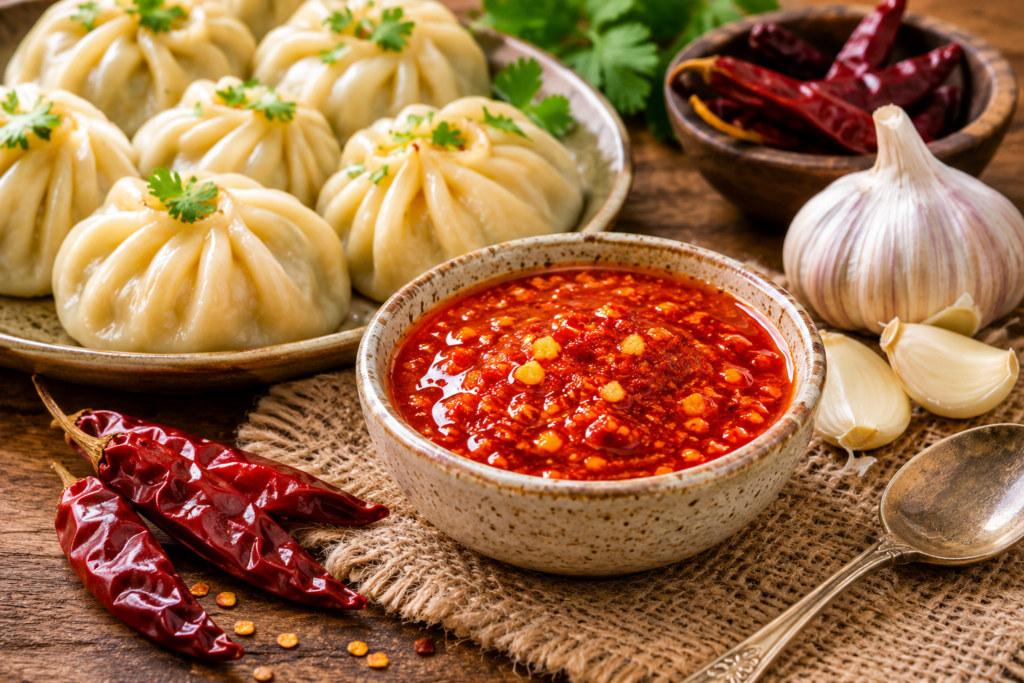
Momo Chutney Without Tomato: Quick Recipe Card
Type: Tomato-free red chilli–garlic dipping sauce. Estimated yield: One small bowl; amount depends on the chilli variety and water used. Estimated total: 20–30 minutes including chilli softening and cooling. Spice: Potentially hot—start with mild dried chillies.Ingredients
- 5 dried Kashmiri red chillies, preferably mild (approximately 15–20 g, depending on size), stems removed
- 2–3 small garlic cloves, peeled
- 1 tablespoon plain white vinegar, or less to start and adjust
- ¼ teaspoon salt, then to taste
- ¼ teaspoon sugar, optional for balancing sharpness
- Approximately 100–140 ml clean water, used gradually (including reserved chilli-soaking water where appropriate)
- ½ teaspoon neutral cooking oil, optional
- 1 teaspoon cornflour/cornstarch mixed with 1 tablespoon cool water, optional if a thicker sauce is preferred
Six-step method
- Remove stems from dried chillies; split them and shake out some seeds if you want less heat. Wear gloves if handling hot varieties.
- Soften chillies in hot water for around 15 minutes, or gently simmer for approximately 5–7 minutes until pliable. Drain, reserving a little of the water.
- Allow the chillies to cool until safe for your blender. Blend with garlic, salt, vinegar, optional sugar and just enough water for a smooth sauce.
- Transfer to a small saucepan. Simmer gently for around 3–4 minutes, stirring so the garlic and chilli mixture is heated evenly.
- For a thicker sauce, stir in a cold-water cornstarch slurry and cook briefly until the starch thickens. Skip for a thinner dip.
- Remove from heat. Taste a small amount with a clean spoon and adjust salt, water or acidity cautiously. Serve with fully cooked momos.
Can You Really Make Momo Chutney Without Tomato?
Yes. Tomato is common in many red momo sauces, but it is not a universal requirement. A chilli-and-garlic dip can be made from softened dried chilli, garlic, acid, salt and a small amount of liquid. Bong Eats’ momo chutney documents a particularly simple no-cook approach involving dried red chilli, garlic, vinegar and salt, while Cook Click N Devour describes a heated chilli–garlic sauce thickened with cornstarch and no tomato.Those are different valid approaches. This guide combines the accessible ingredient list of a chilli–garlic dip with a brief simmer and an optional cornstarch step. It does not reproduce either recipe exactly or claim all street vendors follow one formula.Compared with tomato chutney, expect a more concentrated chilli flavour, a sharper bite and usually less natural sweetness or body. That is why both the type of chilli and amount of added water matter.Choosing Ingredients for a Balanced Chilli–Garlic Dip
Dried red chillies: choose mild before choosing more
Dried chilli varieties vary greatly in heat. Kashmiri-style chillies are often selected for their red colour and relatively gentler character, but packets differ. Start with fewer chillies if you are uncertain, especially when there are no tomatoes to dilute the sauce. Seeds and inner membranes can contribute to pungency; taking out some seeds is not a guaranteed way to make a hot variety mild.Garlic: use fresh cloves without making the flavour harsh
Two or three small cloves are a useful starting quantity. Garlic varies in size, strength and freshness. Blending it with softened chilli and briefly cooking the sauce gives a different result from using completely raw garlic. Do not assume roasted, raw and boiled garlic are interchangeable flavours.Vinegar: tanginess, not shelf-life protection
White vinegar creates the tang usually supplied partly by tomatoes. Its exact perceived acidity depends on the vinegar and the amount of water in the sauce. Start cautiously and taste. This home recipe is not acidified, pH-tested or processed for safe shelf storage; adding a little vinegar does not make it a commercial preserve.Cornstarch: optional thickening only
One teaspoon of cornstarch can make a small batch more spoonable when dissolved in cool water and cooked in the sauce. Without it, the dip may be thinner or need a little reduction. Don’t pour dry starch directly into hot sauce: it can clump. Adding too much may make the sauce gelatinous rather than a dipping chutney.Water: add a little at a time
Over-dilution is a common mistake in sauces that do not have tomato pulp or nuts for thickness. Start with only enough liquid to let the blender move. Add the rest gradually until you achieve a texture that clings lightly to a momo.How to Make Tomato-Free Momo Chutney Step by Step
Step 1: Prepare the dried chillies
Use clean, good-quality dried chillies without visible mould or musty odour. Remove stems and discard any spoiled pieces. Split the chillies, and remove some of the seeds if preferred. Avoid touching your eyes while handling hot peppers and wash your hands carefully afterward.Step 2: Soften them safely in water
Place the chillies in a small bowl and cover with hot water for about 15 minutes, or simmer them gently for roughly 5–7 minutes. The objective is pliable chilli flesh that can blend into a smooth dip, not a particular stopwatch result. If using a bowl, avoid pouring boiling water into unsuitable glass. Drain and reserve a little of the liquid if clean and appropriate.Step 3: Cool and blend with garlic
Allow ingredients to cool to a blender-safe temperature. Add the softened chilli, peeled garlic, salt, vinegar and optional sugar. Add a small amount of liquid and blend, stopping to scrape down the sides. Continue until the sauce is as smooth as you prefer. Follow the appliance maker’s safety instructions for warm ingredients; never seal pressurized steam inside an unsuitable blender.Step 4: Gently cook the chilli–garlic purée
Transfer the blended sauce to a small pan, with optional oil. Cook over low to medium heat for around 3–4 minutes, stirring frequently. It should bubble gently without burning at the bottom. This heating step is a flavour and cooking choice, not a validated method of making the mixture shelf-stable.Step 5: Thicken only if needed
Mix cornstarch thoroughly with a tablespoon of cool water before adding it. Pour slowly into the warm simmering sauce while stirring. Continue until the starch is cooked and the sauce thickens. The finished mixture should coat a spoon without turning into a paste. If you prefer a thinner chilli dip, skip the cornstarch and adjust through gentle reduction or a small quantity of water.Step 6: Balance the flavour and serve
Remove from heat. Taste a little with a clean spoon and adjust salt, acid or water in small increments. Remember that chilli intensity can be strong even in a small tasting sample. Serve alongside freshly cooked momos, preferably with the sauce in its own bowl so unused chutney stays clean.How to Control Heat Without Tomatoes
| If you want… | Change | Why it helps |
|---|---|---|
| Milder sauce | Start with 2–3 deseeded mild dried chillies instead of 5 | Reduces total chilli load |
| A stronger kick | Add a little more softened chilli after tasting | Lets you control heat gradually |
| Thicker consistency | Use minimal blender water and optional cooked starch slurry | Compensates for the lack of tomato pulp |
| Less sharp acidity | Start with less vinegar and correct only after cooking | Prevents a too-sour result |
| No added sugar | Omit the optional pinch and use a naturally mild chilli variety | Changes flavour balance, not chilli chemistry |
Troubleshooting: Common Problems with Chilli–Garlic Momo Sauce
My chutney tastes too sharp or sour
Too much vinegar is a common cause, especially without tomatoes. Start with half the vinegar next time and adjust after heating. A tiny pinch of sugar can soften sharpness, but it should not mask spoiled or burnt ingredients.The sauce is runny
You may have used too much soaking water or skipped reduction. Simmer gently to evaporate excess moisture or use a small properly cooked cornstarch slurry. Add water by the spoonful during blending next time.It turned thick and gluey
Too much starch can make the dip gummy. Stir in warm water gradually and recheck the salt and acidity. For a future batch, use less cornstarch or omit it altogether.My chutney tastes bitter
Burnt garlic or chillies can make a sauce bitter. Cook gently and avoid allowing garlic particles to scorch. If the ingredients were rancid, mouldy or burnt badly, discard the batch rather than disguising the bitterness.It doesn’t have the bright red colour I expected
Colour depends on dried chilli variety and concentration, the amount of water and the cooking process. A very deep-red appearance is not proof of a more authentic sauce. There is no need to add synthetic colouring for visual similarity.It’s too garlicky
Use fewer cloves next time or simmer briefly longer if the flavour seems overly raw. Alternatively, prepare a tomato-based chutney without garlic; that is a different sauce rather than a direct substitute for this chilli-first recipe.Useful Tomato-Free Variations
- No cornstarch: Use only softened chilli, garlic, vinegar, salt and a controlled amount of water. Expect a thinner, more chilli-forward dip.
- Without oil: Simmer gently with a splash of water instead of adding oil; watch the pan carefully.
- With lemon juice: A little lemon can replace part of the vinegar for flavour, but the result will taste different and still isn’t shelf-stable.
- With roasted sesame: Sesame can make the sauce nutty, but adds a major allergen and changes the recipe style. Consult a sesame-based recipe rather than assuming safety for someone with an allergy.
- Without garlic: A no-tomato, no-garlic sauce needs a separately designed flavour balance; simply removing both ingredients may produce an overly sharp chilli mixture. The current recipe does contain garlic.
What Goes Best with No-Tomato Momo Chutney?
This concentrated chilli–garlic sauce pairs with steamed vegetable momos, pan-fried kothey momos and other dumplings. Because the heat can be intense, serve a small quantity alongside the food so people can choose how much they want. For a fresh homemade base, see our steamed momo cooking guide; for a crisp-bottomed option, see our kothey momo recipe.The Momo Crown menu includes multiple steamed and fried-style dumplings. This article is educational and does not represent this sauce as an actual recipe used at Momo Crown outlets.How Long Can You Store Tomato-Free Momo Sauce?
This is a fresh, perishable sauce containing garlic, water and chilli. It has not been acid-tested, heat-processed for canning or validated for room-temperature storage. Put leftovers promptly in a clean, shallow covered container and refrigerate at 4°C (40°F) or below.FoodSafety.gov recommends refrigerating perishable foods within two hours, or within one hour when the temperature is above 32°C (90°F). As a conservative home quality choice for this untested sauce, make a small batch and use it within 1–2 days of correct refrigeration. This is not a laboratory-established expiry period. Discard any batch whose handling or temperature history is uncertain.Never assume that the tablespoon of vinegar makes this product shelf-stable. Homemade sauces require controlled acidity and processing before any canning or unrefrigerated-storage claims can be made.Frequently Asked Questions
Can I make momo chutney without tomatoes?
Yes. Softened dried red chillies, garlic, salt and vinegar can make a red chilli–garlic dip without tomatoes. Published home recipes use both no-cook and gently cooked methods.What can thicken momo sauce without tomato?
A small cooked cornstarch slurry can thicken it. Reducing the added water also helps, but avoid burning the chilli and garlic while simmering.Can I make it without vinegar?
You can use a little lemon juice for tartness or omit added acid, but the taste will change. Neither variation should be treated as preserved or shelf-stable without a validated process.Is this sauce the same as Schezwan chutney?
Not necessarily. Schezwan-style sauces often use additional aromatics, oil, sugar, vinegar and other seasonings. A simple chilli–garlic momo sauce can overlap in flavour but is not automatically the same recipe.Is tomato-free momo chutney vegan?
The specified base ingredients are plant-based. Check any optional packaged products and shared cooking surfaces if dietary restrictions or allergies matter.Does this recipe contain garlic or onion?
It contains garlic and no onion in its listed ingredients. “Without tomato” should not be confused with “without onion or garlic.”Can I use fresh red chillies?
You can, but the water content, flavour and heat will differ. Start with fewer fresh chillies and create a separate trial; the dried-chilli weights above cannot be substituted exactly.Visual recipe: See the 6-step chilli-garlic momo chutney Web Story.
Related food culture: Discover Nepali jhol momo and its tomato-sesame-style broth (a different preparation from this tomato-free sauce).
Serve your momos: See five sides, sauces and drinks to pair with homemade momos.
Prefer sauce without garlic?: Try our separate tomato-and-chilli chutney guide made without garlic.
Spicy Schezwan momos: Explore the spicy Indo-Chinese Schezwan momo style and the current Momo Crown menu preview.