
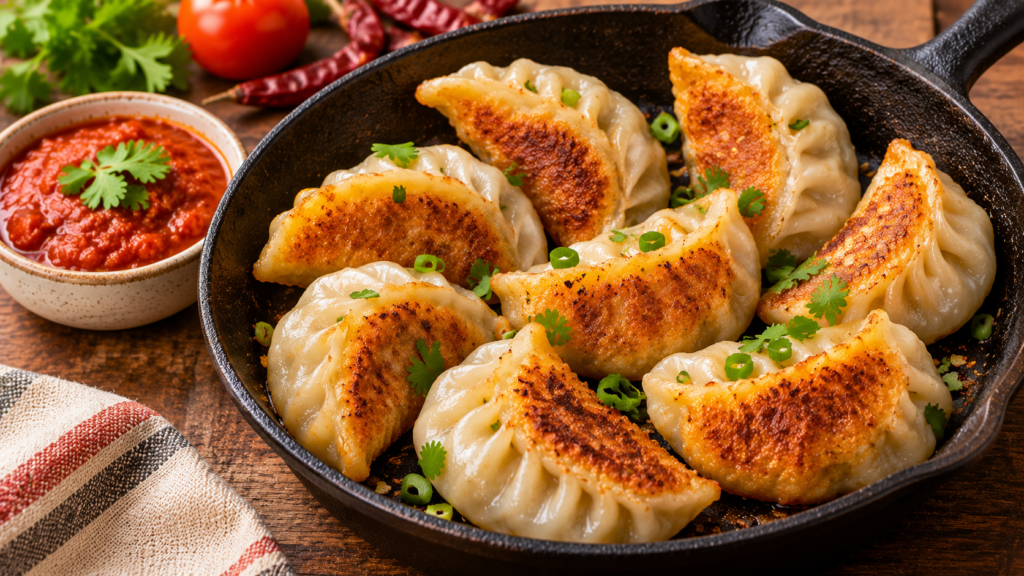
Kothey Momos: Quick Recipe Card
Style: Steamed-then-pan-fried vegetable dumplings. Starting amount: 12 small, fully cooked veg momos. Estimated additional pan cooking: 3–6 minutes, depending on pan, size and desired crispness. Total from scratch: Usually over an hour including dough, filling, folding and steaming. Primary allergens: Wheat; additional ingredients depend on the filling.For the pan-fried finish
- 12 already fully cooked small vegetable momos, kept intact
- 1–2 teaspoons neutral cooking oil to start, or more only if the pan needs it
- Optional: sliced spring onion greens, fresh coriander or toasted sesame for serving
- Tomato–chilli momo achar or another suitable dipping sauce
For homemade momos from scratch (optional)
- 150 g plain wheat flour (maida) plus approximately 65–85 ml water and a pinch of salt for the dough
- ½ cup finely chopped cabbage
- ½ cup finely chopped carrot
- ¼ cup finely chopped capsicum
- 2 tablespoons chopped onion or spring onion
- 1 teaspoon grated ginger, a little black pepper and salt to taste
- 1 teaspoon oil for sautéing the filling, optional
Six-step home method
- For from-scratch momos, knead and rest the flour dough, prepare a fairly dry vegetable filling, roll thin wrappers and seal the dumplings.
- Steam the shaped momos on a raised tray above simmering water until fully cooked. If using ready-cooked momos, skip directly to the next step.
- Let the surface moisture settle briefly; do not leave cooked dumplings sitting at room temperature for a prolonged period.
- Warm a suitable frying pan over medium heat and spread a thin layer of oil across its base.
- Arrange momos flat-side down with gaps and cook without excessive movement until the bottoms become golden and crisp, checking after about 2–3 minutes and continuing as needed.
- Lift out with a thin spatula and serve immediately crisp-side up with a separate dipping sauce.
What Are Kothey Momos?
Kothey (also written kothe or khote in some English-language sources) is a Nepali-associated pan-fried momo style. The defining eating experience is a delicate, tender wrapper with a browned, crispy base. The filling may be vegetable, meat or another combination, depending on the cook.There is more than one cooking sequence. Nepali Taste’s khote momo guide describes steaming first and crisping the bottom in oil. Nepali Momo Hub documents a pan-fry-then-cover-and-steam technique for its frozen products. Both produce a crisp underside, but they require different equipment and cooking judgement.For home cooks learning the method, steam first, crisp second is easier to explain because the centre is already cooked before the short pan-frying stage begins. This is the method covered in detail below.Kothey vs Steamed vs Fried Momos
| Style | Cooking method | Expected texture |
|---|---|---|
| Classic steamed momo | Steam above hot water | Soft wrapper all around |
| Kothey momo | Combine steam cooking with pan-browning one side | Crisp bottom, soft upper wrapper |
| Deep-fried momo | Cook or crisp food in a larger quantity of hot oil | More widely crisped shell |
| Kurkure momo | Usually adds a distinct crumb or cereal coating and fries it | Extra-crunchy outer layer |
Choosing Momos and the Right Pan
Which momos work best?
A round or crescent-shaped momo with a reasonably flat resting side makes pan contact easier. Large, top-heavy dumplings may tip over and brown unevenly. Whichever shape you use, the wrapper must be well sealed and fully cooked before this finishing method.Nonstick, stainless steel or cast iron?
A good nonstick skillet can make the first attempt easier, while properly preheated, well-seasoned cast iron also browns effectively. Stainless steel may require more attention to temperature and sticking. Pick a pan you are comfortable handling, with a sturdy base and a lid only if following a manufacturer-approved pan-steaming method.How much oil is needed?
Use enough to form a light film across the contact surface, not a deep pool. The amount depends on the pan diameter and coating. The suggested 1–2 teaspoons is a starting point for a small batch, not a measured oil-absorption figure. More oil may create a different finish, but it also changes the cooking method and total dietary oil exposure.Making the Momos from Scratch Before Crisping
If you already have fully steamed vegetable momos, jump to the finishing steps. If not, you can make a simple batch of homemade dumplings first. Knead flour with water and salt to a firm but pliable dough, rest it covered for 20–30 minutes, and prepare a filling from finely chopped cabbage, carrot, capsicum, onion, ginger and pepper.Briefly sautéing the vegetables can help remove some excess water. Cool the mixture promptly before assembling. Roll the dough into small thin rounds, add a modest portion of filling and close the edges firmly. Steam the formed dumplings until the thicker pleated area and the filling are fully cooked. Time varies with the size, wrapper and steamer.For the basic steaming setup, see our guide to steaming momos in a kadai or pot. For equipment alternatives, the currently available steaming momos in a kadai or pot guide explains safe raised-tray setups.How to Make Crispy Kothey Momos Step by Step
Step 1: Prepare and fully steam the veg momos
Start with an intact cooked batch. If steaming freshly shaped dumplings, set them above simmering water with gaps, cover and check that the wrapper and filling are completely cooked. Some published recipes reference approximately 10–12 minutes, but your steamer, thickness and dumpling size can change the result. Do not short-cook raw meat fillings simply because they will later touch a frying pan.Step 2: Let excess moisture evaporate briefly
Transfer steamed momos to a clean plate or rack and let obvious surface moisture settle for a moment. Do not leave the food standing out while you work on unrelated tasks. Surface water in hot oil can spatter, so gently handle or pat off an unusually wet patch with clean kitchen paper if needed.Step 3: Warm and lightly oil the pan
Set a heavy skillet over medium heat. Spread a thin film of oil across the base. The pan should be warm enough to sizzle lightly when food is added, but not smoking or burning the oil. Avoid overheating an empty nonstick pan; follow cookware instructions.Step 4: Arrange the momos flat-side down
Use tongs or a suitable spatula to place the cooked dumplings carefully, leaving gaps. The side contacting the pan should be stable and relatively flat. Do not squash the momo or force a rounded dumpling into an unsafe upright position. If needed, use a smaller pan batch for better control.Step 5: Brown one side, checking the colour
Let the momos sit without constantly moving them. Check a sample after roughly 2–3 minutes; if the base is pale, continue carefully until golden. An even brown underside gives the signature contrast. If the bottom turns dark before crisping, lower the heat. The total time varies with the pan and wrapper.Step 6: Lift, drain lightly and serve
Use a thin spatula to release the base without tearing the seam. Transfer to a plate with the crisp side exposed to air, so trapped steam doesn’t soften it immediately. Serve with a tomato–chilli or other dipping sauce in a clean bowl, and eat while the contrast in texture is strongest.Alternative: Pan-Fry and Steam in the Same Pan
Some kothey or potsticker methods place uncooked momos in a lidded skillet, brown their bottoms, add a measured splash of water and then cover to steam the filling through. Nepali Momo Hub describes this approach for its particular frozen products. It can work, but the time and water quantity are product- and pan-specific.Be cautious with this method: adding water to hot oil can cause steam eruptions and splatter. Use a recipe specifically designed for the pan and product, turn the heat down where indicated and keep your face and hands away. Never improvise with a badly fitting lid or assume that a browned underside means a raw meat filling is safe. For beginners, the fully steamed then briefly crisped method above avoids using a water-into-hot-oil step.Common Kothey Momo Problems and Fixes
| Problem | What may have happened | Fix |
|---|---|---|
| Bottom sticks and tears | Pan not prepared properly or dumpling moved too soon | Check cookware preheat, use a light oil film and allow crust to release |
| Bottom burns before crisping | Heat too high or surface too dry | Reduce heat and use a suitable pan coating |
| Top is leathery | Wrappers dried out or overcooked before frying | Keep dough covered and don’t oversteam |
| Momos become soggy after cooking | Stored in a covered hot container after crisping | Serve immediately crisp-side up |
| Only a small patch browns | Uneven flat contact or pan curvature | Try smaller dumplings or a flatter skillet |
| Filling seems undercooked | First steaming stage incomplete | Return to safe steam cooking until fully cooked before pan finishing |
Vegetarian, Paneer and Other Filling Variations
A basic cabbage-and-carrot filling is a sensible starting point because its texture is easy to chop finely. Paneer can also be used, but its dairy content changes allergen requirements and moisture control. For paneer, account for dairy allergens and moisture when preparing the filling. See our paneer momo recipe for an easy home-style filling. Mushrooms release moisture during cooking, so a mushroom filling may need an additional draining or sautéing step.Kothey is about the pan-fried texture rather than any one required filling. Do not claim that a vegetarian version represents every meat-based historical preparation, and don’t assume meat filling is safe merely because the outside is brown.Food Safety for Pan-Fried and Reheated Momos
Already have safely refrigerated cooked dumplings? Our five leftover momo serving ideas explain how to re-steam, pan-crisp and build warm broth bowls while checking safe reheating temperatures.
Use clean cooking surfaces, avoid raw-to-cooked cross-contamination and keep perishable fillings chilled until use. FoodSafety.gov recommends refrigeration within two hours or within one hour when air temperatures exceed 32°C (90°F).If working with raw poultry filling, use a food thermometer: the safe internal minimum is 74°C (165°F). Previously cooked leftovers reheated for eating should also reach 74°C (165°F). These values are listed in FoodSafety.gov’s minimum internal temperature chart.Keep children away from the hob, avoid oil splashes and turn off the heat when finished. Do not pour water into a hot oil fire.What Sauce Should You Serve with Kothey Momos?
A hot chilli-garlic dip, tomato–chilli achar or sesame-based sauce can complement the crisp base. Serve the sauce separately instead of soaking the dumplings in it before the meal. For a different sauce style, see our nutty tomato-peanut momo chutney recipe, checking for peanut and other allergens.The Momo Crown menu lists a Veg Kothey variation. For current outlet and service information, explore the Momo Crown locations page. Adapt this home method to your own equipment and fillings.Frequently Asked Questions
What is the difference between kothey and steamed momos?
Kothey adds a pan-crisped underside while retaining a relatively soft top. Ordinary steamed momos are cooked without pan browning.Do you have to steam kothey momos first?
No single method is mandatory. Some cooks steam first and fry afterward; others combine browning and steaming in a covered pan. The method in this article uses already cooked momos for a more controllable finish.Are kothey momos deep-fried?
Usually no. They are associated with pan-frying one side rather than immersing the whole dumpling in deep oil.Can I make kothey momos without a nonstick pan?
Yes, with a suitably prepared heavy skillet such as well-seasoned cast iron. Stainless steel may require more careful heat and sticking control.Can I use frozen momos?
Follow the frozen product’s cooking instructions first. If they are raw, cook them completely before the finishing method in this article; if pre-cooked, ensure they’re heated through safely.Can I make kothey with atta wrappers?
Yes, but atta’s hydration and texture vary. Try a small batch and ensure the wrapper cooks properly; don’t assume identical texture to maida.Are kothey momos healthier than deep-fried momos?
They may involve less oil than deep frying if otherwise comparable, but the actual difference depends on how much oil is used, the filling, sauce and serving size. No specific calorie comparison is asserted without testing.Explore the Web Story: Compare momos, Japanese gyoza and Chinese wontons in our visual guide.
Visual recipe: See how to make kothey momos with a golden pan-fried base.
Compare momo textures: Compare five steamed, pan-fried and crunchy momo cooking styles.
Himalayan momo traditions: Explore Nepali and Tibetan momo traditions beyond the pan-fried kothey style.
More crispy momo styles: Discover what gives Kurkure-coated momos a crunchy finish.
Dumpling comparison: Compare momo and spring-roll wrappers, shapes and cooking methods.