
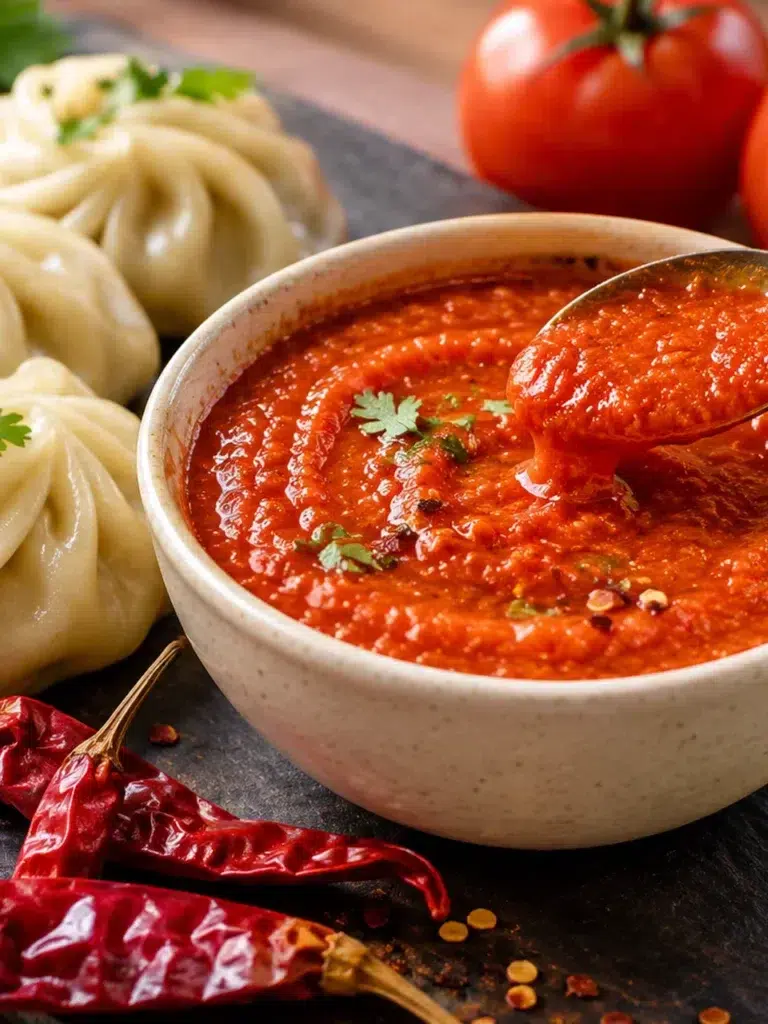
Want a richer, nutty momo dipping sauce instead of a plain red chilli chutney? This momo chutney with peanuts combines ripe tomatoes, roasted peanuts, dried red chilli and optional sesame seeds. The result is designed to be spoonable, gently nutty and adjustable from mild to hot.
Quick answer: Roast plain peanuts until fragrant, cook tomatoes with dried red chillies until soft, cool the ingredients, then blend with a little ginger, garlic, salt and water. Simmer briefly if needed and finish with lemon juice. Add water gradually: a dipping chutney should coat a momo rather than run off like a thin soup.
Peanut Momo Chutney Recipe: Ingredients and Method
Type: Tomato, chilli and roasted-peanut dipping sauce | Estimated preparation: 8 minutes | Estimated cooking: 15–20 minutes | Possible yield: About one medium bowl, depending on water and reduction (not measured) | Major allergen: Peanuts; sesame if included.
Ingredients
- 3 medium ripe tomatoes (roughly 300–350 g)
- 40 g plain unsalted peanuts, raw or roasted (approximately a small handful)
- 2 dried Kashmiri red chillies, or fewer if you want mild heat
- 1 teaspoon white sesame seeds, optional
- 1 teaspoon finely chopped ginger
- 1 small garlic clove, optional; omit for a garlic-free version
- ¼ teaspoon ground roasted cumin, optional
- ¼ teaspoon salt to start, then adjust
- 1–2 teaspoons lemon juice, to taste
- 2–5 tablespoons clean water, added gradually, or more if necessary
- 1 teaspoon neutral cooking oil, optional for the final simmer
Six basic steps
- Roast raw peanuts in a dry pan over low to medium heat, stirring until fragrant. If using already roasted unsalted peanuts, skip the roasting stage.
- Lightly toast the optional sesame seeds separately, stirring constantly; do not let them burn.
- Simmer tomatoes and dried chillies in water until softened, approximately 8–10 minutes for medium tomatoes.
- Allow all hot ingredients to cool to a blender-safe temperature. Peel tomato skins if a very smooth sauce is desired.
- Blend tomatoes, chillies, peanuts, optional sesame, ginger, garlic, cumin and salt with a little water until nearly smooth.
- Simmer the sauce gently for 2–3 minutes if needed. Remove from heat, add lemon juice and adjust seasoning and thickness.
Allergy alert: Do not prepare or serve this recipe to someone with a peanut allergy. Sesame is also an allergen. Do not assume that simply omitting peanuts after they have been prepared on shared surfaces prevents cross-contact.
Why Add Peanuts to Momo Chutney?
Roasted peanuts contribute a nutty flavour and thickening body that plain tomato–chilli sauce does not have. They also change the texture: if the mixture is not blended thoroughly, the chutney may be slightly grainy. Sesame seeds can add another toasted note, but they are optional and do not need to dominate the sauce.
Peanuts and sesame are not arbitrary additions. Published Nepali-style momo achar and jhol preparations use toasted nuts or seeds alongside tomato and chilli. Himal Gautam’s Momo Notebook documents peanut and sesame variations; a Nepali chef’s achar documented by Impact Trek also includes a small quantity of crushed peanuts. Different households and restaurants use different combinations and proportions.
What this guide is not: It does not claim that every Nepali momo sauce contains peanuts, or that the recipe recreates a particular restaurant’s proprietary chutney. Other momo sauces deliberately leave nuts out.
Choosing Ingredients for Better Flavour
Use unsalted, unflavoured peanuts
Salted snack peanuts can make a sauce too salty. Sugared or heavily spiced varieties can change the taste. For a first attempt, plain peanuts offer more control. Raw peanuts need proper roasting; if you use commercially roasted peanuts, check their packaging and freshness.
Use ripe rather than hard tomatoes
Ripe tomatoes give body and tang. Very watery tomatoes may need additional simmering, whereas strongly acidic tomatoes may require less lemon juice. The final thickness depends on tomato variety and the water you add while blending.
Choose chillies by heat, not colour alone
Kashmiri-type chillies often provide a red colour with a milder flavour than some hot chilli varieties, but heat varies by product. Start with one or two and increase only after tasting. Removing seeds may help, but inner chilli membranes also contain heat-producing compounds.
What do ginger and garlic contribute?
Ginger adds a sharp aromatic note and garlic makes the sauce more pungent. Neither is a universal requirement for momo achar. Omitting garlic changes the flavour profile but does not prevent you from making a tomato-peanut sauce. Check all ingredients if cooking for a specific dietary restriction.
Detailed Step-by-Step Peanut Momo Chutney Method
Step 1: Roast peanuts without burning them
Place raw unsalted peanuts in a dry, heavy pan and stir over controlled heat. Turn off the heat when the peanuts are fragrant and evenly toasted, then transfer to a plate to cool. Exact roasting time depends on pan, burner, whether peanuts are split and how much you are making. Avoid using burnt nuts: a bitter flavour cannot be reliably fixed after blending.
Step 2: Toast optional sesame seeds
Use a small dry pan and stir the sesame continuously, stopping when its aroma becomes more noticeable and the seeds begin to colour. Sesame can burn quickly. Move it away from the hot pan immediately. If sesame is omitted, the finished sauce will taste more peanut-forward.
Step 3: Soften the tomatoes and dried chillies
Wash tomatoes under running water, remove stems and put them with the dried chillies into a pan of water. Simmer until tomatoes soften and the chilli flesh becomes pliable. Lift out, reserve a little cooking water and allow them to cool. Peeling the loosened tomato skins is optional.
Step 4: Blend in stages
Put tomatoes, chillies, roasted peanuts, optional sesame and seasonings in a suitable blender. Add only a little water at first. Pulse, scrape down the sides and blend again until the texture suits you. If your appliance struggles with the peanuts, pulse them into small crumbs first before adding the tomato. Never seal very hot ingredients inside a blender that is not rated for them.
Step 5: Control the thickness
The sauce should be smooth enough to dip a momo into. If very thick, add clean water a tablespoon at a time. If too thin, return it to a pan and simmer uncovered briefly, stirring so the ground nuts do not catch at the bottom. Expect a slightly thicker result as the sauce cools.
Step 6: Finish with acidity and taste
Remove from heat, stir in a little lemon juice and taste with a clean spoon. Adjust salt before adding more chilli. Add acid gradually because tomatoes already contain acid. Serve with freshly cooked momos; do not mix used dipping sauce back into a stored container.
How to Make Peanut Chutney Smooth or Slightly Coarse
| Desired texture | Useful adjustment |
|---|---|
| Very smooth | Remove softened tomato skins, blend longer after cooling, and strain if needed |
| Nutty with slight texture | Stop blending sooner or reserve a small portion of finely crushed peanuts |
| Thin dipping sauce | Add small quantities of water and rebalance salt and lemon |
| Thicker spoonable chutney | Start with less water and simmer gently until the sauce coats a spoon |
Why Did My Peanut Momo Chutney Go Wrong?
It tastes bitter
Peanuts, sesame or dried chillies may have scorched. Avoid dark, burnt toasting and throw away rancid or visibly mouldy ingredients. Adding sugar to badly burnt food does not restore a good flavour.
It is too thick
Peanut solids continue to absorb some liquid, and the sauce may thicken on standing. Add water a spoonful at a time and taste again. If stored and chilled, stir a small serving portion rather than repeatedly heating the whole batch.
It is watery or separates
Too much water or an insufficiently blended mixture can cause a loose texture. Blend longer and simmer briefly if appropriate. Do not assume separation necessarily means spoilage, but discard food that has been stored unsafely.
The chilli overwhelms the peanut flavour
Blend in additional cooked tomato and a small amount of roasted peanut only if it is safe for everyone eating the dish. Don’t add sugar blindly; first identify whether the real problem is heat, acidity or salt.
It is grainy
Roasted peanut pieces may not have been blended finely enough. Cool thoroughly and blend again, using a little water for movement. Some rustic graininess is normal in nut-based sauces.
Can You Make It Without Sesame, Garlic or Tomato?
Without sesame: Yes. Omit sesame and retain peanuts for body. Without garlic: Omit garlic and adjust ginger or cumin to taste. Without tomato: That would be a materially different sauce; tomatoes provide the primary acid and moisture here, so it needs a separate tested recipe rather than a casual swap.
For people with peanut allergy: Do not treat a different nut as a universally safe alternative. Peanut and tree-nut cross-contact can occur, and sesame may also be problematic. Follow medical allergy guidance and use a completely separate peanut-free recipe with verified safe ingredients and equipment. Food Allergy Research & Education explains why peanut avoidance includes cross-contact controls.
What Momos Pair with Peanut Chutney?
For a broader comparison of mild, tangy, nutty and spicy dips, explore our guide to the best sauces for momos.
Its nutty texture can suit simple steamed vegetable momos, pan-fried dumplings and paneer momos. Start with a modest quantity so the dip does not overpower the filling. Pair it with the guide to steaming momos at home or explore the guide to types of momos.
Want a tomato-based option without garlic? Try our garlic-free momo chutney recipe with adjustable chilli heat. You can also browse the Momo Crown menu for different momo styles, although this article does not claim the restaurant uses this chutney formula.
How to Store Tomato–Peanut Momo Chutney Safely
This is a fresh, perishable homemade sauce with no validated shelf-stable preservation process. Put it into a shallow clean covered container and refrigerate promptly at 4°C (40°F) or below. FoodSafety.gov advises refrigerating perishable food within two hours—or one hour in temperatures above 32°C (90°F).
Because this exact recipe has not undergone shelf-life testing, prepare small batches and plan to use within 1–2 days of correct refrigeration as a conservative household choice rather than a validated expiry date. A squeeze of lemon does not make it safe to leave at room temperature. Discard if its handling or storage conditions are uncertain.
Frequently Asked Questions
Can peanuts be used in momo chutney?
Yes. Roasted peanuts feature in a number of momo achar and jhol preparations, although other styles use sesame, tomato, chilli or other ingredients without peanuts.
Can I use peanut butter instead of roasted peanuts?
Unsweetened plain peanut butter may work differently, but it can contain added salt, sugar or oils and has a smoother consistency. It is not an exact replacement for this untested formula; start with less, check labels and adjust thickness carefully.
Is this chutney vegan?
The specified ingredients are plant-based when using neutral oil and no dairy additives. Packaged products and cross-contact must still be checked for dietary needs.
Is peanut momo chutney the same as jhol momo?
No. Jhol momo describes dumplings served in a generous pourable sauce or broth. A peanut chutney can be used as a thick dip or thinned as one component of some jhol preparations.
Can this recipe be made without onion?
Yes. The stated formula contains no onion. Garlic is optional and can be omitted separately.
Do I need roasted sesame seeds too?
No. They add another nutty note, but the peanuts are sufficient to give this variation its character.
Research Notes and Sources
This recipe is an original editorial starting formulation informed by published momo achar techniques, not a reproduced restaurant recipe or a demonstrated test batch. It contains peanuts and optional sesame, both important allergy considerations. Ingredient ratios, estimated yield and cooking duration should be verified with a genuine kitchen trial before publication.
- Himal Gautam — The Momo Notebook: Nepali-style achar and jhol variations using sesame and peanuts.
- Impact Trek — a Nepali chef’s momo achar: a related sauce with toasted seeds, peanuts and tomato.
- Food Allergy Research & Education — Peanut: allergen avoidance and cross-contact.
- FoodSafety.gov — Four Steps: refrigeration and food hygiene.
Peanut chutney visual recipe: Follow six quick illustrated steps for a roasted-peanut tomato-chilli momo dip, including allergen guidance.