
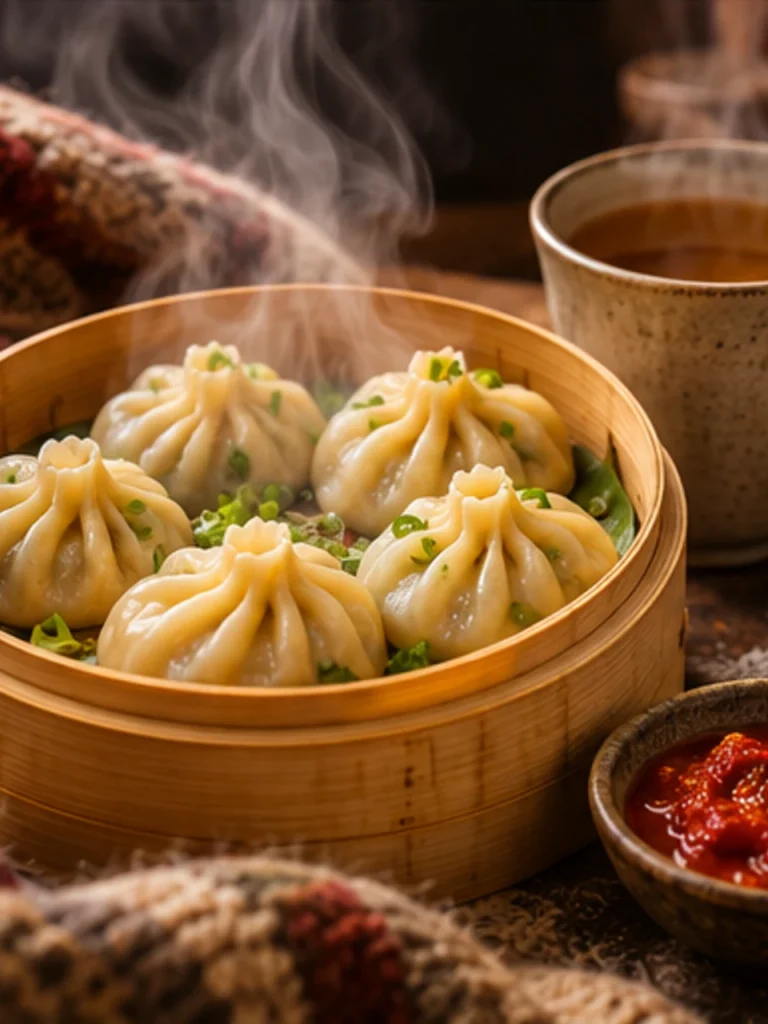
Quick answer: Gentle re-steaming is usually the most reliable way to refresh cooked momos without turning the wrapper leathery. A covered pan with a splash of water is a good alternative; the microwave is convenient when used with a moisture-retaining cover. Whatever the method, refrigerated leftovers must be reheated thoroughly to 74°C (165°F).
On this page
Start with food-safe leftovers
Reheating cannot make spoiled or improperly stored food safe again. Cooked momos with perishable fillings should be chilled promptly: FoodSafety.gov recommends refrigerating within two hours, or one hour above 32°C (90°F). Use cooked leftovers within three to four days. If a batch has remained out too long, discard it rather than relying on extra heating.
If momos were bought as frozen packaged food, follow the maker’s instructions rather than treating them as ordinary cooked leftovers.
Method 1: re-steam for a soft wrapper
The steamer is especially useful if the original dumpling was soft and tender. A small amount of water beneath a raised basket produces an enclosed moist environment without soaking the wrapper. Avoid filling the basket to the brim: leaving gaps helps warm the entire portion more evenly. For large or dense dumplings, reheating can take longer than for smaller pieces, so use the filling’s temperature rather than the exterior appearance as the endpoint.
Handle fragile dumplings with a broad utensil and allow excess condensation to drip away before serving. If the wrapper tears, the food can still be served safely when reheated thoroughly, but the pieces may work better in a warm broth than on a decorative platter. For a stovetop setup without a dedicated steamer, our steaming in a pot or kadai guide shows how to arrange the raised tray.
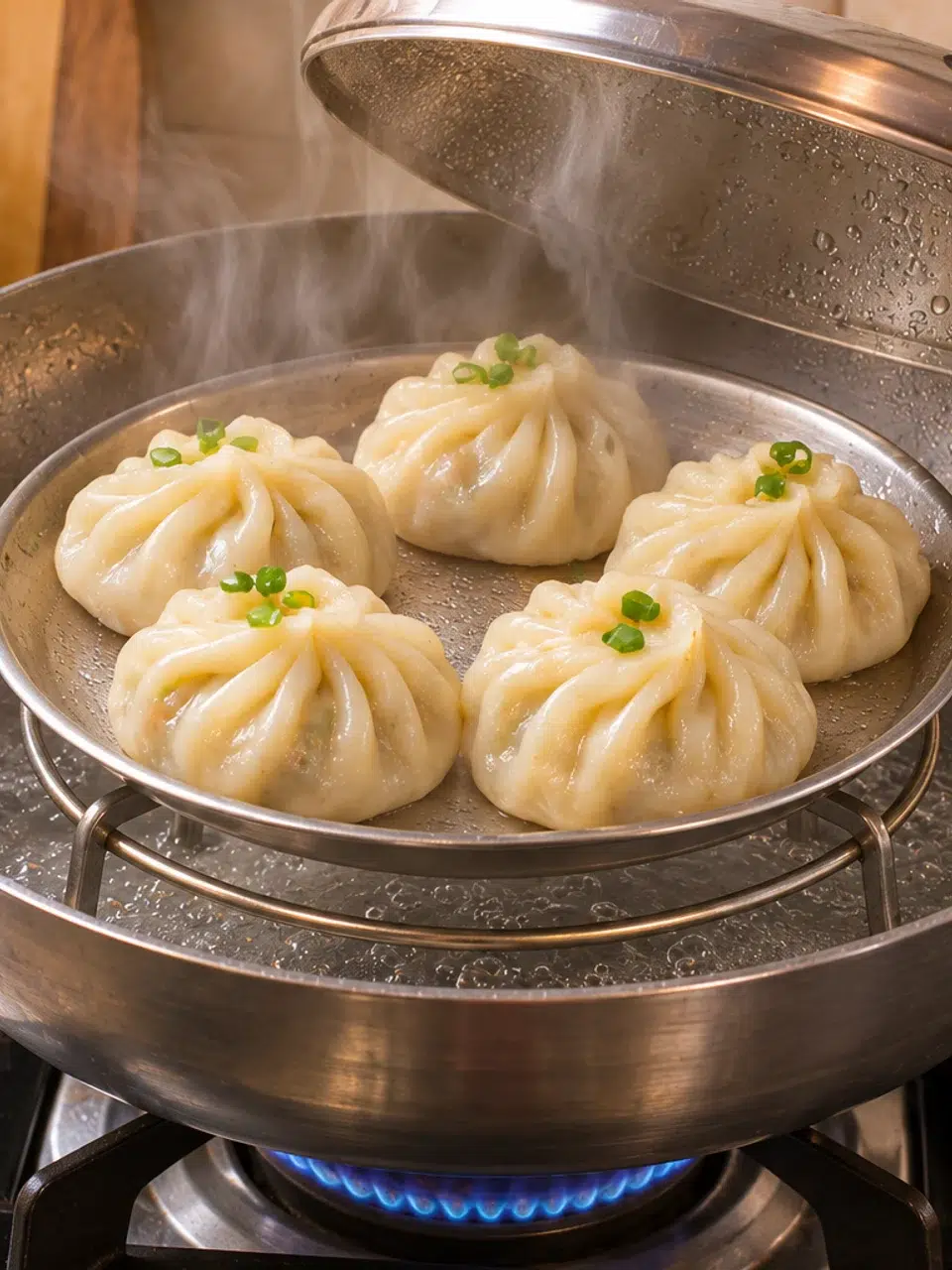
- Put water below a well-fitting steamer basket, not up against the food.
- Bring the water to a steady simmer.
- Place the refrigerated cooked momos apart on a lightly greased tray.
- Cover until they are thoroughly hot through the centre. Use a suitable thermometer where possible.
- Lift them promptly and serve with sauce on the side.
This is the texture-led first choice for classic steamed vegetable or paneer momos. Avoid leaving the cooked pieces in the basket long after they are ready; their pleats can become damp.
Method 2: covered pan-steaming
Pan-steaming is a useful middle ground when you want gentle heating with the option of a crisp underside. A small splash of water creates steam under the lid; once it evaporates, the pan can be uncovered and the base briefly browned. Keep the heat moderate and avoid leaving the pan dry over a strong flame. If a filling includes meat, the centre must be fully reheated regardless of how golden the wrapper appears.
How much water is needed depends on the pan, batch size and wrapper thickness. Add only enough to create steam without leaving the dumplings swimming. Work with one layer at a time and move pieces gently so their sealed edges do not tear. Pan-steaming cooked leftovers is different from preparing raw dumplings; always follow an appropriate cooking process for raw or frozen uncooked momos.
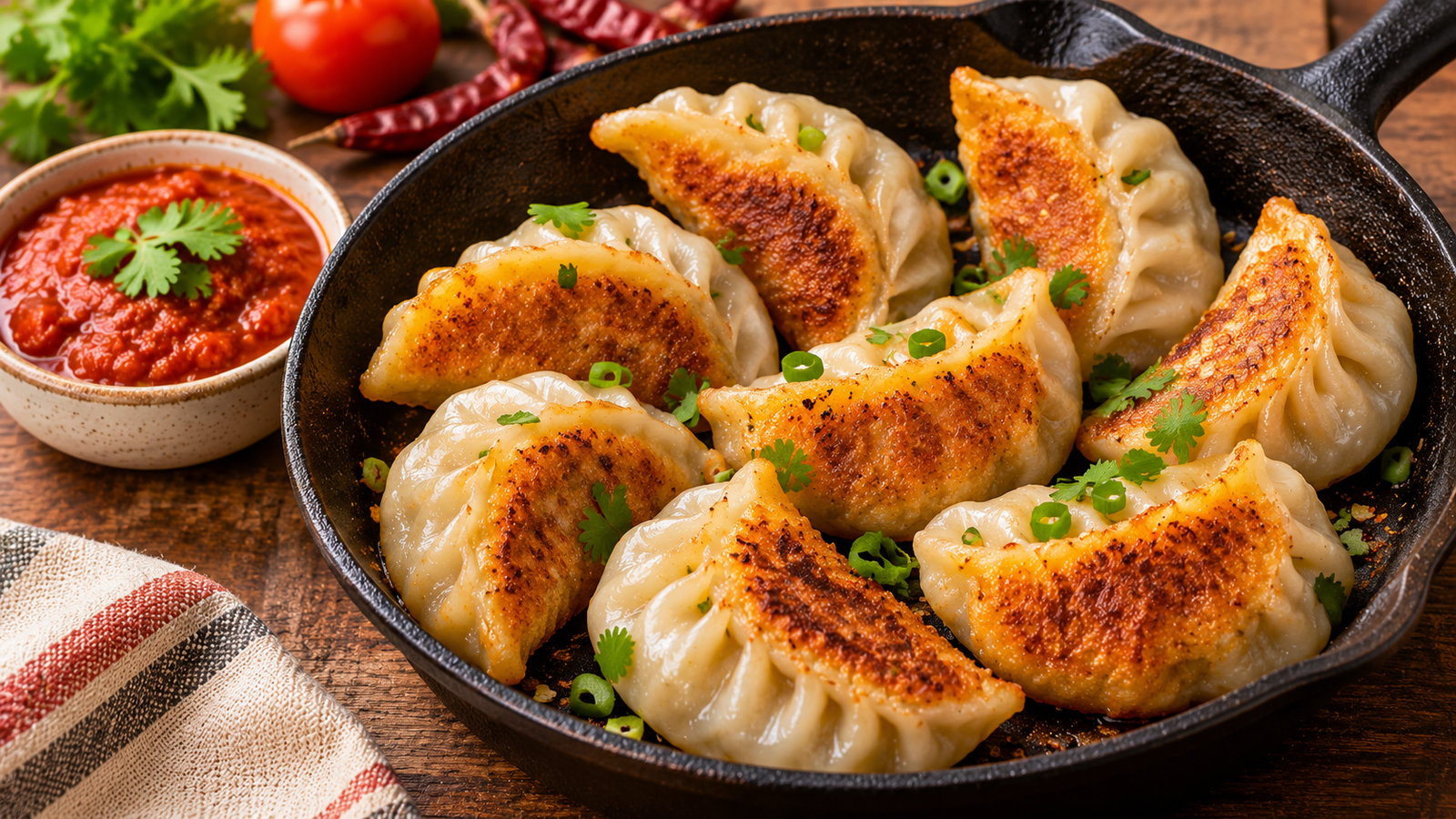
Use a nonstick or well-seasoned frying pan over moderate heat. Arrange a single layer of cooked momos, add a small splash of water, cover and let the steam do the work. When the water has evaporated, check the centres. For a crisp base, add a tiny amount of oil and finish briefly uncovered—but do not mistake a browned base for proof that the interior is thoroughly hot.
This approach suits kothey-style pan-fried dumplings particularly well.
Method 3: microwave with moisture
The microwave is convenient for one or two portions, but uneven heating can leave cold spots in the filling. Use a microwave-safe dish and cover according to the appliance instructions so that moisture circulates and splashes are controlled. Turn or rearrange food during heating when needed, allow appropriate standing time and measure the centre where possible. An extra burst of heat does not reliably compensate for a large frozen lump that is still cold inside.
The technique is less effective for a previously crisp or coated surface because steam softens the crust. Choose a pan or oven-type finish when maintaining crunch is important, while keeping complete reheating the priority. If sauce has already soaked the wrapper, serve the dumplings as part of a hot broth bowl rather than expecting them to become as firm as fresh.

Arrange only a few cooked momos in a microwave-safe dish, add a spoonful of water and loosely cover with a microwave-safe lid. Heat in short stages, repositioning if the appliance heats unevenly, then let the food stand according to appliance guidance. Check the centre before eating. Microwaving without any moisture often gives a chewy, dried surface.
FoodSafety.gov notes that microwave reheating requires thorough heating to 74°C and attention to cold spots. Microwave power varies too much for a universal time claim.
Which method fits which momo?
Start by identifying whether the dumplings are raw, frozen uncooked, frozen cooked or refrigerated leftovers. These are not interchangeable categories. A packet of commercially frozen dumplings should be cooked using its own directions; a refrigerated already-cooked portion is a reheating task. Keeping that distinction clear prevents the common mistake of stopping when a wrapper looks ready while the centre is not.
For soft vegetable or paneer momos, steaming is usually the simplest texture choice. For kothey-style dumplings, a covered pan followed by brief browning can restore some contrast. If you prefer soup, heat the broth and cooked momos thoroughly and assemble near serving time to prevent excessive soaking. Choose a method that suits your cookware rather than promising a single universal cooking time.
| Momo type | Preferred texture method | Watch out for |
|---|---|---|
| Steamed vegetable | Re-steam | Oversteaming thin edges |
| Pan-fried/kothey | Covered pan, then brief crisping | Dry bottoms |
| Fried or coated | Oven or air fryer if already fully cooked | Crisp exterior with cold centre |
| Soup momos | Reheat broth and dumplings thoroughly | Broken wrappers from rough boiling |
Keeping flavour and preventing waste
Reheating success starts with storage. Divide cooked leftovers into clean shallow containers, refrigerate promptly and label the date. Keep wet chutneys separate where possible so the wrappers do not absorb moisture before reheating. When you are ready to eat, heat only the portion you need, then serve promptly with sauce, herbs or a little warm broth.
If leftovers were held at an unsafe temperature or their storage history is uncertain, do not reheat them for consumption. Neither a hot sauce nor browning can undo food that has been mishandled. For family gatherings, use smaller batches and check that special dietary portions remain clearly labelled. This guide on how to reheat momos is meant to protect both taste and safe handling.
Store chutney separately from cooked momos: wet sauces soften the wrapper in the refrigerator. Reheat only the amount you intend to eat. Serve with a freshly stirred sauce, a clear broth or fresh herbs rather than trying to revive dried-out dumplings by drowning them in oil. For more about wrapper texture, visit our soft dough and wrapper troubleshooting guide.
Frequently asked questions
Can I reheat momos twice?
The safest quality practice is to chill promptly, portion the batch and reheat only what you need thoroughly. Repeated cooling and reheating adds handling opportunities.
Can I reheat momos without a steamer?
Yes. A covered pan with a little water or a microwave-safe covered dish can work; make sure the centre is thoroughly hot.
Should I reheat momo chutney with the momos?
It is usually better to store and serve the sauce separately. Follow the sauce’s own storage guidance, especially for dairy-based dips.
Sources and further reading
- FoodSafety.gov: Safe internal cooking temperatures
- FoodSafety.gov: Four steps to food safety
- USDA: Safe thawing methods
For more serving ideas, see our leftover momo recipes and explore the Momo Crown menu for current published dishes.