
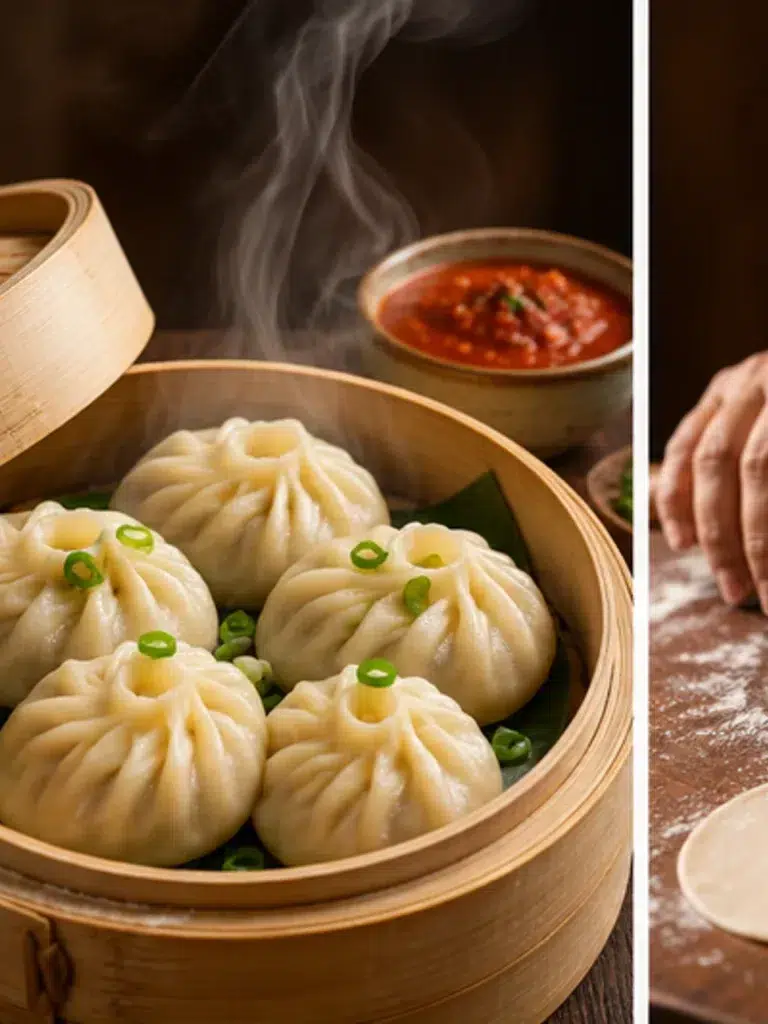
Leftover momo recipes: Give safely stored cooked dumplings a delicious second serving with five easy ideas: gentle steaming, pan-crisping, broth bowls, vegetable plates and an oven finish. Refrigerate promptly and reheat the centre to 74°C (165°F); these tips are for cooked leftovers, not raw frozen momos.
On this page
Leftover momo recipes start with safe storage
To check the normal refrigeration window and discard rules, see how long cooked momos last in the fridge.
Write the cooking date on the container before it goes into the refrigerator. Separate large batches into shallow containers so they cool promptly, and keep the refrigerator at 4°C (40°F) or below. A tightly closed container helps prevent the wrappers from drying out and keeps ready-to-eat food away from raw ingredients. Never use the smell or appearance alone to decide that mishandled leftovers are safe.
If dumplings have already been mixed into sauce, the reheating method should suit the whole dish. A moist pan or steamer may be more useful than a dry oven. The safest leftover momo recipes depend on knowing when the original dish was cooked and how it was held before refrigeration.
- Were the momos properly cooked before storage?
- Were they refrigerated within two hours, or within one hour when exposed to temperatures above 32°C?
- Have they been stored at 4°C or below and within the safe refrigerated window?
- Were raw meat juices and shared utensils kept away from cooked food?
- Can you reheat the filling and wrapper to at least 74°C (165°F) with a suitable thermometer?
If handling history is uncertain or they sat out beyond safe limits, discard rather than trying to rescue them in a frying pan.
1. Gently re-steamed momos
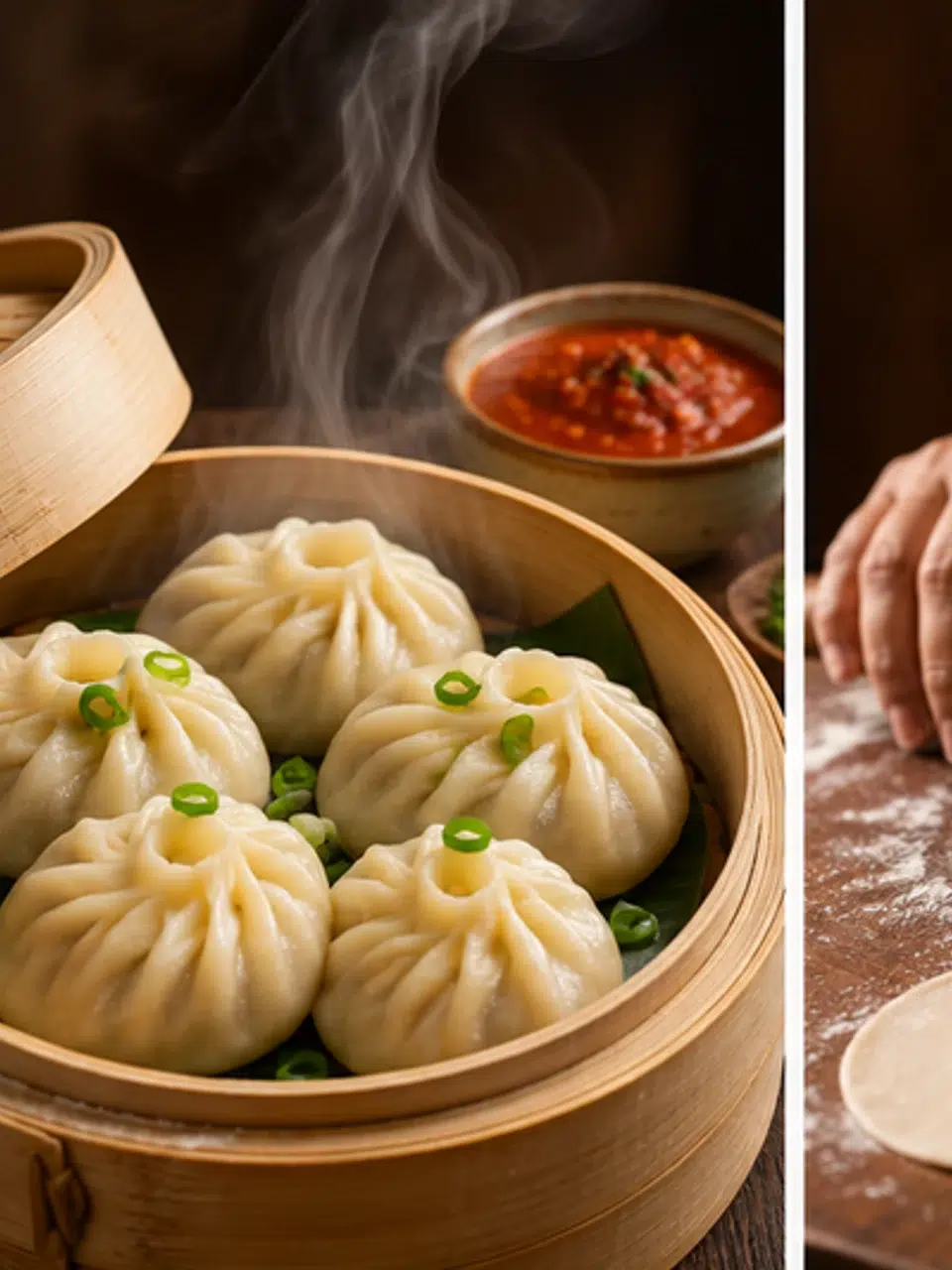
A small steamer can restore moisture to a firmer refrigerated wrapper. Arrange cooked momos apart on a clean, lightly prepared tray and steam until thoroughly hot, checking the centre. This tends to preserve the familiar soft bite more successfully than dry heating alone. Keep chutney in a separate bowl until serving. For an equipment guide, see steaming in a kadai or pot.
2. Pan-crisped momos with a browned underside
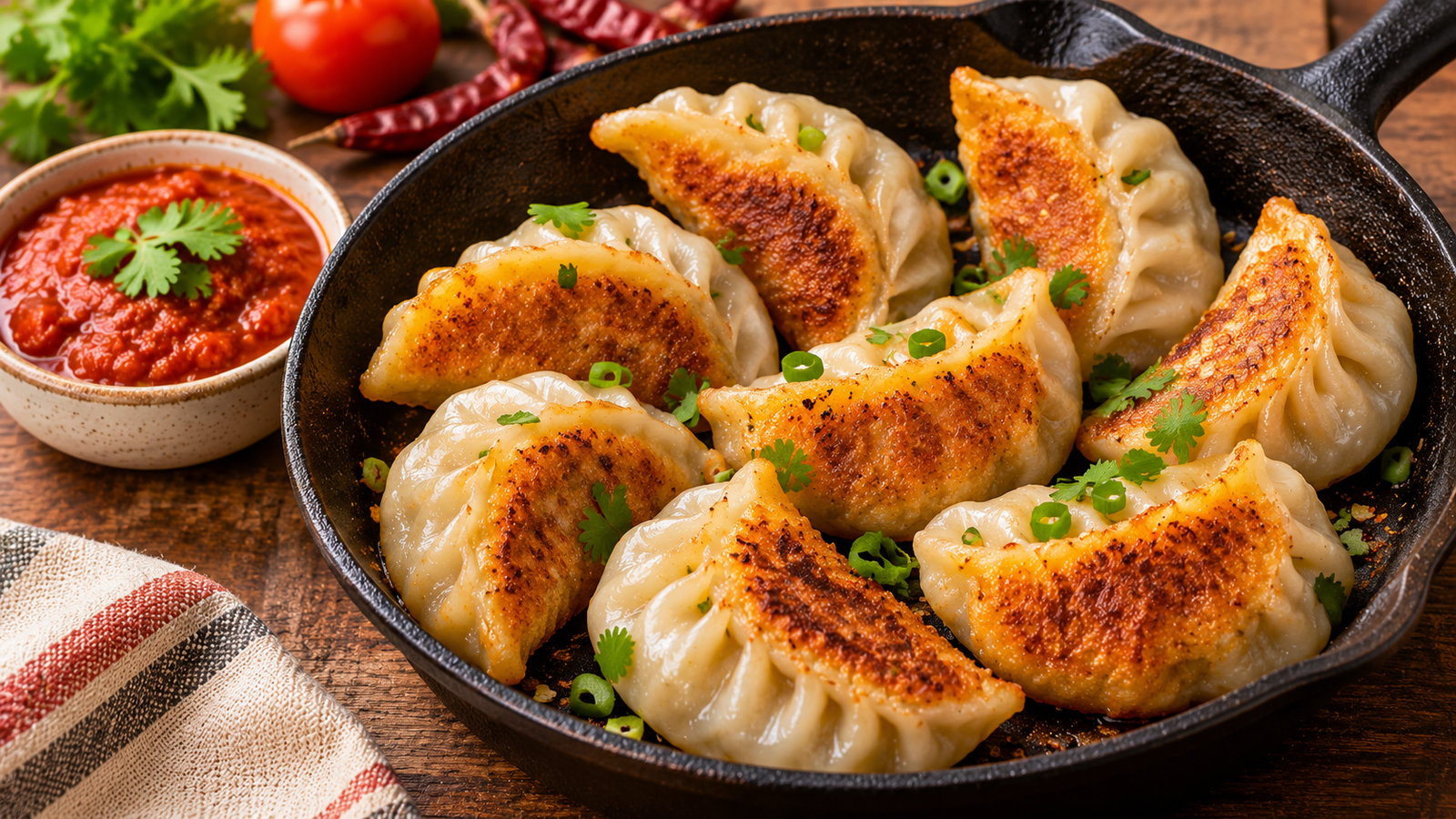
Warm a non-stick pan with a little oil, arrange safely stored cooked momos on the base and add controlled moisture under a lid if needed so the centre reheats. Finish by uncovering briefly for browning. Do not treat a crisp bottom as evidence of safe centre temperature; verify reheating to 74°C. This produces a kothey-inspired finish but is not the same as cooking raw kothey momos from scratch. See the published kothey recipe for the difference.
3. A warm vegetable-broth momo bowl
For a lighter meal, add spinach, sliced mushrooms or finely chopped cabbage to a ginger broth. Simmer those vegetables until cooked, and ensure the dumplings themselves are fully reheated before serving. Use enough broth to loosen the wrappers without hiding their texture. A squeeze of lemon or a scattering of spring onion can make the bowl feel fresh, even though the momos are leftovers.
Unlike raw dumplings that may be cooked in hot liquid, this method starts with already-cooked, safely refrigerated food. A finished broth that is merely warm is not an adequate way to reheat a cold filling. That distinction is important in leftover momo recipes made for a quick lunch.
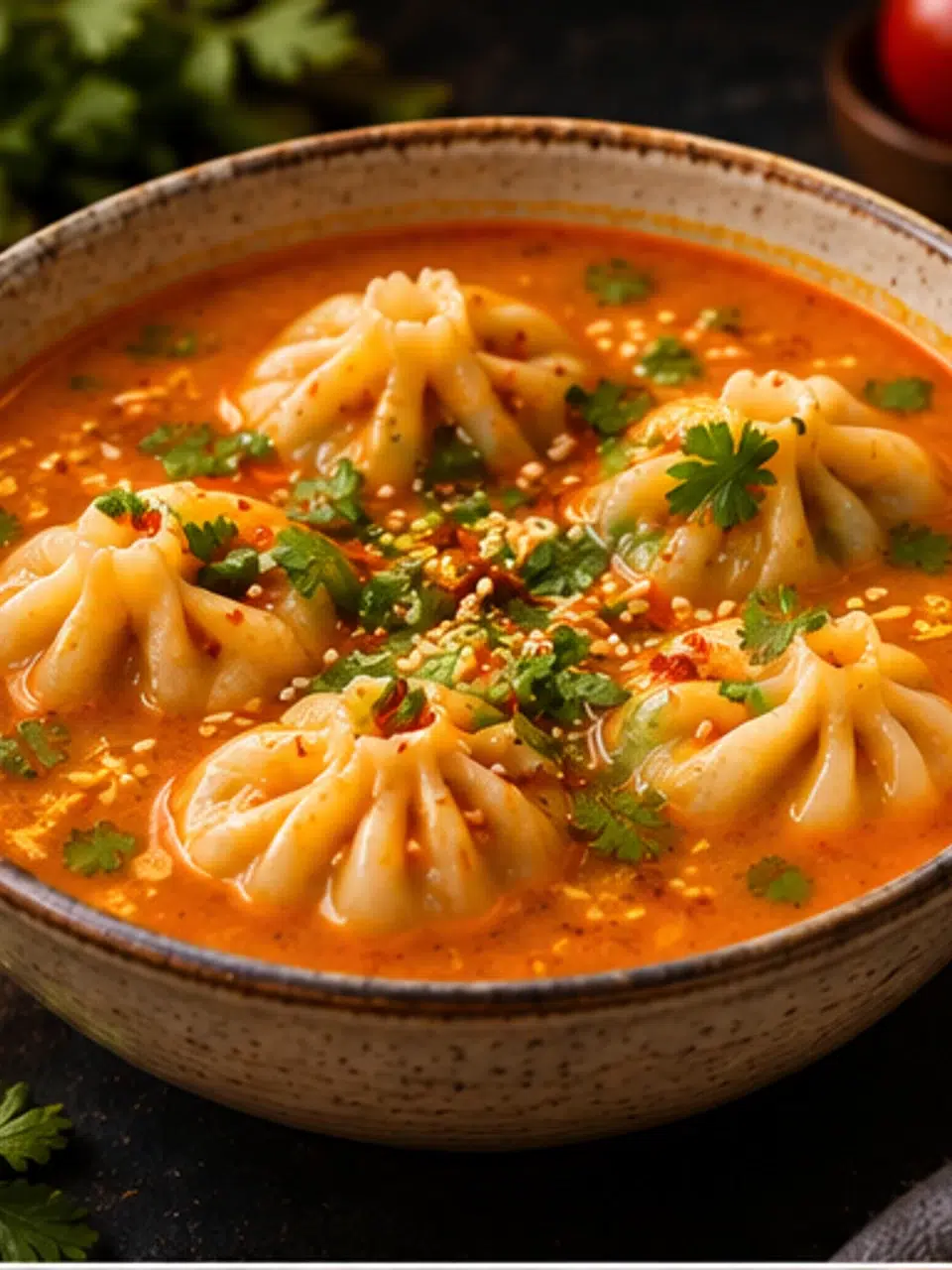
Heat a simple ginger and vegetable broth thoroughly and reheat the cooked dumplings separately or ensure they reach 74°C in the finished bowl. Ladle broth over them just before eating so the wrappers don’t soak for an extended period. Add finely chopped spring onion or coriander for freshness. For recipe inspiration, see jhol momo broth recipe. Do not add refrigerated leftovers to lukewarm soup and assume the broth will safely reheat them.
4. A colourful momo-and-vegetable plate
Reheat leftovers completely first; pair them with freshly washed crunchy vegetables and a small separate chilli–tomato sauce. Assemble just before eating so warm dumplings do not remain on a cold salad for hours. Consider mild sauce for anyone sensitive to chilli. For related serving ideas, explore our momo platter guide.
5. An oven-finished spiced momo
Fully reheat the dumplings first, then coat them lightly in a spiced yoghurt dressing and roast briefly to add colour. This is a finishing method, not a substitute for reaching the correct centre temperature. Yoghurt introduces milk; the wrapper may contain wheat. Fully heat the centre before adding the final coating and oven colour. Avoid repeated cycles of warming and cooling across multiple meals.
The rule behind all five ideas
The USDA reheating guidance sets 165°F (74°C) for leftovers and says to boil sauces, soups and gravies when reheating. The FoodSafety.gov storage chart gives 3–4 days for many refrigerated cooked leftovers. None of these methods makes spoiled or improperly stored food safe. For more preparation techniques, explore how to steam momos without a steamer.
Leftover momo recipes: a simple prep plan
Start by checking the storage date and choosing one method for the entire portion you plan to eat. Keep extra refrigerated servings cold while you cook. Use a food thermometer in the thickest filling rather than guessing from steam or browned edges. Any leftover momo recipe begins with safe storage, not a clever reheating trick.
For crispness, add a little oil only near the end of a thorough reheat. For softness, introduce steam early and avoid a prolonged dry pan. For a soup bowl, make the broth first and add hot dumplings close to serving. This way, texture and temperature work together.
Quick flavour pairings
For a step-by-step comparison of gentle steam, a covered pan and microwave techniques, read how to reheat momos without drying them out.
Choose accompaniments that match the reheating method. Bright tomato achar cuts through the richness of lightly pan-fried dumplings, while a clear broth complements soft vegetable fillings. If the original filling was strongly seasoned, use a gentle dip rather than layering several competing sauces. Taste the finished seasoning only after the food has reached a safe reheating temperature.
A practical way to avoid waste is to plan the next use as soon as you refrigerate the momos. Freeze suitable portions promptly when necessary rather than letting them approach the end of their fridge life. These leftover momo recipes are flexible serving ideas, but no recipe can compensate for unsafe storage or repeated warming on the counter.
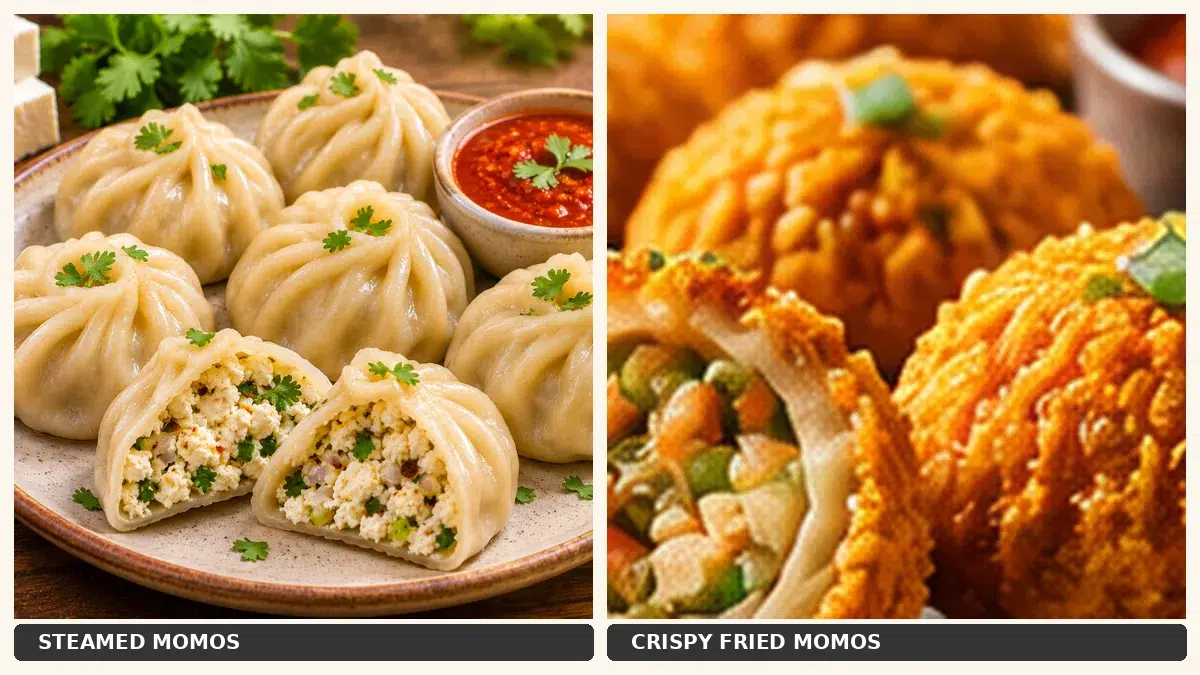
Ginger, spring onion, fresh coriander and a little lemon brighten a vegetable broth. A mild tomato sauce pairs with steamed momos; a sharp achar can balance a crisp pan-fried version. Serve chilli separately so everyone controls the heat. Check sauce labels for wheat, soy, sesame, peanuts and dairy when relevant.
Want more dumpling techniques? See our kothey momo recipe and steaming guide. These leftover momo recipes work best when a small batch is reheated once and eaten promptly. For a fresh vegetarian gathering, explore our Himalayan vegetarian dinner menu.
Decide whether the cooked momos are suitable to save
Before choosing a recipe, reconstruct the food’s journey. When were the momos cooked? Were they refrigerated promptly, or left on a serving table for an uncertain period? Has the dish already been reheated and cooled again? If you cannot establish that leftovers were stored safely, do not try to rescue them with a hotter pan, more spices or an attractive sauce.
For leftovers you intend to keep, use clean utensils and containers, separate the food from raw ingredients, and refrigerate promptly. Divide large batches into shallow containers rather than leaving a deep pile to cool slowly. The refrigerator should be at or below 4°C (40°F), and leftovers should be reheated thoroughly to 74°C (165°F). Use a food thermometer where practical, especially with dense fillings.
When you prepare leftover momo recipes, assess the wrapper and filling separately. A filling may be hot at the surface and cool at the centre. A crisp wrapper can look ready before the interior has reached a safe temperature. Do not use colour, aroma or the first bite as a substitute for food-safety checks.
Label containers with the preparation date so no one has to guess. If the original meal had sauce on the side, store it separately when appropriate and follow its own refrigeration guidance. Dishes containing dairy, meat or other perishable ingredients need particular care; a vegetarian label does not exempt a dish from safe storage.
Choose a reheating method that suits the wrapper
Steaming works well when the objective is to restore a pliable wrapper. Use a suitable steamer or a stable perforated insert above simmering water, keeping the dumplings from sitting directly in the water. Avoid tightly stacking them; circulation helps heat reach each piece more evenly. If a wrapper has become delicate, lift it with a wide spoon or spatula.
Pan-crisping adds a browned surface, but it also creates a trap: the outside can become golden before the filling is properly reheated. Start with a modest amount of oil, use medium heat rather than the hottest setting, and allow time for the centre to heat. A brief covered stage can assist reheating; then uncover to regain some crispness. Confirm doneness before serving.
For broth-based leftover momo recipes, fully heat the dumplings in the hot liquid and check that they are thoroughly reheated. Add fragile greens, coriander or a squeeze of citrus near the end to preserve their character. Soup may soften a wrapper that is no longer pleasant when dry, although it cannot make an unsafe leftover safe.
An oven finish is useful for a tray of portions, especially when a dry surface is wanted. Spread the dumplings apart, avoid assuming a single fixed cooking time works for all sizes and fillings, and check the middle before serving. The best method is the one that restores the texture while meeting safe reheating requirements.
A small pantry plan for five different meals
You do not need a different shopping basket for each serving idea. A few adaptable ingredients can support several dishes: ginger, garlic where desired, spring onions, a little neutral oil, leafy greens, cabbage, carrots, a tomato-based dip and a mild vegetable broth. Keep any specialist sauces optional so the leftover momos remain the main ingredient rather than disappearing beneath strong seasoning.
For gentle re-steaming, prepare a fresh dip or add a little chopped coriander after reheating. For pan-crisped dumplings, mix a small bowl of tomato achar and place it on the side. For a soup bowl, warm a broth with ginger, add cooked vegetables, then ensure the momos are fully reheated in the liquid. For the vegetable plate, combine hot momos with freshly prepared vegetables and a light dressing.
For an oven-finished version, use a modest coating of oil and spices that suit the original filling. A vegetable or paneer dumpling already seasoned with cumin may not need a second heavy spice blend. Keep the flavours balanced so the filling still tastes like the dish you started with.
These leftover momo recipes are intended as flexible meal formats rather than measured restaurant formulations. Check packaged sauce labels for sesame, peanuts, soy or dairy when serving anyone with dietary restrictions. Choose separate bowls and utensils when needed so that a garnish or shared dip does not introduce an unexpected ingredient.
What to do when the texture has changed
Dry wrapper: A wrapper can lose moisture in the refrigerator. If the momos were stored safely, a gentle steaming approach or a broth bowl may improve eating quality. Use sufficient moisture, but avoid soaking dumplings so long that the seams tear. Do not try to repair a dried wrapper by leaving cooked food on the counter to absorb moisture.
Soggy bottom: A damp wrapper may be better suited to soup than aggressive pan-frying. If you choose a pan, allow a little surface moisture to evaporate before encouraging browning. Work in smaller batches so the pan does not steam the entire portion unevenly. A soft result is not necessarily a failure if the centre is properly reheated and the dish tastes good.
Broken dumplings: Treat them as ingredients in a broth or vegetable bowl rather than insisting on perfect shapes. Keep any filling that has come loose in the hot dish, and confirm that everything is reheated. This is a useful way to reduce waste when wrappers were already fragile before storage.
Overly spicy leftovers: Serve them with plainly seasoned vegetables or a gentle broth, rather than adding more heat. Do not promise that a dairy topping or another sauce can make an allergen-containing dish suitable for someone who must avoid that ingredient. Texture changes are often manageable in leftover momo recipes; food-safety failures are not.
How to serve different fillings and dietary preferences
Vegetable, paneer and meat fillings can behave differently on reheating. A moist vegetable filling may soften quickly, while a dense meat filling needs particular attention to reaching a safe internal temperature. Paneer adds dairy, and some restaurant sauces also contain dairy or nuts. If the dumplings came from mixed or unlabelled containers, do not guess which pieces suit a person with an allergy.
Label different fillings when you first store them, especially after a family celebration or shared meal. Keep appropriate portions in separate containers and avoid using one set of utensils across foods that must remain apart. This makes leftover momo recipes more convenient and reduces the chance that a sauce or garnish is accidentally added to the wrong plate.
For a vegetarian meal, check whether the dipping sauce or broth contains meat-based stock. For a vegan meal, confirm dairy and egg ingredients as well as the wrapper and filling. For a wheat-free diet, the fact that the filling is made from vegetables does not mean the wrapper is suitable. Read the recipe and label for each component.
When serving a guest with a serious food allergy, use verified information about the original meal and any newly added ingredients. If the cooking and storage history is unknown, choose a newly prepared suitable meal instead of trying to make an unverified leftover safe through presentation.
Plan portions and prevent another round of waste
Start with the number of cooked dumplings actually available. If a container holds only a few pieces, a soup bowl with vegetables may feel like a complete meal; an ambitious oven tray may not. If there are many pieces, split the amount into sensible servings before heating. Reheating the whole batch and putting half back in the refrigerator is less practical than heating only what you intend to eat.
Build the meal around the dumplings rather than adding large portions of noodles or rice by habit. A warm vegetable broth can create volume with a small number of pieces. A chopped salad or cooked greens may balance pan-crisped dumplings. A little sauce served separately allows each person to choose the flavour and spice level.
When you plan leftover momo recipes, write the proposed meal on the container or in a household meal plan. “Tomorrow’s ginger-broth momo bowl” is more actionable than “use leftovers soon.” It also helps another family member know whether the food is reserved for a specific lunch. If several fillings are stored, note their type and any important dietary information.
Finally, clean the pan, steamer and thermometer after reheating, and avoid placing cooked food on surfaces used for raw ingredients without washing them. The most successful second serving is simple: it uses suitable food, heats it thoroughly, tastes enjoyable and does not create another uncertain container of leftovers.
Frequently asked questions
Can I turn leftover cooked momos into soup?
Yes, if they were safely stored and reheated fully. Add them close to serving to protect texture.
How long can I keep cooked momos in the fridge?
FoodSafety.gov’s general cooked-leftover guidance is 3–4 days at 4°C or below, provided storage was safe from the beginning.
Does pan-frying make unsafe leftovers safe?
No. Discard food that was improperly held or stored; cooking cannot reliably undo every hazard.
Sources and further reading
- FoodSafety.gov: cold food storage chart
- USDA: safe leftover reheating
- CDC: prompt refrigeration and thawing
Explore more ideas on the Momo Crown story and menu pages.