
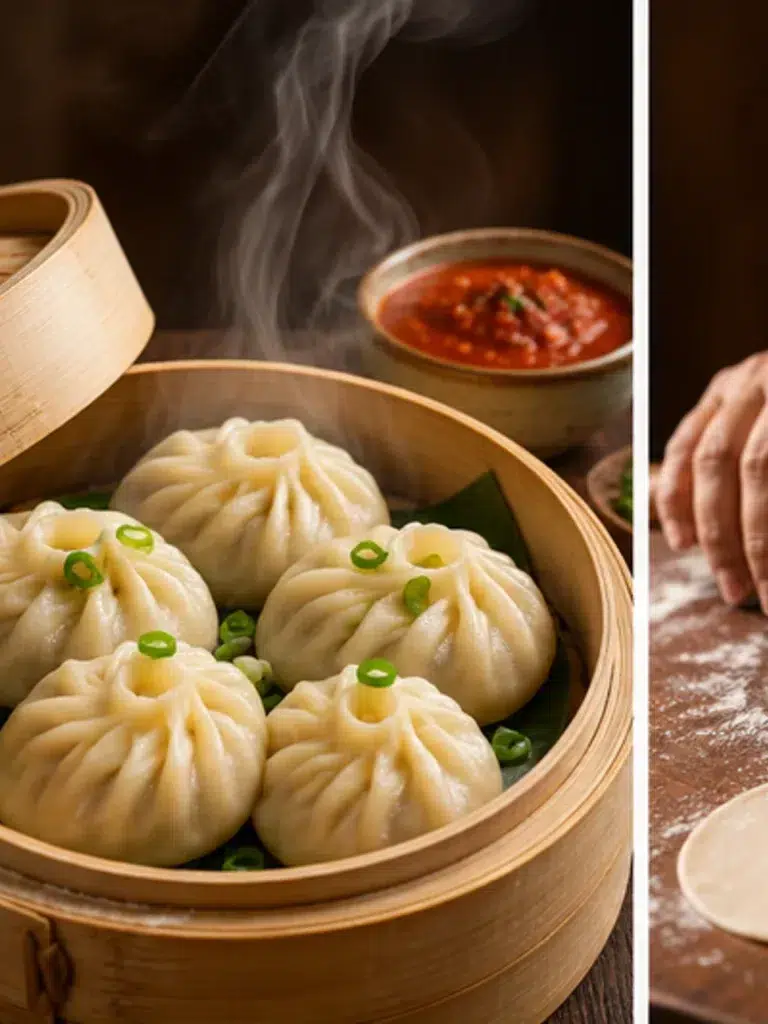
What makes jhol momos different from ordinary steamed momos? Instead of serving dumplings with a small bowl of thick chutney, jhol momo places freshly steamed momos in a generous helping of tangy, spicy, drinkable sauce. Many Kathmandu-style versions include tomatoes, toasted sesame, dried chilli and, in some recipes, peanuts, roasted soybeans or timur (a citrusy, tingling spice).
Quick answer: Roast sesame seeds, soften tomatoes and chillies with ginger and garlic, blend into a smooth paste, then add warm vegetable stock or water until the sauce is pourable. Place fully cooked hot veg momos into serving bowls, spoon over the jhol and eat promptly before the wrappers become too soft.
Easy Vegetarian Jhol Momo Recipe: Quick Card
Style: Steamed vegetarian momos served with thin tomato–sesame jhol | Planning servings: 2–3 bowls (depending on portion size) | Cooked momos: About 12 small pieces | Estimated jhol preparation and cooking: 25–35 minutes | Allergens: Sesame; peanuts if optional peanuts are included; wheat or other allergens from the momos and stock.
Ingredients
- 12 small fully steamed, hot vegetarian momos
- 3 medium ripe tomatoes (roughly 350–450 g)
- 2 tablespoons white sesame seeds
- 1 tablespoon plain peanuts, optional; omit for a peanut-free variation only with appropriate cross-contact control
- 2 dried Kashmiri red chillies; adjust to taste
- 2 small garlic cloves, peeled
- 1 teaspoon chopped ginger
- ½ teaspoon cumin seeds or ¼ teaspoon ground cumin
- A small pinch of turmeric, optional
- 1 tablespoon neutral oil or a little mustard oil, used according to its safe cooking instructions
- 350–500 ml hot, unsalted vegetable stock or water, added gradually
- ½–1 tablespoon lemon juice, to taste
- Salt to taste, starting with a small pinch
- Fresh coriander leaves for garnish, optional
- A very small pinch of timur, optional, if available and familiar to you
Six-step jhol method
- Toast sesame seeds in a dry pan until aromatic, stirring constantly. Roast optional peanuts separately until properly toasted.
- Cook tomatoes, dried chillies, garlic and ginger until softened; use controlled heat and a little water if needed.
- Allow hot ingredients to cool to a blender-safe temperature. Blend with toasted seeds, optional peanuts, cumin, salt and a little stock.
- Return the sauce to a saucepan. Add more stock or water gradually until it is thin enough to pour generously.
- Simmer gently, then finish off the heat with lemon juice and optional coriander. Taste and adjust salt or chilli.
- Put fully cooked hot momos into bowls, ladle the jhol over them and serve immediately.
Note: The quantities and time are editorial starting estimates. This is not a guaranteed replica of any named Kathmandu restaurant’s jhol.
What Is Jhol Momo?
Jhol momo is a dish built from steamed dumplings and a generous liquid accompaniment. In Nepali usage, jhol describes the liquid or soupy character of the sauce. Unlike momos served with a thick side chutney, the jhol surrounds the dumplings and becomes part of every mouthful. Depending on the kitchen, it can be thin and brothy or slightly creamy from ground toasted seeds and nuts.
This style is widely associated with Kathmandu Valley momo culture. Smithsonian’s March 2026 account of momo history emphasizes the complex cultural and trade background of the dumpling itself rather than claiming one settled origin. Specific jhol methods also differ among home cooks and restaurants, so it is better to describe a Nepali-inspired home version than to declare it the one authentic formula.
Jhol Momo vs Momo Soup vs Regular Chutney
| Dish | Typical liquid | How it is served |
|---|---|---|
| Jhol momo | Pourable, seasoned achar or broth; often tomato and sesame | Dumplings served in a generous pool of jhol |
| Regular steamed momo with chutney | Small amount of thicker dipping sauce | Sauce served beside the dumplings |
| Dumpling soup | Broth that may be vegetable, chicken or another soup style | Dumplings cooked in or added to soup; not necessarily jhol achar |
A clear vegetable dumpling soup is not automatically jhol momo. Likewise, a bowl of thick tomato chutney spooned lightly over momos may not have the thinner, drinkable character many people expect from jhol.
Why These Ingredients Work Together
Toasted sesame seeds
Sesame adds a roasted, nutty body and can make the jhol look slightly creamy. Toast it carefully and do not let the seeds turn dark and bitter. Sesame is an allergen. If anyone eating the dish is allergic to sesame, do not make this recipe for them; simply scraping seeds out afterward is not safe.
Ripe tomatoes and dried chillies
Tomatoes provide colour, moisture and tang. Chillies add flavour and heat, but their strength varies. Start with less chilli and add more later. The colour of jhol does not reliably tell you how hot it will taste.
Peanuts or soybeans: optional regional variations
Some versions include peanuts, roasted soybeans or both, adding body and a different nutty note. Chef Sanjyot Keer’s jhol momo demonstration uses toasted soybeans, sesame and peanuts, while other published recipes make a tomato–sesame sauce without all three. Our starting version uses sesame and makes peanuts optional, not mandatory.
Timur and finishing acid
Timur is associated with the characteristic citrusy, tingling sensation in some Nepali condiments. Use it sparingly; it is not a direct stand-in for black pepper. Lemon juice brightens the finished sauce, but add it after tasting because tomatoes may already be acidic.
How to Make Jhol Momo at Home: Detailed Method
Step 1: Prepare cooked momos first
Jhol is typically poured over ready-to-eat momos, so steam and properly cook the dumplings before serving. If preparing homemade vegetable momos, use a safe raised steaming tray and check that the thickest pleated wrapper is not raw. Our guide to steaming momos without a steamer explains how to use a pot or kadai safely.
Step 2: Toast sesame and optional peanuts
Heat a dry pan over moderate heat. Stir sesame seeds until lightly coloured and fragrant, then remove them immediately. Toast peanuts separately if using. Do not let either ingredient burn: overtoasted seeds produce bitterness that can dominate the broth. Keep roasted ingredients separate from other food if allergies are a concern.
Step 3: Cook the tomato and aromatics
Wash and roughly chop tomatoes. Simmer with the dried red chillies, garlic and ginger until the tomatoes collapse into a soft mixture. A splash of water helps prevent catching. This is an alternative to charring tomatoes over a flame, which is used in some traditional-style recipes but requires care and adequate ventilation.
Step 4: Blend only when cool enough
Allow the tomato mixture and toasted seeds to cool to a temperature suitable for your blender. Blend with a small amount of vegetable stock, cumin, salt and any optional timur until smooth. For a fine-textured jhol, blend thoroughly and strain if desired. Never trap steam in an appliance not designed for hot food.
Step 5: Turn the thick base into drinkable jhol
Transfer the sauce to a pan and gradually add hot stock or clean water. Bring it to a gentle simmer. It should flow around the dumplings and be easy to sip from a spoon—not be as thick as peanut butter or as watery as plain water. Adjust in small increments so the flavour does not become diluted.
Step 6: Finish and assemble bowls
Taste the jhol, add lemon juice and coriander, then adjust salt. Place fully cooked hot momos in shallow serving bowls. Spoon over enough hot jhol to partly surround them, and serve at once. If the momos stand in the broth for too long, the wrappers can soften and lose structure.
How Thin Should Jhol Momo Sauce Be?
There is no universal millilitre-per-momo standard. It should be more pourable than an ordinary thick red chutney. Some kitchens offer a fairly thin, drinkable broth; others prefer a slightly nutty, coating sauce. The final texture also depends on how finely the toasted sesame and nuts are blended.
| If the sauce is… | Try… |
|---|---|
| Too thick | Add warm vegetable stock by the spoonful, then check salt and acidity |
| Too thin | Simmer gently to reduce, avoiding scorching seed solids |
| Grainy | Blend more thoroughly after cooling, or pass through a fine sieve |
| Overly sharp | Add more cooked tomato base and adjust lemon rather than immediately adding sugar |
| Too spicy | Increase non-spicy tomato and stock, then adjust salt carefully |
Common Jhol Momo Mistakes
Why does my jhol taste bitter?
Burnt sesame, peanuts, chilli or garlic can make the sauce bitter. Toast carefully at a controlled temperature. Extremely bitter burnt ingredients should be discarded rather than hidden with sugar.
Why did the momos break in the broth?
Oversteamed wrappers, poor seals or long standing in hot liquid can make dumplings fragile. Cook them fully but avoid excessive handling; add to bowls just before serving.
Why does the jhol taste bland after thinning?
Water dilutes the seasoning. Taste after adding stock and rebalance salt, chilli and lemon incrementally. Using an unsalted vegetable stock gives greater control.
Why does my sauce separate?
Ground seeds and other solids can settle. Blend finely and stir before serving. Separation by itself does not prove spoilage, but sauces held at unsafe temperatures should be discarded.
Allergens and Dietary Variations
The sesame-based jhol here contains sesame, and optional peanuts are a separate major allergen. The momos may contain wheat, dairy or soy depending on the wrapper and filling. A vegetarian vegetable stock does not automatically mean that a packaged stock is free from allergens or garlic/onion.
For a strictly sesame-free or peanut-free meal, use a completely different recipe and prevent shared-equipment cross-contact rather than telling someone to pick out seeds or nuts. For a no-onion-no-garlic sauce, check each component and note that omitting these aromatics changes the flavour profile.
How to Serve Jhol Momos
Planning to make momos part of a larger meal? The Himalayan-inspired vegetarian dinner menu offers a simple home hosting plan with steamed momos, soup and separate achar.
Warm the serving bowl if safe to do so, add fresh hot momos and pour over jhol just before eating. Finish with a little coriander or spring onion if desired. The dish is meant to be enjoyed with both dumplings and liquid; put a spoon alongside the bowl. For a separate thick sauce, see the peanut momo chutney guide after publication.
Momo Crown’s published menu includes various momo styles, but this guide is a general educational recipe and does not claim that a Momo Crown outlet sells this exact jhol preparation.
Storage and Food Safety
Jhol containing cooked tomato and ground seeds is perishable. Cool it promptly in a clean shallow container and refrigerate at 4°C (40°F) or below. FoodSafety.gov recommends chilling within two hours, or one hour above 32°C. For this untested home formula, using the sauce within 1–2 days under correct refrigeration is a conservative quality choice—not a microbiologically established shelf-life.
Store sauce and cooked momos separately when possible so the wrappers do not absorb excess liquid. Reheat perishable leftovers thoroughly; food stored or held unsafely should be discarded.
Frequently Asked Questions
Is jhol momo soup or chutney?
It is commonly described as momos served with a pourable, seasoned jhol achar or broth. It is more liquid than a typical thick dipping chutney, so both descriptions capture part of the experience.
Do jhol momos contain peanuts?
Some do; some use sesame alone or other seed-and-spice combinations. Always ask about the actual recipe rather than assuming one allergen profile.
Is jhol momo necessarily vegetarian?
No. The sauce and filling can include vegetarian or animal-based ingredients. The vegetarian version here is one variation of this flexible dish.
What is the difference between jhol and regular steamed momo?
The dumpling can be similar, but jhol momo is served in generous sauce or broth instead of only being dipped into a small side portion.
Can I make jhol without timur?
Yes, although the flavour will differ from versions that use it. It is an optional ingredient here, not a requirement for every household recipe.
Why not use a thick tomato chutney as-is?
Jhol is usually intended to be pourable and sippable. You can start with a tomato–seed base, but it needs the right amount of stock or water and rebalanced seasoning.
Sources and further reading
Jhol momo recipes vary among cooks and regions. These references offer useful context on ingredients, broth methods and culinary history.
- Smithsonian: A History of Momo — cultural and culinary context, March 2026.
- Nepali Taste: Jhol Momo — tomato and toasted-sesame broth method.
- Your Food Lab / Chef Sanjyot Keer: Jhol Momo — ingredient variations and sauce-to-broth preparation.
- FoodSafety.gov — refrigeration and hygiene.
Soup vs jhol: Compare dumpling soup with tomato-sesame-style jhol momo in eight slides.
Nepali chilli momos: Discover C-momo, a saucy chilli-style momo that differs from jhol.