
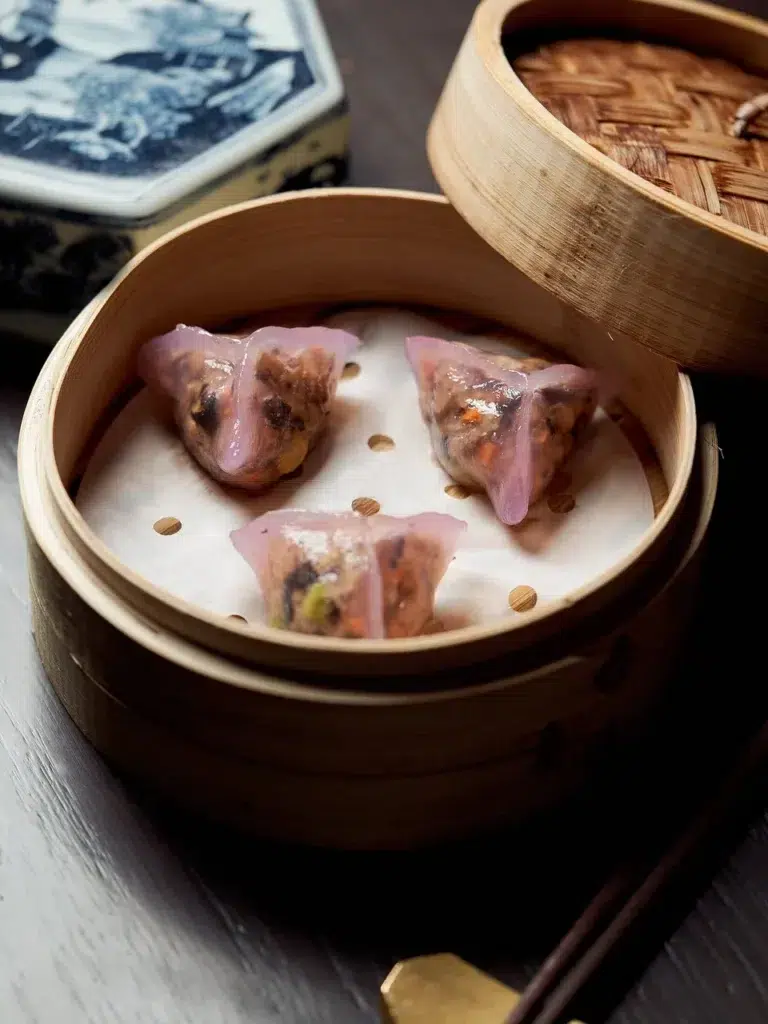
How many types of momos are there? There is no fixed official number. Momos can be categorized by how they are cooked, what they are filled with, what sauce or broth they are served in, and how the wrapper is made. That is why a steamed paneer momo and a jhol paneer momo can both be valid descriptions of the same broad dumpling family.
For the basics of the dish and its Himalayan food history, start with what are momos? This guide explains 15 commonly encountered or contemporary varieties of momos, including steamed, fried, kothey, jhol, kurkure, tandoori and several filling-led options. It also explains which names describe traditional preparations and which are newer restaurant or street-food variations.
Jump to the 15-type comparison
15 Types of Momos at a Glance
| # | Type | What distinguishes it | Texture or flavour |
|---|---|---|---|
| 1 | Classic steamed | Hot steam cooks the stuffed wrapper | Tender, soft exterior |
| 2 | Fried | Wrapper is cooked or crisped in oil | Crunchy, browned exterior |
| 3 | Kothey / pan-fried | Pan contact creates a crisp base while steam finishes the dumpling | Crispy base, softer top |
| 4 | Jhol | Momos served in a thin, tangy, often sesame-tomato sauce or broth | Saucy and spoonable |
| 5 | Chilli / C-momo | Momos coated or tossed in a chilli-based sauce | Spicy and savoury |
| 6 | Tandoori | Momos finished with tandoori-style seasoning and heat | Smoky, spiced |
| 7 | Kurkure | Additional crispy crumb or cornflake coating | Extra crunchy |
| 8 | Afghani-style | Restaurant-style creamy sauce or topping | Rich and mildly spiced |
| 9 | Paneer | Fresh paneer used as the main filling | Soft, dairy-rich |
| 10 | Mushroom | Finely chopped mushroom filling | Savoury and earthy |
| 11 | Cheese | Cheese-centred filling or topping | Creamy, sometimes stretchy |
| 12 | Wholewheat | Atta replaces or partly replaces refined wheat flour | More pronounced wheat flavour |
| 13 | Spinach-coloured | Spinach used to tint or flavour wrapper dough | Green wrapper; flavour depends on filling |
| 14 | Beetroot-coloured | Beetroot added to wrapper dough | Pink/red wrapper with subtle earthy notes |
| 15 | Open-faced / basket | Top remains partly open, showing filling | Depends on filling and cooking method |
How to read the table: These categories overlap. Paneer, mushroom and cheese describe fillings; steamed, fried and kothey describe cooking; jhol and Afghani mainly describe service or sauce; spinach and beetroot describe wrapper variations. The names are not mutually exclusive.
Types of Momos by Cooking Method
1. Classic steamed momos
Perhaps the easiest reference point for momo texture. A thin dough sheet is filled, folded and cooked over steam. The result should be tender, with a fully cooked centre. Vegetable, paneer and meat-filled versions all exist; only the stuffing determines whether a particular steamed momo is vegetarian.
For a home method, see our vegetable momos recipe or whole-wheat wrapper variation. The steaming without a steamer guide explains safe alternatives using a pot or kadai.
2. Fried momos
Fried momos have a browned, crunchy exterior. Some methods fry already steamed momos; others cook filled dough directly in oil. Those approaches need different safety and cooking checks. Fried does not automatically specify a filling, nutritional value or exact amount of absorbed oil.
3. Kothey momos
Kothey generally refers to pan-fried momos with crisping where the wrapper contacts a hot pan and a softer, steam-finished upper surface. It offers a contrast between crunchy and tender textures without immersing the entire dumpling in deep-frying oil. Regional naming and finishing methods can vary.
Types of Momos with Sauce or Broth
4. Jhol momos
Commonly associated with Kathmandu and Nepali momo culture, jhol momos are served in a generous liquid achar or broth. Tomato, sesame and spices are common elements, though recipes differ. The momos may be steamed before going into the sauce, so “jhol” identifies how they are served, not necessarily a unique wrapper.
The Nepal Tourism guide distinguishes jhol from regular steamed momos by its warm, pourable sesame-tomato accompaniment. Local variations deserve respect; no single restaurant recipe is the sole authentic one.
5. Chilli momos or C-momos
In this style the cooked momos are coated in a chilli-led sauce, often with onion, capsicum or other savoury additions. Depending on the kitchen, the dumpling can be fried first and then tossed in sauce. Ask about the heat and allergen ingredients, especially soy sauce or other packaged seasonings.
6. Afghani-style momos
A newer restaurant or Indian street-food variation generally served with a rich, creamy, mildly spiced white sauce. Although “Afghani” is a popular menu name, it should not be taken as proof that this exact momo preparation is a traditional Afghan dish. The Indian Express describes the creamy street-food version.
Spiced, Crispy and Fusion Momos
7. Tandoori momos
In many Indian-style preparations, cooked momos are coated with a spiced yogurt or tandoori-style marinade and finished over strong heat. The flavour is different from a plain steamed momo: charred edges, tangy spices and smoky notes become important. Whether it is actually made in a tandoor, oven or grill depends on the kitchen.
8. Kurkure momos
Kurkure means an extra-crunchy style in many modern menus. A battered or coated momo is typically rolled in crushed cornflakes or another coarse crumb and fried for a pronounced crispy shell. It is not the same as an ordinary fried momo because there is an additional coating. See our Kurkure momos recipe for a cooked-veg-momo, batter and cornflake method, or explore the illustrated coating guide.
Momos Categorized by Their Fillings
9. Paneer momos
Fresh paneer, usually grated or crumbled, takes the place of a mostly vegetable or meat-based filling. Aromatics, capsicum, herbs and chilli may be added. Paneer is dairy, so paneer momos are not vegan. For a home-style filling, finely chop paneer with suitable vegetables and avoid an overly wet mixture. Our paneer momos recipe covers dough, filling and steaming.
10. Mushroom momos
Finely chopped mushrooms create an earthy, savoury filling. They release water when cooked, so the stuffing needs some moisture control before folding. The name does not guarantee a vegan recipe; butter, cheese or dairy sauces may also be present.
11. Cheese momos
These can include processed cheese, mozzarella-style cheese, paneer blends or other dairy products. A cheese filling changes melting, texture and salt content, so it should be described clearly rather than assumed to match paneer. Cheese momos can be steamed or fried.
Momo Styles Classified by Wrapper
For a colourful home variation, try our beetroot momos recipe using naturally tinted wheat wrappers and vegetable filling.
12. Wholewheat or atta momos
Atta replaces some or all of the refined wheat flour. These wrappers may be more robust and taste nuttier or wheatier. The dough generally needs hydration adjustments and good resting. A wholewheat momo is still made with wheat and is not gluten-free.
13. Spinach-coloured momos
Spinach purée or another spinach preparation is added to the wrapper dough to give it a green hue. This can make the dish visually striking, but the final ingredients, cooking method and portion size determine its nutritional properties. Colour alone is not evidence that a momo is healthier.
14. Beetroot-coloured momos
Beetroot can give wrapper dough a pink or red colour and a mild earthy note. The pigment may shift during cooking, and the added liquid changes dough hydration. Whether the filling is veg, paneer or something else is a separate choice. Natural colour does not by itself mean the dish has special health benefits.
15. Open-Faced or Basket Momos
These dumplings leave the top partly open, exposing the filling rather than sealing every pleat completely. They are often seen in contemporary cafés. Because the filling is exposed, it’s particularly important to use a preparation method that cooks it thoroughly; a visually attractive open top does not establish food safety.
Which Type of Momo Should You Try First?
| If you prefer… | Look for… | What to expect |
|---|---|---|
| Soft dumplings | Classic steamed | A tender wrapper with filling flavour at the centre |
| Crunchy snacks | Fried or kurkure | A crisper bite; kurkure has extra coating |
| Crisp and soft together | Kothey | Pan-crisped base and softer top |
| Plenty of tangy broth | Jhol | Soup-like sauce and spoonable service |
| Paneer as the main ingredient | Paneer momo | Dairy-rich filling |
| Smoky, spiced flavour | Tandoori | Marinade and high-heat finishing |
| Novel appearance | Spinach or beetroot | Coloured wrappers, taste depending on filling |
Are Some Types of Momos Healthier Than Others?
Preparation matters, but the name alone is not enough to assign calories, protein, sodium or health benefits. Steaming typically adds less cooking oil than deep-frying an otherwise comparable momo. However, paneer, cheese, butter, sauce and portion sizes change the nutritional result. A beetroot wrapper isn’t automatically a balanced meal; a wholewheat wrapper still contains gluten.
For a careful discussion without invented nutritional numbers, see our steamed versus pan-fried momo comparison.
Questions to Ask Before Ordering
If you have an allergy or dietary restriction, ask about the filling, wrapper, sauce and shared preparation surfaces. Milk may be present in paneer or cheese momos; wheat is common in wrappers; soy can appear in chilli sauces; sesame is common in some jhol preparations. Vegetarian food may not be vegan, and a no-onion-no-garlic style is not automatically suitable for every stricter diet.
Cooked momos are best eaten promptly or kept at safe temperatures. General food-safety guidance recommends refrigeration of perishable leftovers within two hours or one hour above 32°C. Food that looks cooked on the outside may still require an internal temperature check, especially for poultry fillings.
Which of These Styles Does Momo Crown List?
The official Momo Crown menu describes steamed options and varieties including paneer, wholewheat, spinach-and-corn, beetroot, fried, kurkure, kothey and gyoza. The guide above discusses the broader momo category; it does not imply that every type listed here is sold by Momo Crown. Consult the menu and location updates for current offerings and launch information.
Frequently Asked Questions About Momo Types
What is the difference between steamed and kothey momos?
Steamed momos are cooked over steam; kothey-style momos add pan contact for a crisp underside while the rest stays relatively soft.
Are jhol momos the same as momo soup?
Both put momos in liquid, but jhol is associated with a specific type of tangy, seasoned achar or broth in Nepali momo culture. An ordinary clear dumpling soup is not automatically the same dish.
Are kurkure and fried momos the same thing?
Not exactly. Kurkure usually has an additional crumb or cereal coating; regular fried momos may develop crispness directly from the dough.
Can momo fillings be vegan?
Yes, with vegetables, mushrooms or other suitable plant ingredients and a vegan wrapper and sauce. Check for dairy, egg and shared equipment before assuming.
How many types of momos exist in total?
There is no universal total. Recipes continue to evolve, and one momo can fit several categories at once, such as steamed, paneer-filled and wholewheat.
What is the most traditional variety?
Steamed filled dumplings are a widely recognized foundation, but regional preparations have their own histories. Avoid assigning one modern street-food variant as the definitive version of an entire culture.
Sources and further reading
This guide organizes named preparations reported in Nepali and Indian food coverage. The list is a helpful classification, not a historical ranking or a definitive inventory. Photographs or illustrations of any one dish should not be interpreted as images of all 15 examples.
- Nepal Tourism: Types of Momo in Nepal — jhol, kothey, steamed and other Nepali-associated styles.
- Al Jazeera: Why Indians Are Mad for Momos — reporting on the diversity of Indian momo styles.
- The Indian Express: Momo Variations — modern fusion examples such as Afghani, kurkure and spinach momos.
- FoodSafety.gov: 4 Steps to Food Safety — allergen handling and storage principles.
Soya filling guide: Explore a home-style soya momo filling with rehydrating and sealing tips.
Mushroom momo filling: See a home-cooking guide to savoury mushroom momos and moisture control.
Tandoori momo style: Explore the spiced-yoghurt coating and oven or pan finish used for tandoori momos.
Tibetan tingmo versus momos: Learn how Tibetan steamed tingmo bread differs from filled momos.