

Want to make vegetable momos at home from scratch? This veg momos recipe covers the wrapper dough, a finely chopped cabbage-and-carrot filling, two simple folding styles and careful steaming. You do not need a commercial momo machine, but you do need a little time to roll and shape the dumplings.
On this page
Quick answer: Make a firm but flexible flour dough and rest it covered. Lightly cook finely chopped vegetables to remove some moisture, cool the filling, roll thin wrappers, fill and seal. Steam the shaped momos above water until the wrappers and filling are cooked through, then serve with a red chilli dipping sauce.
Jump to ingredients and recipe
Quick Veg Momos Recipe: Ingredients and Steps
Type: Steamed vegetarian dumplings. Planning time: Allow 60–90 minutes for mixing, preparation, shaping and cooking, depending on experience. Estimated yield: approximately 12–16 small momos (size-dependent). Allergens: Wheat; soy if using optional soy sauce.
For the momo wrappers
- 150 g plain flour (maida)
- Approximately 65–85 ml room-temperature water, added little by little as the flour needs
- ¼ tsp salt
- ½ tsp neutral oil (optional)
For the vegetarian filling
- ½ cup finely shredded cabbage (approximately 45–55 g)
- ½ cup finely chopped carrot (approximately 55–65 g)
- ¼ cup finely chopped French beans (approximately 25–35 g)
- ¼ cup finely chopped capsicum (approximately 35–40 g)
- 2 tbsp finely chopped spring onion or regular onion
- 1 tsp grated ginger
- 1 small garlic clove, finely chopped (optional)
- 1 tsp neutral cooking oil
- ¼ tsp freshly ground black pepper
- ½–1 tsp soy sauce (optional; check salt and wheat allergens)
- Salt, added sparingly and to taste
Method in six steps
- Mix flour and salt, add water gradually and knead into a smooth, fairly firm yet pliable dough. Cover for 20–30 minutes.
- Chop vegetables finely. Heat a teaspoon of oil and briefly sauté the ginger, optional garlic and vegetables until some excess moisture evaporates. Cool the filling.
- Season with pepper, optional soy sauce and a small pinch of salt. Taste and avoid over-salting.
- Divide the rested dough into small balls. Roll into thin rounds, keeping the centre slightly more substantial than the edges.
- Put a small spoonful of filling in each wrapper, fold or pleat, pinch closed and place apart on a lightly greased steamer tray.
- Steam over simmering water until each momo is properly cooked. Check the thicker pleated base before serving; cooking time depends on wrapper thickness, size and your steamer.
Important: Use cooking cues rather than relying on one universal timer.
What Are Veg Momos?
For a plant-based variation without dairy or eggs, see our vegan momos recipe with tomato-ginger dipping sauce and ingredient-label guidance.
Veg momos are wheat-dough dumplings filled with finely prepared vegetables, sealed into different shapes and most often steamed. They are associated with Himalayan and Tibetan-influenced food traditions and have also become a familiar street food across India. Recipes vary widely, particularly the amount of cabbage, beans, capsicum, onion, ginger and seasoning used.
One established recipe from Dassana’s Veg Recipes uses cabbage, carrot, beans, capsicum and spring onion and explains both traditional pleated and simpler folded shapes. Adjust the proportions to the filling and wrapper size you choose.
How to Make the Dough Soft Enough to Fold
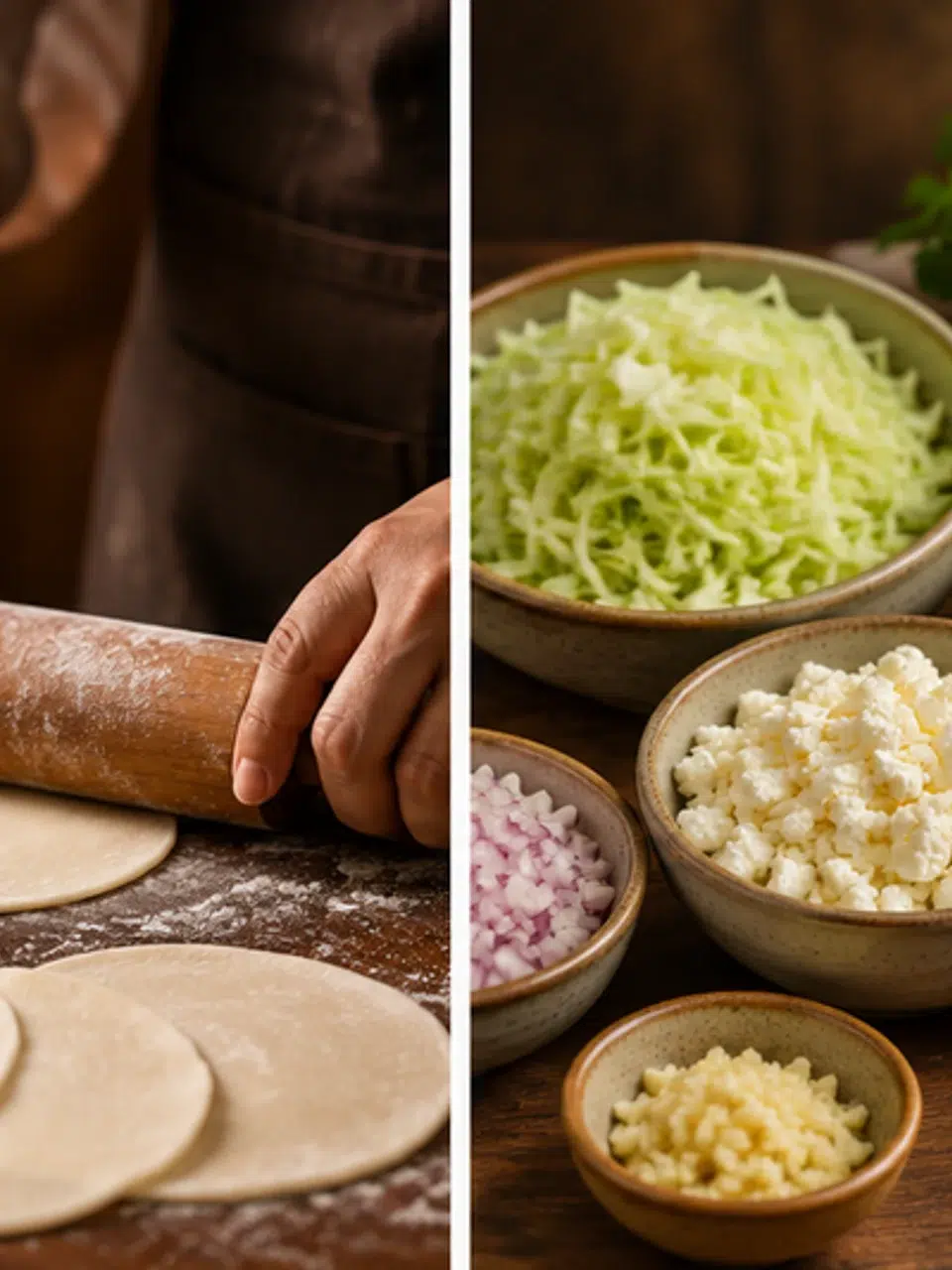
Mixing in too much water makes thin wrappers difficult to handle; too little water leads to cracking. Because different flours absorb different amounts, start with most of the suggested water and add it gradually only as needed. Knead until dry patches are gone and the dough forms a cohesive ball. Cover the surface tightly while it rests.
Resting can make rolling easier. Keep the dough portions you are not shaping under a cloth or lid so their surfaces do not dry out. Roll the wrappers from centre outward, letting the edges become thin enough to pleat without tearing. For a dedicated troubleshooting explanation, see our soft momo dough guide.
How to Prepare Vegetable Filling That Isn’t Watery
For ingredient-specific moisture adjustments, see seven fixes for watery momo filling.

Fine chopping helps each momo hold together and gives the filling an even bite. Wash vegetables under running water and prepare them on a clean board. Cabbage and onion release moisture after salting; add salt shortly before filling, or briefly cook off some moisture as in this version.
A short sauté should soften the raw edge of the vegetables without turning them into a wet mash. Spread the filling in a clean shallow dish to cool promptly before putting it into dough wrappers. Do not leave perishable fillings sitting at room temperature through a lengthy shaping session.
What if the filling tastes bland?
Correct salt in small increments and add black pepper, ginger or a little optional soy sauce. Extra liquid sauces can make the mixture wet; do not treat more sauce as the only solution.
What if you don’t like cabbage?
Use more carrot, beans, mushrooms or finely prepared capsicum, adjusting for moisture. Mushrooms release liquid while cooking, so allow some of that moisture to evaporate before assembling. Changing ingredients will change the final flavour and yield.
Detailed Step-by-Step Instructions
Step 1: Knead and rest the dough
Put flour and salt in a bowl. Add water bit by bit, mixing with fingers or a spoon until the flour forms a rough mass. Knead on a clean worktop until smooth. You should be able to press a small piece without it disintegrating, but it should not spread like batter. Cover and rest 20–30 minutes as a practical starting guide.
Step 2: Chop the filling ingredients finely
Prepare cabbage, carrots, French beans, capsicum and onion. Aim for finely chopped rather than large hard pieces: oversized vegetables can puncture wrappers and distribute unevenly. Keep washed vegetables away from raw meat-preparation equipment to prevent cross-contamination.
Step 3: Cook and season the vegetable mix
Heat a little oil in a frying pan. Briefly cook grated ginger and optional garlic, then add the vegetables. Stir-fry for a few minutes until slightly softened and less watery; avoid overcooking into mush. Cool safely, then add pepper and optional soy sauce and adjust salt cautiously.
Step 4: Roll wrappers without drying them out
Divide dough into equal small pieces. Flatten and roll each into a circle. The centre should be strong enough to hold filling and the edge thin enough to fold. Keep unfilled discs covered; if the dough shrinks back, rest it a little longer rather than forcing it.
Step 5: Seal in a half-moon or pleated shape
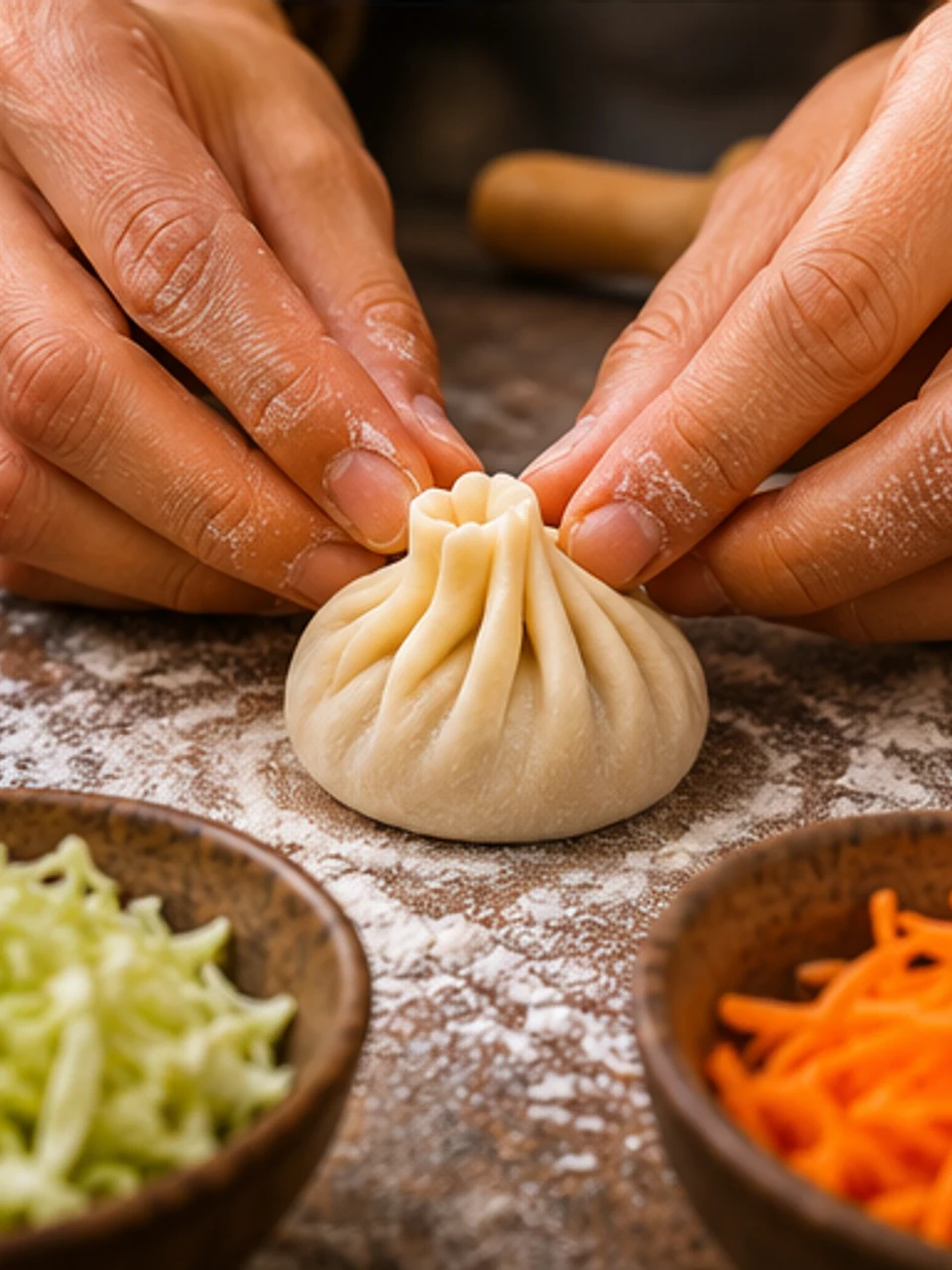
Place a modest amount of filling in the middle. For a beginner-friendly fold, bring two sides together and pinch the seam into a half-moon. For a gathered style, make small pleats around the perimeter and close the top firmly. Make sure the sealing edge is free of filling and heavy flour dust.
Step 6: Steam and check before serving
Grease a perforated steaming tray lightly and place the momos with space between them. Set the tray above simmering water and cover. Published veg momo methods can use around 5–7 minutes for small thin wrappers, while thicker momos and alternative steaming setups take longer. Check one: the wrapper should not be raw or pasty at the thicker pleated centre, and the filling should be cooked and hot. Do not oversteam only to meet a clock time.
Two Folding Techniques for Beginners
To practise beyond these two shapes, follow our four beginner-friendly momo folding methods.
| Method | How it works | Good for |
|---|---|---|
| Half-moon | Fold a round wrapper in half, align edges and pinch firmly | First-time cooks and quicker batches |
| Gathered pleat | Fold short sections around the circumference and pinch closed at the top | Traditional-looking round momos, once you have practiced |
Both forms can make a good momo. The important points are a sealed edge, manageable filling quantity and wrapper thickness that will cook evenly. Appearance alone does not guarantee good texture.
Can You Steam Momos Without a Commercial Steamer?

Yes. A stable raised metal rack and properly fitting heat-safe perforated plate inside a deep lidded pot or kadai can function as a non-pressurized steamer. Make sure the water remains below the tray and the assembly cannot tip. If you have an idli stand, use it according to its manufacturer’s instructions. Do not improvise pressure-cooker valve modifications.
Our separate steaming without a steamer guide explains those setups, timing ranges and burn-prevention practices in more detail.
7 Problems That Make Homemade Momos Disappointing
| Problem | Possible cause | What to change |
|---|---|---|
| Wrappers crack | Dough too dry or exposed to air | Add small amounts of water and cover dough while working |
| Momos taste doughy | Thick centre or unfinished steaming | Roll more evenly and inspect the pleated base |
| Filling is soggy | Excess water from cabbage or mushrooms | Drain or cook off moisture and season late |
| Momos burst | Overstuffing or weak seam | Use less filling and pinch edges cleanly |
| Momos stick to tray | Ungreased surface or touching pieces | Grease lightly and leave gaps |
| Wrappers are tough | Heavy wrapper or extended steaming | Roll thinner and check cooking cues |
| Filling tastes flat | Underseasoning or overcooking | Balance salt, ginger and pepper before sealing |
What to Serve with Steamed Veg Momos
A spicy red tomato–chilli chutney is a familiar pairing. For people avoiding garlic or onion, the garlic-free momo chutney recipe provides an alternative once published. A clear vegetable soup or light dipping sauce also works. Portion sauce separately rather than returning used dips to storage containers.
Momo Crown’s menu lists several types of vegetarian dumplings; this educational home recipe is not represented as the brand’s private outlet recipe.
Make-Ahead Storage and Food Safety
Refrigerate perishable cooked or prepared fillings promptly at 4°C or below, and do not leave them out longer than two hours (one hour when the surrounding temperature exceeds 32°C). For longer storage, you can freeze shaped raw momos separately on a tray, then transfer them to a sealed labelled freezer container. Details appear in our freezing uncooked momos guide when available.
The FSSAI safe-food advice emphasizes washing hands, surfaces and fresh produce. FoodSafety.gov explains safe chilling and prevention of cross-contamination.
Frequently Asked Questions About Veg Momos
Can veg momos be made without garlic?
Yes. Omit garlic from the filling and check sauces and packaged seasonings. Other ingredients, including onion and ginger, may still need changing for stricter preferences.
Can I make veg momos without maida?
Wholewheat atta is an option but needs different handling and hydration. A gluten-free millet or rice wrapper is not a direct one-to-one swap for wheat dough.
How long do homemade momos take?
Mixing, chopping, rolling and folding can take more than an hour, especially for beginners. Steaming is only one part of the process.
Are veg momos vegan?
The specified basic ingredients can be vegan if the optional sauces and other products are plant-based. Paneer, butter, mayonnaise and some sauces would change that.
What is the easiest momo fold?
A simple half-moon fold with a firmly pinched seam is usually easier to learn than a complex pleated crown.
Why does momo dough turn hard?
Possible reasons include dry dough, inadequate resting, thick wrappers and oversteaming. Diagnose the dough and cooking method separately rather than simply adding oil.
Plan Your First Veg Momo Batch
Before mixing, clear a clean rolling surface, prepare a covered bowl for the dough and keep an appropriate container ready for the filling. Divide the dough into manageable portions rather than rolling every wrapper at once. Uncovered wrappers can dry and crack before you reach the steamer; covered dough stays easier to shape. Keeping the tools and ingredients organised makes the folding stage more enjoyable for beginners.
Begin with a few practice pieces. Place a modest spoonful of filling in the centre and try a simple half-moon seal. If the first pieces look uneven, focus on closing every gap rather than making elaborate pleats. A consistently sealed dumpling holds its filling more reliably than a decorative shape with exposed seams.
If the vegetables release a lot of water, drain the excess or briefly cook off moisture rather than adding large quantities of flour. If the dough feels sticky, allow a short covered rest and dust the surface lightly. These adjustments matter more than forcing a rigid piece count. The exact number of momos depends on wrapper size and how much filling you use.
Offer a sauce separately for diners who want different levels of heat. Our momo chutney without garlic is one tomato-chilli accompaniment, and a gentle mild dipping sauce provides another choice.
Prepare Ahead, Freeze or Save Cooked Momos
For a meal later in the day, make the preparation schedule work around safe storage. Keep perishable fillings appropriately chilled between assembly batches and avoid leaving them on the counter for a long rolling session. Once the dumplings are shaped, cook them thoroughly or begin a suitable freezing process promptly. Preparing a batch ahead is convenient only when the handling history is clear.
When freezing raw pieces, arrange them separately on a lined tray until firm, then transfer them to a labelled airtight container. Do not freeze food that has already been held under unsafe conditions. Our guide to freezing uncooked momos explains storage, packing and cooking from frozen.
For cooked leftovers, use clean shallow containers, refrigerate promptly and reheat the portion you intend to serve until thoroughly hot. Keep chutney separate where practical so the wrappers do not become waterlogged. The reheating guide compares moist steaming, covered pan reheating and microwave methods.
A reliable veg momos recipe is as much about manageable kitchen habits as ingredients: cover the dough, control vegetable moisture, cook completely and store food safely. Use the stated timings as a starting guide because equipment, wrapper thickness and filling quantity can change the result.
Before the first steaming batch: check the filling and wrapper
Try sealing one practice momo before preparing the full batch. If the dough tears at the edge, check whether it has dried out or whether the centre was rolled too thin. If the seam opens when you lift the piece, reduce the filling and pinch the wrapper more firmly. If the filling seems watery, gently press or drain the vegetables rather than hiding the problem with extra flour. A small practice dumpling can reveal these issues before you use the rest of the dough.
Start heating the steamer only once you are ready to cook the first batch. Keep the water below the raised tray and leave enough space between pieces for steam circulation. Avoid overcrowding, especially if the kitchen steamer is shallow or small. The wrapper should cook fully and the filling should be suitably hot throughout. A thick folded seam may need more attention than a thin flat edge.
What to serve when guests have different preferences
Choose a sauce to complement the filling rather than cover it completely. A tomato-chilli chutney adds sharpness, while a gentle ginger-tomato dip allows the vegetables to remain more prominent. Put different sauces in separate labelled bowls. If someone needs to avoid particular ingredients, check the wrapper, filling and every condiment independently before serving; a vegetable-based dumpling may contain wheat, and optional sauces can contain soy or other allergens.
For an easy family meal, cook manageable batches and bring them to the table promptly rather than leaving a large tray uncovered. Serve each guest an appropriate portion, then offer more if needed. Refrigerate suitable leftovers promptly in clean containers. This flexible routine is the practical advantage of a homemade veg momos recipe: you can adapt the filling, folding method, sauce and portion to the people actually eating.
Sources and further reading
These references provide additional context on ingredient choices, cooking and food safety. Adjust home recipes to the ingredients and equipment you use.
- Dassana’s Veg Recipes: Vegetable Momos — dough, mixed-vegetable filling, folds and steaming cues.
- FSSAI: Tips for Safe Food — produce and kitchen hygiene.
- FoodSafety.gov: 4 Steps to Food Safety — refrigeration and food handling.