
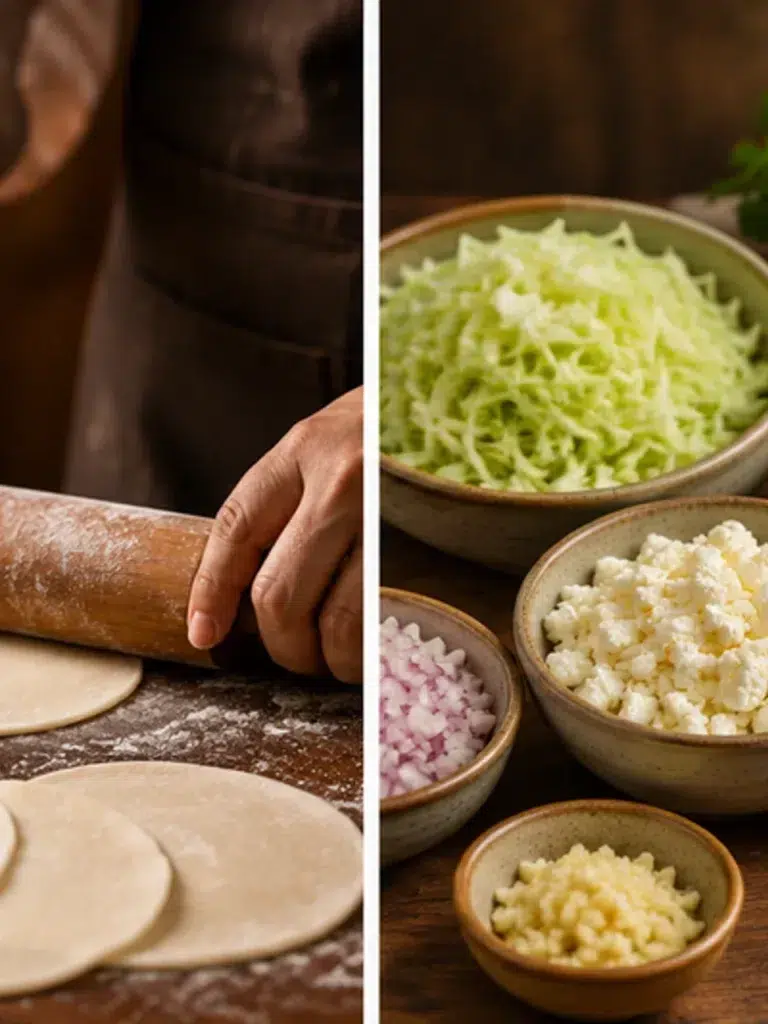
Quick answer: Roll momo wrappers thin enough that the edges fold neatly without a heavy knot, but not so thin that the filling pushes through. For many hand-folded momos, the centre can remain a little thicker than the rim. Instead of treating one millimetre figure as a universal rule, judge the dough by feel, flexibility and consistent rolling.
On this page
Why edge and centre thickness can differ
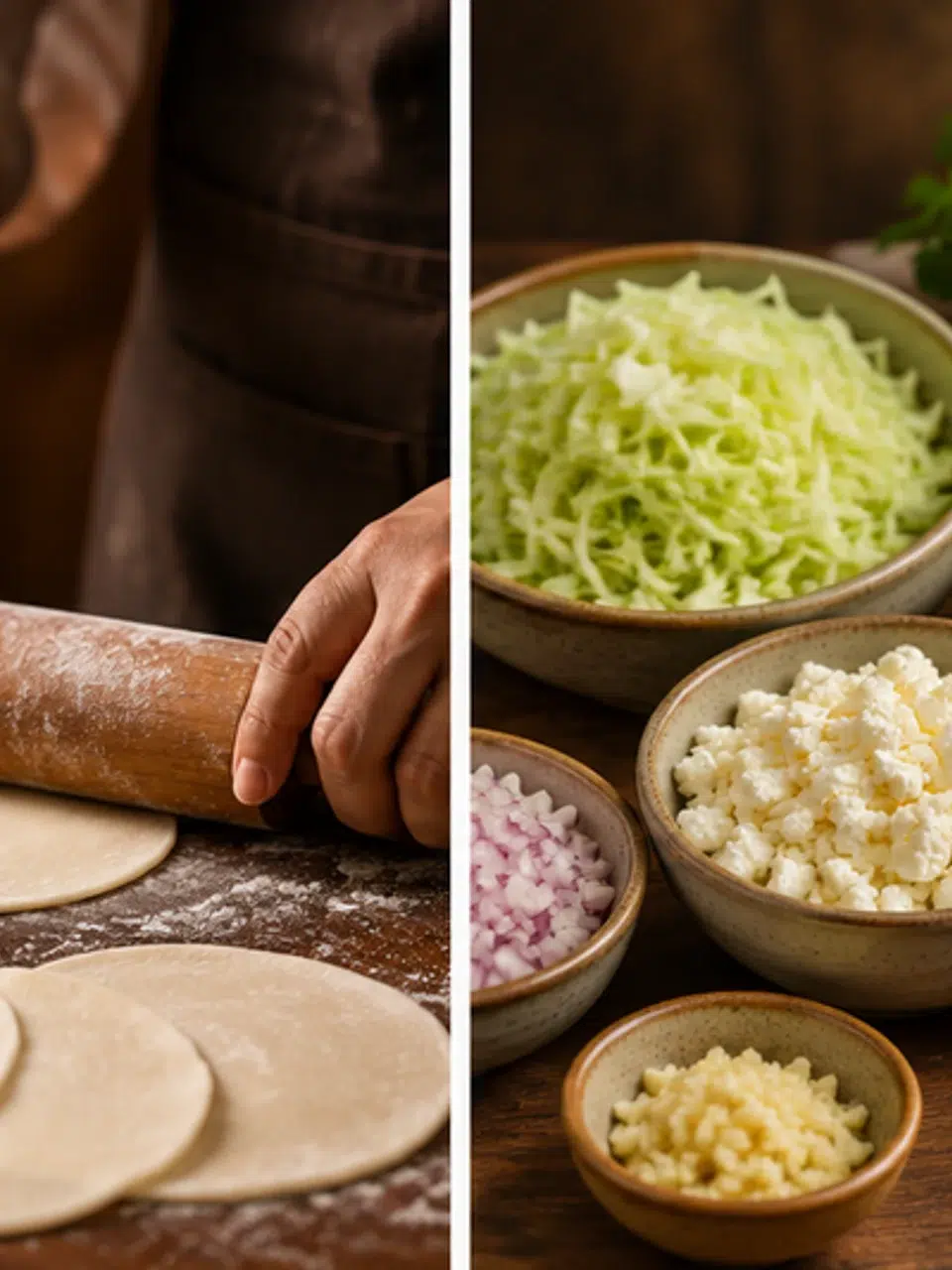
The centre carries the filling’s weight and is pressed against the steamer surface. The edge is folded over itself, sometimes many times. If the edge starts as thick as the centre, those overlapping pleats may stay gummy or chewy even after the rest of the wrapper is cooked. If the centre is too thin, a juicy filling can puncture it. A slightly stronger middle and gradually thinner rim balance these needs.
Five checks before you add filling
- Lift the round. It should support its own weight without drooping like wet cloth.
- Look for evenness. Avoid abrupt transparent spots or ragged tears.
- Flex the edge. It should bend and pinch without cracking.
- Check the rim. An edge that bunches into a thick rope will make a dense pleat.
- Test one dumpling. Cook a trial piece and check the thickest fold before shaping the whole batch.
These are qualitative checks suitable for home cooks. Dough behaviour changes with flour, water, resting and ambient conditions.
How to roll a more even round
- Divide rested dough into equal pieces and keep the pieces under a clean damp cloth.
- Press each into a small puck on a lightly dusted work surface.
- Roll from the centre outward with gentle pressure.
- Rotate the dough a little between passes so the wrapper stays broadly round.
- Use shorter passes near the edge to thin the rim while preserving the middle.
- Brush off heavy dust before filling; flour-caked edges resist sealing.
If the disc retracts as you roll, cover and rest the dough briefly rather than stretching it by force.
What changes with maida and atta?
White all-purpose wheat flour often rolls into a smooth, extensible disc. Wholewheat atta contains bran that changes dough texture and may absorb more water, so it can require a longer covered rest and more careful rolling. King Arthur Baking’s gluten explanation describes how wheat proteins build a network when hydrated and kneaded, and how bran can affect structure. The hydration guide notes that whole-grain flours often require more water at similar feel.
See our whole wheat momos recipe for an atta-based starting point.
Common texture problems
| Result | Likely cause | Next adjustment |
|---|---|---|
| Chewy knot on top | Edge too thick or too many folds | Thin rim and make smaller pleats |
| Base rips | Centre too thin or wet filling | Keep centre stronger; manage moisture |
| Edges crack before sealing | Dry surface or insufficient rest | Cover dough; adjust hydration gradually |
| Disc shrinks while rolling | Tight dough with little relaxation | Rest covered before continuing |
| Wrapper tastes raw after steaming | Thick centre or insufficient cooking | Roll more evenly and cook until done |
How to avoid measuring obsession
Exact thickness can be useful in commercial production with calibrated equipment, but home doughs differ. Start by making a small test batch: shape a half-moon and a gathered pleat using the same dough. Steam and compare the thickest bite. Change only one variable for the next round, such as edge thinness or filling size. That feedback matters more than an unsupported “perfect” measurement.
For sealing options, read four beginner-friendly folds. For cracks and drying, see soft momo dough troubleshooting.
Use a Practical Wrapper Thickness Test Instead of One Exact Number
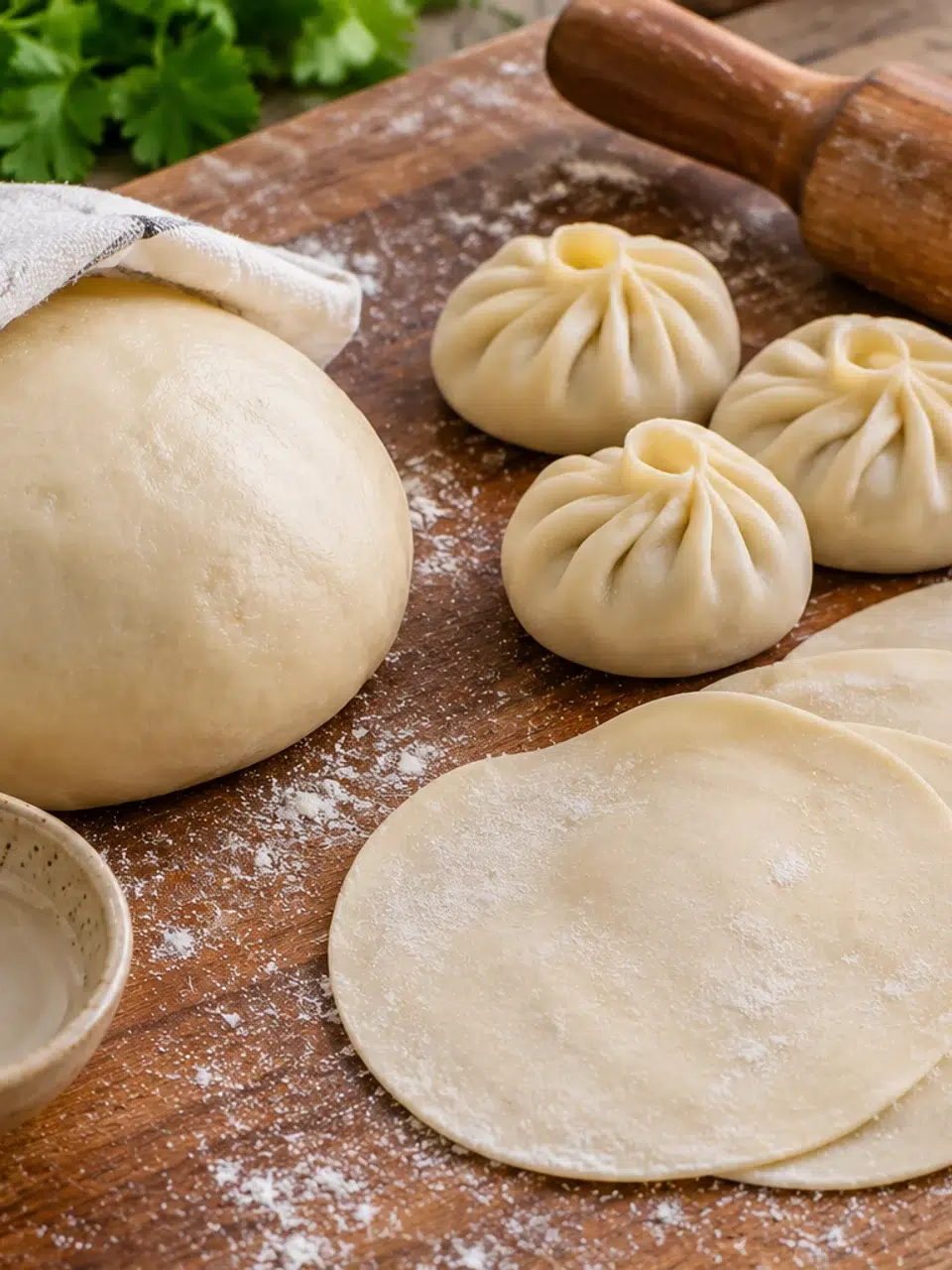
A momo wrapper must do two things at once: support a spoonful of filling and fold into a sealed edge. Those jobs call for slightly different handling. Rather than prescribing a universal millimetre measurement, roll a small test round and lift it gently. The centre should be strong enough not to stretch into a thin patch under its own weight, while the outer rim should pinch together without leaving a bulky rope of dough.
Place a modest amount of filling in the centre and make one half-moon dumpling. If the wrapper tears on the side, it may be too thin or the ingredient pieces may be too large. If the edge forms a thick chewy band, roll the perimeter thinner before folding the next piece. A small test batch gives a better answer than a ruler alone because dough behaviour depends on flour, hydration, resting and filling.
Some wrappers are naturally larger or smaller, and different dumpling traditions use different shapes. A gathered pouch with many pleats may need more attention to edge thickness than a simple half-moon fold. The goal is an even cooked texture, secure filling and a pleasant bite, not perfect visual transparency.
How to Roll from the Centre Toward the Edge
Begin with small, evenly divided pieces of rested dough. Flatten one portion into a disk and dust the surface lightly with flour if it sticks. Roll from the middle outward, rotate the disk and repeat. For a wrapper with a stronger centre, use shorter strokes on the outer edge rather than pressing equally hard across the whole round.
Try to avoid rolling back and forth repeatedly over the same narrow strip. That can create thin spots or a shape that stretches unevenly when filled. Lift and rotate the wrapper frequently so you can notice where the thickness changes. If the dough springs back or resists rolling, cover it briefly and allow more rest before forcing it thinner.
Keep the unrolled dough covered. A wrapper can dry quickly at the edges while you work on other pieces, making the rim hard to pleat. If several people are helping, one person can roll small batches while another fills them immediately. Excessively large stacks of unfilled wrappers may stick together or develop dry rims before they are used.
Why Maida, Atta and Flour Blends Roll Differently
Maida is refined wheat flour that often rolls into a smooth, light-coloured wrapper. Whole-wheat atta includes bran and germ and typically needs more water to achieve comparable softness. It may also behave differently when stretched because bran can interfere with the gluten network. A dough that rolls thin easily with one flour cannot be assumed to feel identical after substituting another at the same water level.
For a wheat-flour blend, begin with a modest portion of atta and add water gradually while kneading. Rest the dough covered, then assess whether it can roll without cracks. A little more moisture or resting time may be needed for a higher whole-wheat proportion. There is no nutritional reason to mislabel wheat flour as gluten-free: both maida and atta contain gluten.
For a fuller comparison, see our best flour for momos guide and the whole-wheat momo recipe. Flour variations can be rewarding, but changing flour, water and folding style all at once makes troubleshooting difficult.
Match Wrapper Thickness to the Filling
Finely chopped cabbage and carrot may distribute easily inside a small dough round when excess free liquid is controlled. A very wet filling can weaken an overly thin base, while large chunks can push sharply against the sidewall and cause a tear. For beginners, choose a modest spoonful of evenly chopped filling rather than trying to stretch a small wrapper over a tall mound.
Paneer is soft but can be wet, particularly if stored in liquid. Drain it as appropriate and avoid making the filling pasty with heavy sauces. Mushroom fillings can release moisture after cooking, so let excess liquid evaporate and cool the mixture safely before assembling. A well-managed filling reduces the pressure placed on a delicate wrapper.
Raw meat fillings require separate hygiene and full cooking. The wrapper should not be the only clue that the meat is cooked; use appropriate safe internal temperatures. When cooking poultry-filled momos, the centre should reach 74°C (165°F). Choose a wrapper sturdy enough for the filling and avoid oversized pieces that may not heat evenly.
Our watery momo filling guide helps manage vegetable moisture before wrapping, while the paneer momo recipe offers a contrasting filling texture.
Why Thick Pleats Make a Wrapper Feel Tough
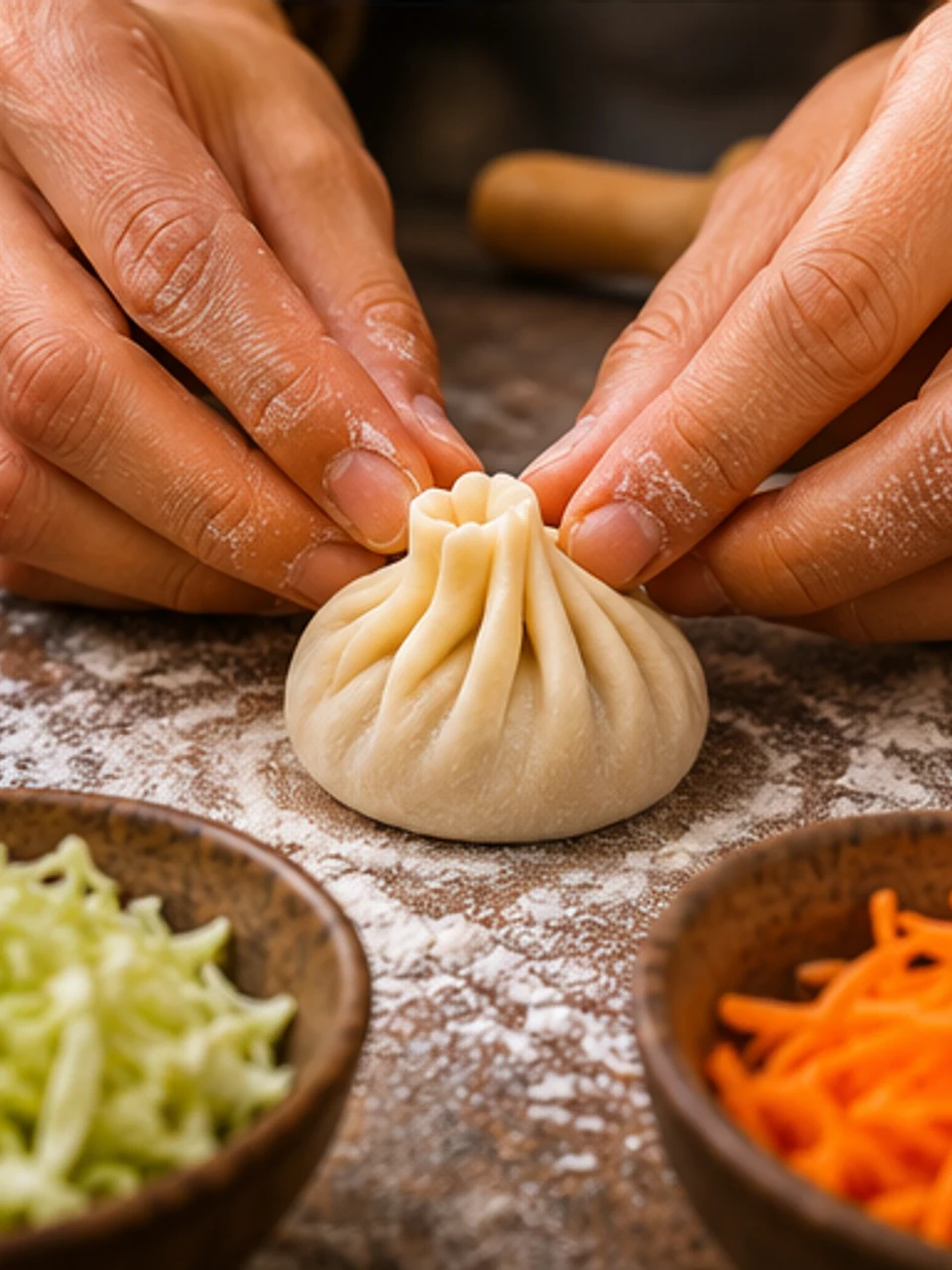
When the edge of a round is folded repeatedly into a gathered crown, several layers of dough meet in one small area. If the original rim is as thick as the middle, the final knot can be chewy even after the rest of the dumpling feels tender. The solution is not necessarily longer steaming, which may soften or overcook the sides. A slightly thinner perimeter and fewer heavy overlaps often create a more balanced bite.
To practise, fold a half-moon first and press along one continuous seam. Then make a crescent with a few small pleats, paying attention to how much dough accumulates at each pinch. Compare the thickness between an open-edge seam and a gathered round. The difference is easiest to feel when the dough is rested and pliable.
If a pleated crown keeps opening, inspect whether the edges are wet, oily, floury or dry. Overfilling can also pull them apart. Do not solve every weak seam by making the entire wrapper thicker; the extra dough may simply create a tougher bite. See four beginner folding methods for step-by-step practice.
Diagnose Wrapper Thickness Problems by Texture
| What you notice | Likely cause | What to test next |
|---|---|---|
| Thin side tears before steaming | Uneven pressure or oversized filling | Roll more evenly and use less filling |
| Top knot remains doughy | Too many thick overlapping pleats | Thin the rim and simplify the fold |
| Wrapper springs back while rolling | Gluten tension and insufficient rest | Rest covered and try again |
| Edge cracks during folding | Dry or underhydrated dough | Cover the dough and review water amount |
| Base tears during lifting | Thin underside or steamer sticking | Protect the tray and use a broad utensil |
Change one condition at a time. If a batch has thick pleats, roll the outer rim a little thinner while keeping the same dough and filling. If the next dumpling feels more balanced, that points toward the fold rather than the flour. This method helps a home cook learn without throwing away a whole tray because the first wrapper was imperfect.
A soft wrapper is also influenced by serving time. After cooking, leave perishable food at room temperature only within safe limits; reheating an unsafe leftover is not an acceptable solution. Correct dough texture and safe food handling are separate responsibilities.
How to Judge the Wrapper After Steaming
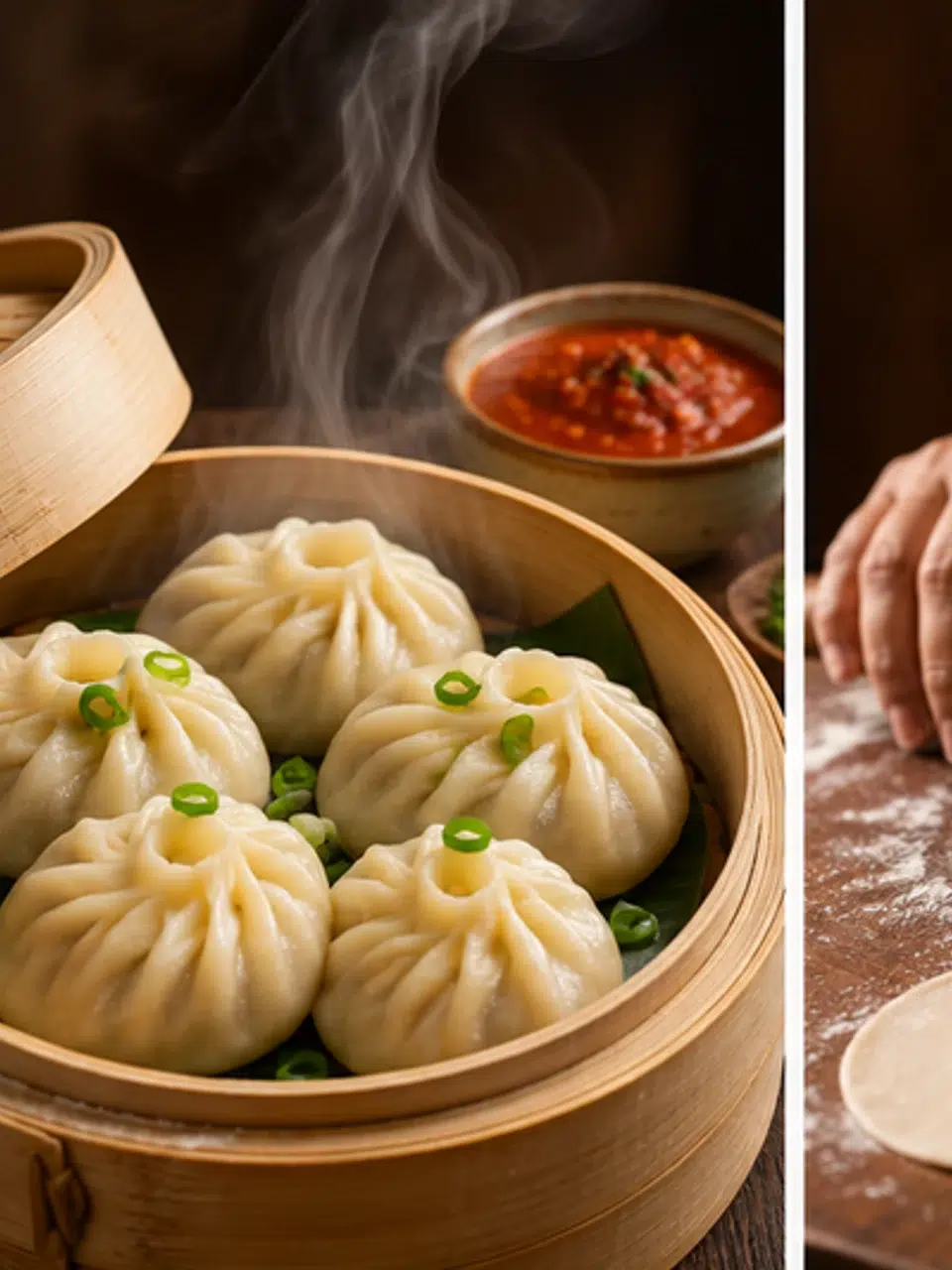
Cook a small test batch in a stable steamer with water below the raised tray. Ensure the dumplings have enough space and that any liner permits steam circulation. Once the wrapper and filling are fully cooked, lift one dumpling gently from beneath. Check the thickest folded section and the flat underside, not only the most transparent part of the sidewall.
If the entire wrapper is gummy, the dough may be undercooked, rolled too thick or unevenly heated. If only the top knot is tough, rethink pleat size and rim thickness. If the sidewalls become fragile and tear while the crown remains firm, improve thickness distribution instead of increasing cooking time indefinitely. A dumpling that looks glossy is not always fully cooked at the centre.
For meat fillings, verify safe doneness independently. Raw poultry must reach at least 74°C (165°F) internally. Use clean utensils for cooked pieces and keep raw-food tools away from the serving tray. The home steaming guide covers equipment setup and ways to avoid uneven heating.
A Simple Wrapper-Rolling Workflow for a Family Batch
Prepare the filling before starting the main rolling session, then keep any perishable ingredients appropriately chilled while you make the wrappers. Rest the dough covered and divide it into portions close to the intended dumpling size. Use one small group for practice, then adjust the rolling pressure before preparing more pieces.
Roll three or four rounds, fill and fold them, and place the shaped dumplings apart on a suitable lightly prepared tray. Cover the remaining dough during this process. If the filling begins releasing water, drain the free liquid or otherwise correct it safely before assembling more. Keep the working area clean and avoid mixing utensils used for raw meat and ready-to-eat sauces.
Steam in manageable batches rather than overcrowding the basket. Serve cooked dumplings promptly with sauces separately, or refrigerate suitable leftovers within the recommended safe period. A thin, attractive wrapper is not worth a poor seal or unsafe food handling. The useful rhythm is rest, roll, fold, cook, check and serve.
If you want to prepare raw dumplings for a future meal, our freezing guide explains individual tray-freezing and labelling. The wrapper’s thickness affects how it handles in the freezer as well as on the steamer tray.
A Four-Wrapper Practice Exercise
Make four equal pieces of dough from one rested batch. Roll the first into a fairly uniform thick round and use it as a reference. Roll the second with a supportive centre and slightly thinner edge. Roll the third with an especially thin rim, and keep the fourth more evenly thin throughout. Use the same small amount of filling for each piece and label them temporarily if that helps.
Fold them into the same simple shape so the difference in thickness is easier to judge. Check whether any edge cracks, whether the seam closes comfortably and whether the base feels strong enough to lift. Steam the pieces thoroughly using the same safe setup. Then compare the cooked wrapper at the crown, sides and underside. This exercise is for learning how dough behaves, not a claim that one of the four shapes is objectively best in every kitchen.
If the second round gives a comfortable tender sidewall and a well-cooked pleat, use that as a reference for the rest of the batch. If all four pieces feel too dry, the issue may lie in dough hydration or cooking rather than rolling. If every piece sticks to the tray, review tray preparation and lifting technique before changing thickness again.
Frequently asked questions
Should the momo wrapper be transparent?
Not necessarily. Extremely thin patches can tear; an evenly flexible wrapper matters more than transparency.
Should I roll every part equally thin?
For gathered pleats, a slightly stronger centre and thinner rim can improve the final bite.
Why are my momo edges hard?
Thick overlap, dry dough or prolonged cooking can make pleats tough; check those variables rather than adding oil blindly.
Evidence and further reading
For a broader view of Himalayan-inspired food, explore momo styles and Momo Crown’s official menu. Opening status and availability should be checked on the locations page.