
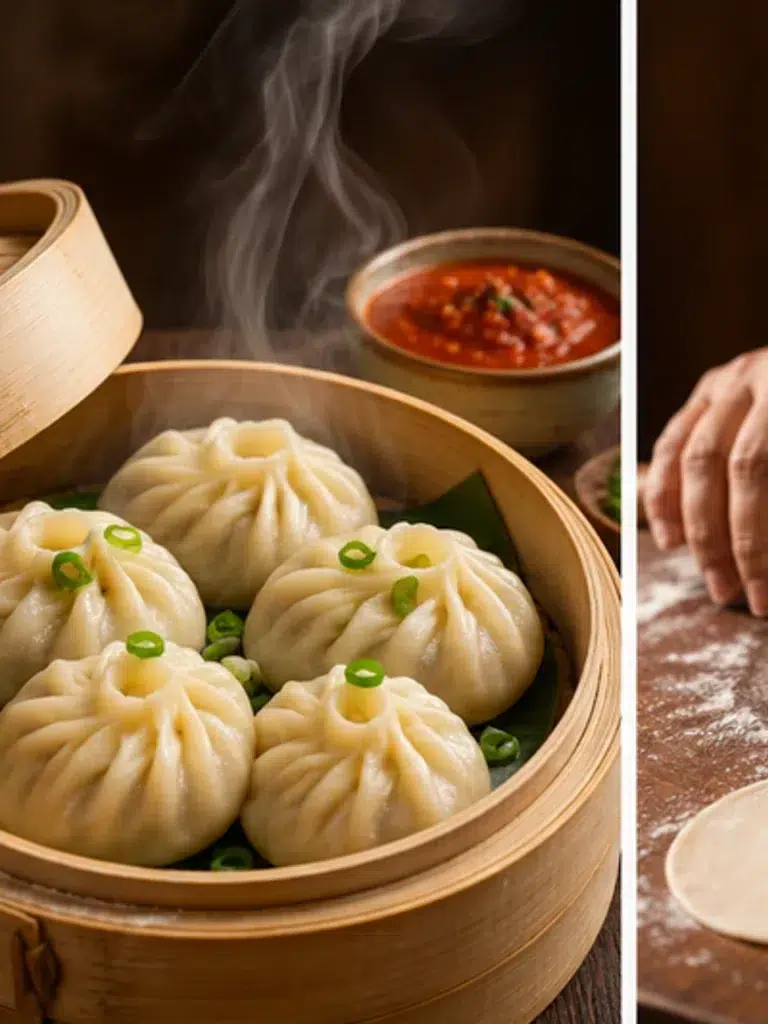
Quick answer: The easiest momo fold for beginners is the half-moon: add a modest spoonful of filling, bring the wrapper edges together, then pinch firmly along the seam. Once that is comfortable, practise a crescent pleat or gathered round. A secure seal matters more than a perfect number of pleats.
On this page
Set up the wrappers before folding
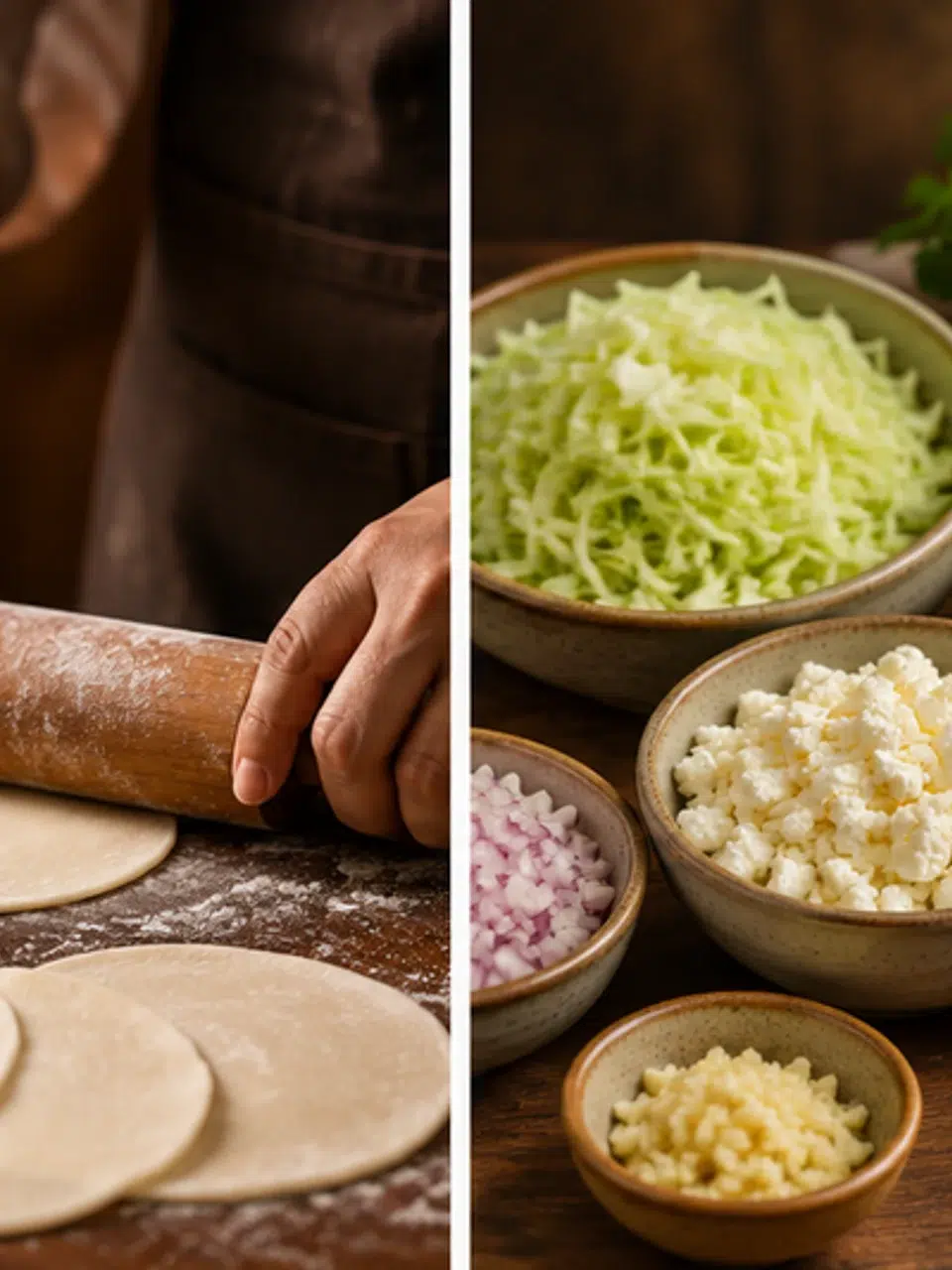
Use small, supple rounds and keep the unused dough covered so the surface does not dry out. The centre can be slightly thicker than the edge; the edge should be thin enough to pinch without forming a chewy knot. If a disc springs back as you roll, pause and let the dough relax before continuing.
For an ingredients-first explanation, see our soft momo dough and wrapper guide. This tutorial focuses on shaping; wrapper dimensions vary with the type and size of dumpling.
Shape 1: the half-moon fold
- Place a small portion of cooled filling in the middle of a round wrapper.
- Keep a clear strip around the rim so filling cannot prevent the edges from sealing.
- Fold the circle in half over the filling.
- Press the middle closed, then pinch outward towards both tips.
- Check for gaps by gently lifting the piece; put it seam-up on a lightly oiled tray.
Best for: a first homemade batch and vegetable fillings that hold together. Common fix: if the edges will not meet, remove some filling; do not stretch the dough until it splits.
Shape 2: the crescent pleat
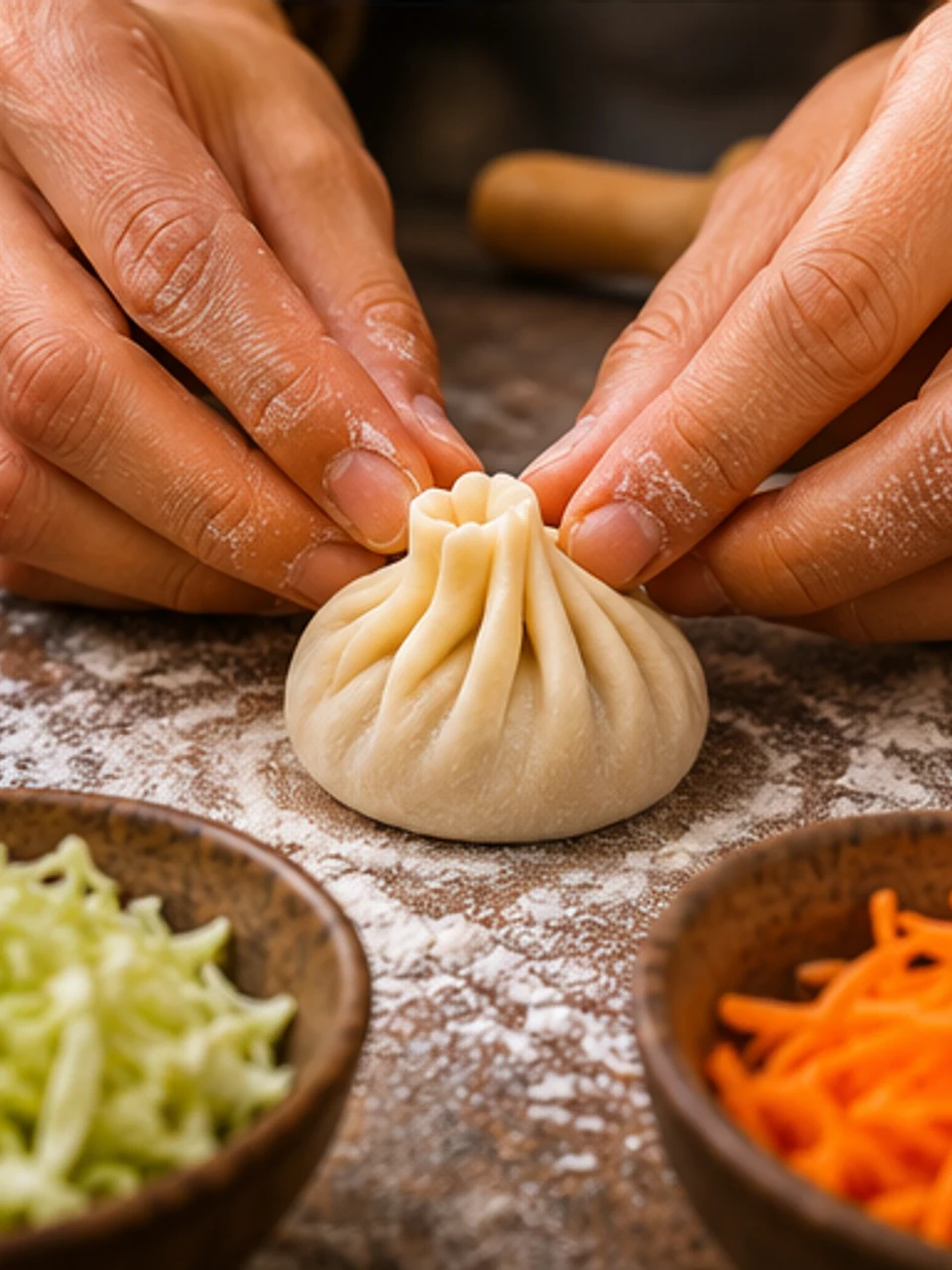
- Hold a half-filled wrapper in one hand.
- Bring one short section of the top rim onto the opposite rim and pinch.
- Make small, overlapping folds along the top edge while keeping the opposite side relatively smooth.
- Press every pleat against the back edge and close both tips.
This creates a gentle curved silhouette. A few even pleats look more intentional than many loose ones. Begin with four or five folds and add more only as your hands become comfortable.
Shape 3: the gathered round momo
- Rest the filled wrapper in the palm of one hand.
- Gather a small section of the perimeter with the other hand.
- Continue around the circle, folding the new section against the previous one.
- Pinch the gathered top closed so no filling is visible.
The classic gathered look needs a little practice. Overstuffing makes the final top knot thick and difficult to cook; use less filling until your folds are consistent.
Shape 4: simple pinch-seal pockets
For a faster alternative, fold the round into a half-moon and press small ridges along the seam using thumb and forefinger. The ridges need not be decorative; they must form one continuous closure. This suits a casual home supper when beautifully pleated tops are less important than a neatly cooked, intact dumpling.
Troubleshooting: why the seams open
If wrappers split after they enter the steamer, use our guide to why momos burst while steaming to distinguish seam, filling and tray issues.
| Symptom | Likely reason | Better approach |
|---|---|---|
| Dough cracks | Dried surface or dough too firm | Keep covered; review water and rest |
| Filling leaks | Too much filling or an oily rim | Reduce portion; keep edges clean |
| Top feels doughy | Too many thick overlapping folds | Roll edges thinner; pinch smaller pleats |
| Momos stick together | Pieces stored touching | Leave space on an oiled tray |
Once shaped, use gentle steaming rather than a vigorous rolling boil to protect the seams. Raw meat fillings require safe cook-through; for poultry, 74°C (165°F) is the safe minimum internal temperature.
The Momo Crown perspective
The beauty of a momo is in its considered simplicity: a well-balanced wrapper, a thoughtfully seasoned filling and an intentional seal. Learn how different forms relate to serving styles in our guide to 15 momo varieties. These basic folding techniques can help home cooks practice a reliable, attractive seal.
Understand the Wrapper Before Choosing a Fold
A good folding session begins with a wrapper that can bend without cracking. A typical wheat momo wrapper is rolled into a round with a sturdy enough centre for the filling and a relatively thin edge for sealing. If the edge is very thick, several overlapping pleats can form a doughy knot; if the whole wrapper is paper-thin, a coarse vegetable filling may puncture it.
Rest the dough covered before rolling. Work with a few rounds at a time and keep the unrolled dough under a lid or clean cloth so it does not dry out. If a wrapper springs back as you roll, cover it and allow more relaxation time rather than pressing hard enough to tear the surface. A small amount of flour can prevent sticking, but excess dry flour on the rim may weaken the seam.
When learning how to fold momos, start with a small amount of finely prepared filling that can sit in the middle without dripping. Place it with a clean spoon and keep a clear border around the edge. Fold one sample dumpling and test whether the seam remains closed when it is lifted gently. Making a few practice pieces is more useful than trying to shape an entire tray before checking the dough.
Which of the Four Momo Folds Should You Practise First?
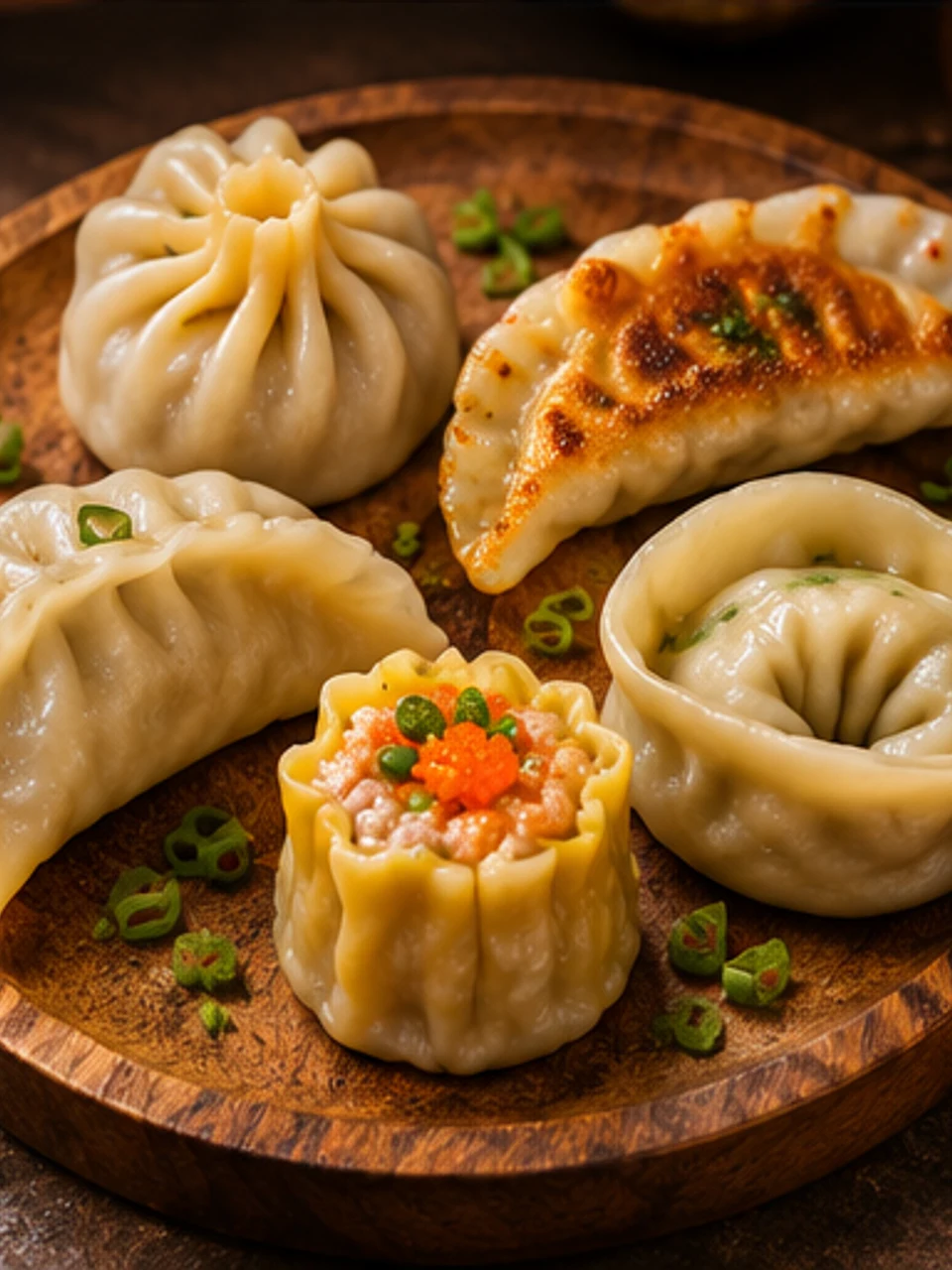
| Fold | Best beginner use | Common difficulty |
|---|---|---|
| Half-moon | First practice with a simple sealed rim | Overfilling can split the straight seam |
| Crescent pleat | A decorative pan-friendly shape | Pleats must be pinched into the opposite edge |
| Gathered round | A pouch-like steamed dumpling | Too many pleats create a thick top knot |
| Pinch-seal pocket | A quick variation for small wrappers | Corners and ends can open if not pressed firmly |
Choose a fold that suits the size and texture of the wrapper. The half-moon offers the clearest starting point because you need to connect only two sides and press the rim together. Once this feels consistent, add two or three small pleats to make a crescent. More complex gathered shapes can follow when your fingers are comfortable handling the dough.
No fixed pleat count determines whether a momo is successful. A clean seam, well-managed filling, fully cooked dough and an enjoyable bite are more meaningful than perfect symmetry. If you are pan-frying a dumpling, a reasonably stable base can be useful; for steaming, spacing and a secure seam matter more than a particular decorative pattern.
A Simple Five-Minute Folding Practice Routine
First minute: Roll two or three small, supple dough rounds and cover the rest of the dough. Check whether the edges are thin enough to pinch and whether any flour residue makes the surface slippery. If the wrappers are dry, review the dough’s hydration and resting time before adding more filling.
Second minute: Place a modest spoonful of vegetable filling in the centre of the first round. Lift one side to meet the other, press the middle closed and pinch outward to make a simple half-moon. Keep the seam clean and avoid stretching dough across a large mound of filling.
Third minute: Repeat with a second wrapper and add a few tiny pleats along one edge. Press each pleat firmly to the opposite edge. If the pleats open, try less filling rather than adding more water to every wrapper. Keep your fingers dry enough to handle the dough comfortably.
Fourth minute: Make a gathered shape by lifting small sections around the filling and joining them at the centre. Avoid pulling too tightly or leaving a thick uncooked crown. Practise the shape only when the dough remains flexible.
Fifth minute: Compare the seams and gently lift each piece. Look for gaps, thin areas and filling touching the edges. Practise correcting one fault at a time. This short routine is a skill-building approach rather than an exact guarantee of speed; the first few folds often take longer.
Why a Momo Fold Opens and How to Correct It
Dry wrapper: The edge cracks instead of stretching. Keep unused dough covered, allow a short rest and check that the flour absorbed enough water. A tiny amount of moisture on a dry rim may help, but soaking the wrapper makes it slippery.
Overfilled wrapper: The rim cannot meet without stretching thin around the filling. Use a little less filling. A smaller dumpling that stays sealed is preferable to a larger one that leaks during steaming.
Wet or oily edge: The pinched seam slides apart. Keep the border clear and make sure the filling is not running onto the wrapper. For cabbage, mushrooms and other juicy ingredients, consult our watery momo filling fixes before folding.
Uneven thickness: A very thin patch can tear when the filling heats, while a thick pleated section may take longer to cook. Roll the wrapper with more even pressure and avoid stacking too many folds in one spot.
Sticking to the tray: The dumpling splits when lifted after steaming. Lightly grease a compatible surface, leave space between pieces and use a suitable broad utensil when removing cooked momos.
What to Do with Shaped Momos Before Cooking
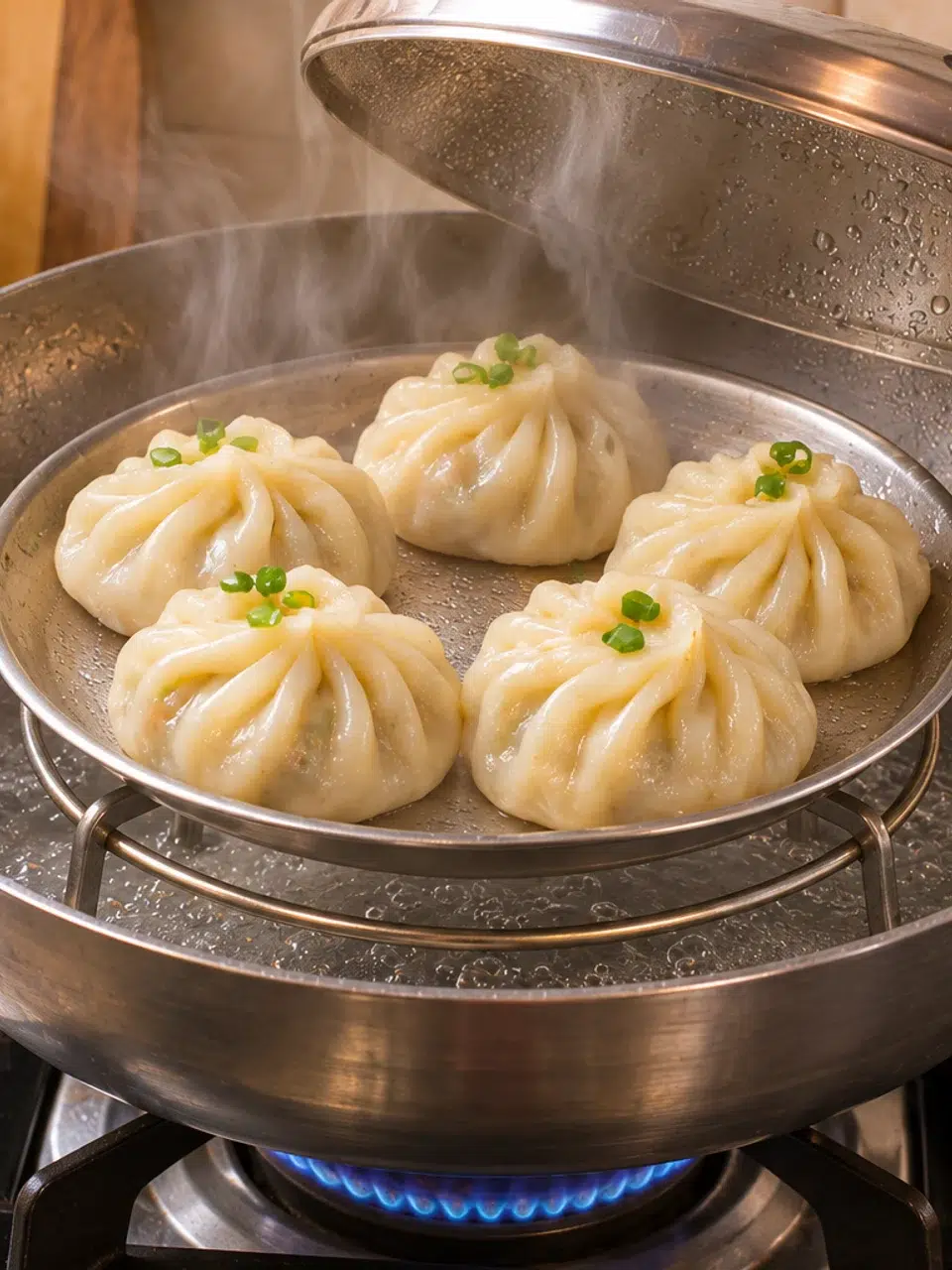
Transfer shaped momos to a clean, appropriate tray with space between each piece. Avoid piling them on top of one another: damp wrappers can stick and tear when separated. Keep the remaining dough covered while finishing each batch. If the filling is perishable, do not leave uncooked pieces sitting at room temperature through a long cooking session.
Cook the first few dumplings thoroughly and inspect the thickest folded areas. A translucent-looking wrapper is not a guarantee that the filling is safe, especially when a raw meat ingredient is involved. Use the appropriate safe cooking temperature for the filling, and for raw poultry check that the centre reaches 74°C (165°F). The home steaming guide covers suitable raised trays and stable cookware.
For a future meal, correctly prepared uncooked momos can be individually tray-frozen and then moved to labelled freezer packaging. Our freezing guide explains how to prevent pieces from sticking together. If you plan to serve immediately, pair the dumplings with a separately served tomato-chilli chutney or another suitable dip.
Learning how to fold momos is a practical kitchen skill: the aim is a secure wrapper that suits your chosen filling and cooks evenly. A neat home-style fold can look different from a professional restaurant dumpling and still be a satisfying result.
Homemade vs Pre-Rolled Wrappers: Folding Differences
Homemade momo dough is often soft and flexible after a covered rest, while packaged dumpling wrappers can have a different thickness, moisture level or flour mixture. Some packaged products are designed for gyoza or wontons rather than momos, so they may not produce an identical texture or cooking result. Read the ingredients and storage directions before substituting them into a home recipe.
If the wrapper feels dry or brittle, work with only a few at a time and keep the rest protected from air according to the product guidance. A tiny amount of water may help a dry edge seal, but soaking the whole round can make it slippery and difficult to handle. If the wrapper is already soft and slightly tacky, extra moisture may make the seam worse.
The right amount of filling also depends on the wrapper size. A small round needs less filling than a large round, and a very thin wrapper may struggle with coarse vegetables. Practise one piece first, lift it gently and check that the rim closes without stretching. For dough-specific guidance, see our soft momo dough troubleshooting guide.
Set Up a Folding Workstation for Friends or Family
When several people help shape momos, assign simple tasks instead of crowding around one bowl of filling. One person can portion the dough, another can roll wrappers, and someone else can seal the dumplings. Keep a clean tray ready for completed pieces, with enough room between them to avoid sticking. Covered dough and a tidy work surface make the session smoother.
Make any dietary requirements visible before beginning. If someone needs a vegetarian or allergy-aware filling, prepare it with suitable utensils, separate ingredients and clearly labelled trays. Do not assume a different folding shape alone can keep allergens apart; shared boards, hands and serving tools also matter. Paneer contains milk, tofu contains soy, and common wheat wrappers contain gluten.
Children may enjoy watching or helping with appropriate supervised tasks, but adults should handle sharp tools, hot steam and raw meat fillings. Work in small batches and refrigerate perishable filling when it is not actively being used. A relaxed session should not turn into hours of uncooked filled dumplings resting at room temperature.
How Steaming, Pan-Frying and Soup Affect Your Fold
Steamed dumplings can use many shapes, provided the edges are sealed and the wrapper cooks thoroughly. A gathered pouch may look attractive, but a very thick top knot can remain doughy while the sides seem ready. Smaller, evenly spaced pleats help avoid excessive overlap. Place the shaped pieces apart on a suitable tray above simmering water.
Pan-fried kothey-style dumplings usually benefit from a stable side that can contact the pan and brown evenly. A crescent shape may be convenient for this, but other sealed shapes can work depending on the pan and preparation. Avoid treating a crisp underside as proof that a raw filling is fully cooked; use the appropriate method and check the centre.
Soup-served momos need seams that stay intact when touched by hot broth. It may help to cook the dumplings thoroughly before adding them to a clear broth so the delicate wrappers do not sit in liquid unnecessarily. Compare our vegetarian momo soup with kothey pan-fried momos for two different serving approaches.
Why a Well-Folded Momo Can Still Split
Even a carefully sealed dumpling can open if the wrapper was overfilled, dried out, rolled unevenly or damaged by a coarse ingredient. A wet filling can weaken the dough from inside, while an oily rim may prevent the sides from bonding. If a folded momo fails during steaming, inspect the location of the tear before changing the entire method.
A split along the seam suggests a sealing or filling-volume problem. A tear in the middle of the wrapper may indicate a thin patch or an ingredient pressing outward. A torn base can happen when a piece sticks to the steamer and is lifted roughly. Each cause has a different correction, so a brief inspection can prevent the next batch from failing for the same reason.
If a dumpling bursts during cooking, first ensure the filling is fully cooked and the food has been handled safely. An imperfect shape may still be edible when the centre is safe, but do not mistake a neat exterior for confirmed doneness. For additional techniques, see our watery filling fixes and safe steaming setup guide.
Frequently asked questions
What is the easiest momo shape?
A simple half-moon fold with one continuous sealed edge.
How much filling should I add?
Only enough to let the rim meet without stretching. Start small and increase as your technique improves.
Do I need to wet the wrapper edges?
Fresh dough often seals when pinched. If the rim is floury and dry, a tiny dab of water may help; too much makes it slippery.