
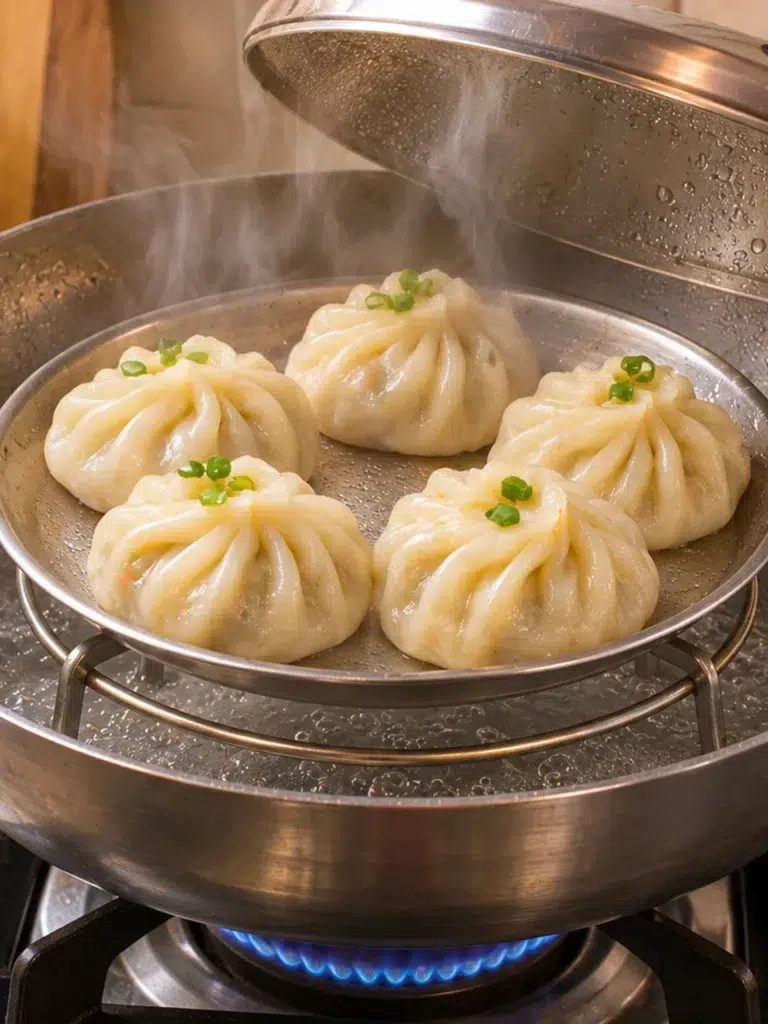
Quick answer: Momos usually stick because damp dough is touching an unprepared tray, pieces are crowded or the wrapper is pulled away before it has set. Lightly grease the steamer surface, leave visible gaps and use a thin utensil to lift cooked pieces gently. Do not solve sticking by drenching the wrappers in oil: tray preparation and timing matter more.
On this page
Why the base clings to the tray
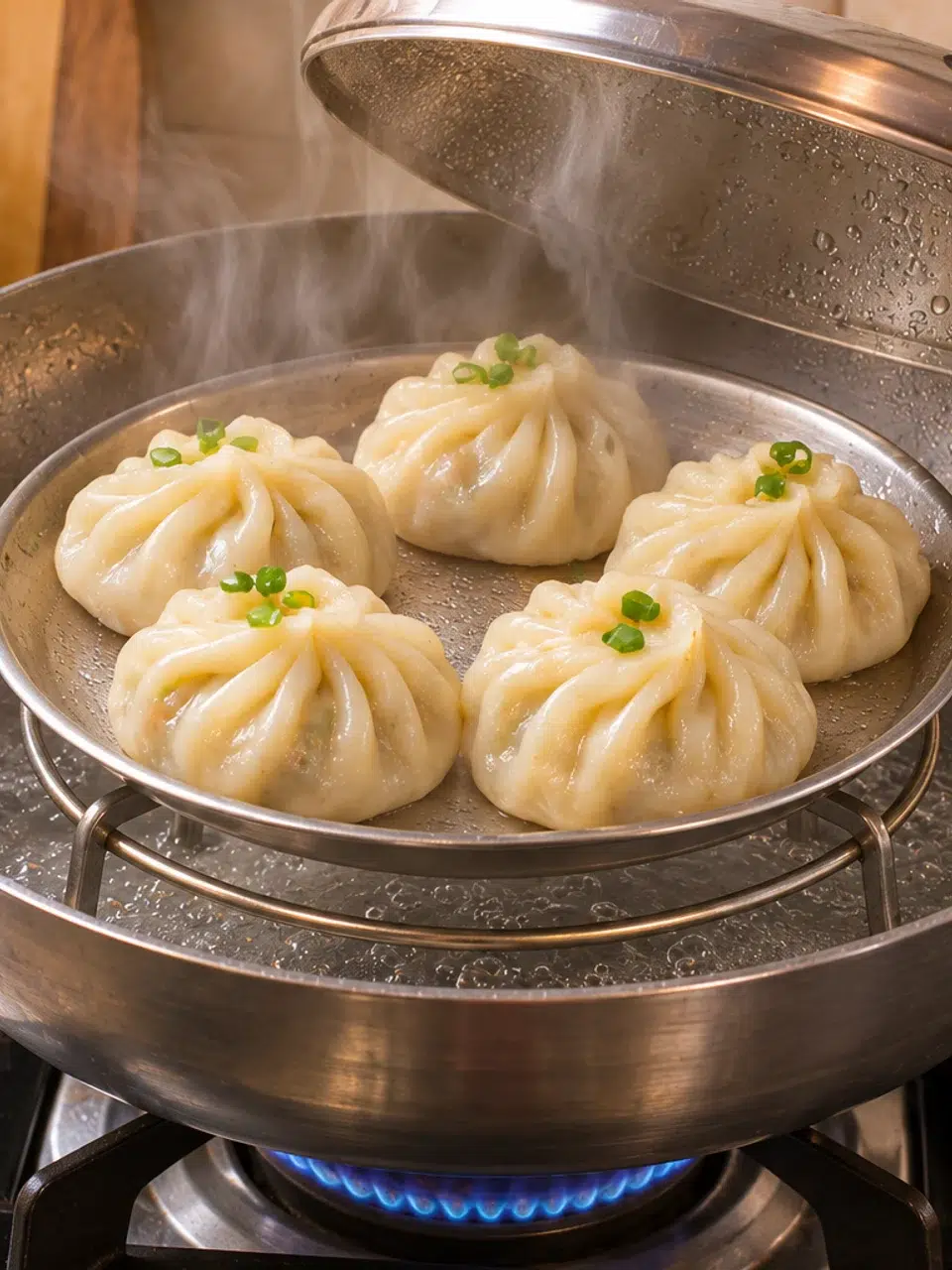
Raw dough contains water and starch. As a dumpling heats, its underside initially stays moist and can adhere to ungreased metal, especially where it sits flat against a solid surface. Overfilling, small gaps and condensation can add to the problem. A wet, partly open seam may also leak vegetable juices that act like glue.
Some sticking is a routine kitchen problem—not proof the dough recipe has failed. The trick is to reduce surface contact and lift at the right moment.
Seven fixes that make the biggest difference
- Lightly oil the surface. Use a very thin film of neutral cooking oil on the perforated tray; oil does not need to pool.
- Use perforated food-safe parchment. Leave enough open holes for steam to rise. Do not use heat-unsafe paper or plastic.
- Keep a gap around every momo. They can expand slightly and stick to their neighbours if crowded.
- Roll evenly. A thick, gummy base takes longer to cook than a thin edge.
- Keep the water below the tray. Dumplings in direct contact with water are more likely to become soggy.
- Do not keep opening the lid. Maintain steady steam rather than repeatedly cooling and wetting the surface.
- Lift from underneath. Slide a slim spoon or spatula under the base instead of tugging the top pleats.
How to rescue momos that are already stuck
Switch off the heat and carefully open the lid away from your face. Give the cooked dumplings a short moment to settle, then loosen each base with a thin, heat-safe spatula. If the tray has cooled and the momos remain glued down, use a little warm water at the contact point and carefully work underneath; avoid soaking the whole batch. A torn wrapper is still edible if its filling was safely cooked and handled, but keep any filling that spills onto an unclean surface out of the serving dish.
Never lift an unstable insert by the dumplings or force a hot tray with bare hands.
Choose a liner that actually allows steam through
| Tray setup | Benefit | Watch out for |
|---|---|---|
| Lightly greased metal | Easy, minimal extra equipment | Too little oil near the base |
| Perforated food-safe parchment | Reduced surface adhesion | Blocking every steam hole |
| Purpose-made silicone steamer liner | Reusable, easy release | Temperature compatibility and airflow |
| Food-safe cabbage leaf | Gentle barrier, adds a little aroma | Leaf tearing or blocking steam |
Use only clean, food-safe liners suitable for the equipment and temperature. For improvised steaming setups, see our kadai, pot and idli-stand guide.
What to change if the wrapper is the real issue
A dough that is too wet can adhere to your hands, rolling board and steamer; dough that is too dry can split during folding. Flour absorption and resting both matter. The soft momo dough guide explains how to add water gradually and keep dough covered. For filling control, the article on watery momo filling covers salting and moisture management.
Serving, storage and safe handling
Serve cooked momos on a clean platter and keep chutney separate until the last moment. If not serving immediately, follow proper hot-holding or prompt refrigeration practices; food safety is not improved by letting trays sit at room temperature. FoodSafety.gov’s four-step guide covers clean preparation and chilling. For leftovers, see reheating momos without drying them out.
Why Steel, Bamboo and Improvised Steamer Surfaces Behave Differently
A stainless-steel or aluminium steamer is easy to clean, but an unprepared flat section can cling to wet wheat dough. Tiny holes help steam circulate, yet they can also catch very thin wrappers if a dumpling is pressed into the opening. A little oil on the surface can form a release layer. The goal is a lightly coated tray, not a pool of oil that changes the wrapper’s flavour and makes the dumplings slide around.
A bamboo basket often uses a liner or leaf to keep soft dumplings away from the woven surface. Any leaf must be food-safe, clean and suitable for heat; a random garden leaf is not an appropriate substitute. If using parchment, choose food-safe paper rated for steaming and leave openings so steam can reach the dumplings. A solid sheet covering every vent may produce uneven cooking.
A makeshift kadai or large pot can also hold an appropriate raised tray. The tray must be stable, well above the water and compatible with the pot and lid. Do not balance a plate on improvised objects that could tip into boiling water. Our pot and kadai steaming guide explains the basic setup.
Prepare the Tray Before the First Batch
Start by washing and drying the steamer tray according to the equipment instructions. Remove residues from previous cooking that can act like sticky patches. Apply a thin film of suitable cooking oil to the areas where the dumplings will touch, or use an approved perforated liner. A small brush can make the layer more even than pouring oil directly over the tray.
Arrange shaped momos with space around their bases and pleats. Crowding lets neighbouring wrappers touch and glue together as they cook. If you are filling several trays, check whether the steamer is designed for stacking and whether all levels receive steam. Do not assume the top layer cooks at the same rate as the bottom; verify doneness as appropriate.
Bring the water to a steady simmer before loading the basket unless the recipe or equipment requires otherwise. Place the basket carefully over the water and cover it. Avoid lifting the lid every minute, which interrupts cooking and can drip condensed water onto delicate wrappers. If the pan threatens to boil dry, stop safely and replenish according to the appliance instructions.
How to Lift Cooked Momos Without Tearing the Base
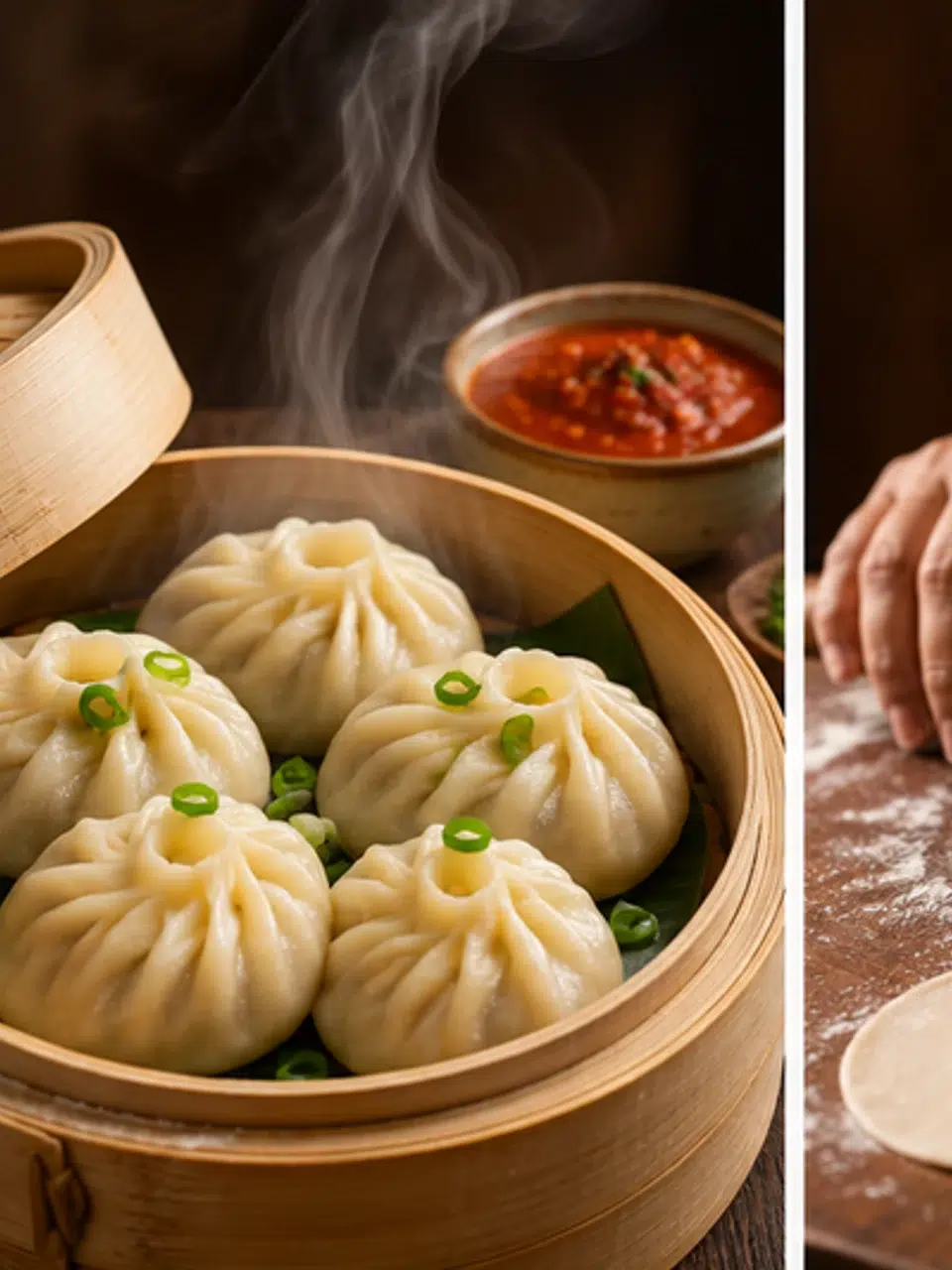
Once the dumplings are fully cooked, take the basket off the heat safely. Give the hottest steam a moment to escape before reaching in. Loosen each dumpling from underneath with a thin, appropriately shaped spatula or broad spoon instead of pulling upward by the pleated top. This supports the base, where sticky contact is most common.
If a wrapper is resisting, do not yank it. Gently work the utensil around the perimeter and examine whether filling has leaked through the bottom. A small brief rest can sometimes help the wrapper settle, but it should not become prolonged room-temperature holding of perishable cooked food. Use clean serving plates and a dedicated utensil rather than moving pieces to a board that has held raw fillings.
A few irregular wrappers do not mean the meal is ruined. If the filling and wrapper are cooked safely and cleanly handled, a torn dumpling can be served as part of a warm broth bowl or eaten carefully with a spoon. The issue to fix for the next batch is the tray contact, not the visual perfection of the previous plate.
What Dough Hydration and Wrapper Thickness Change
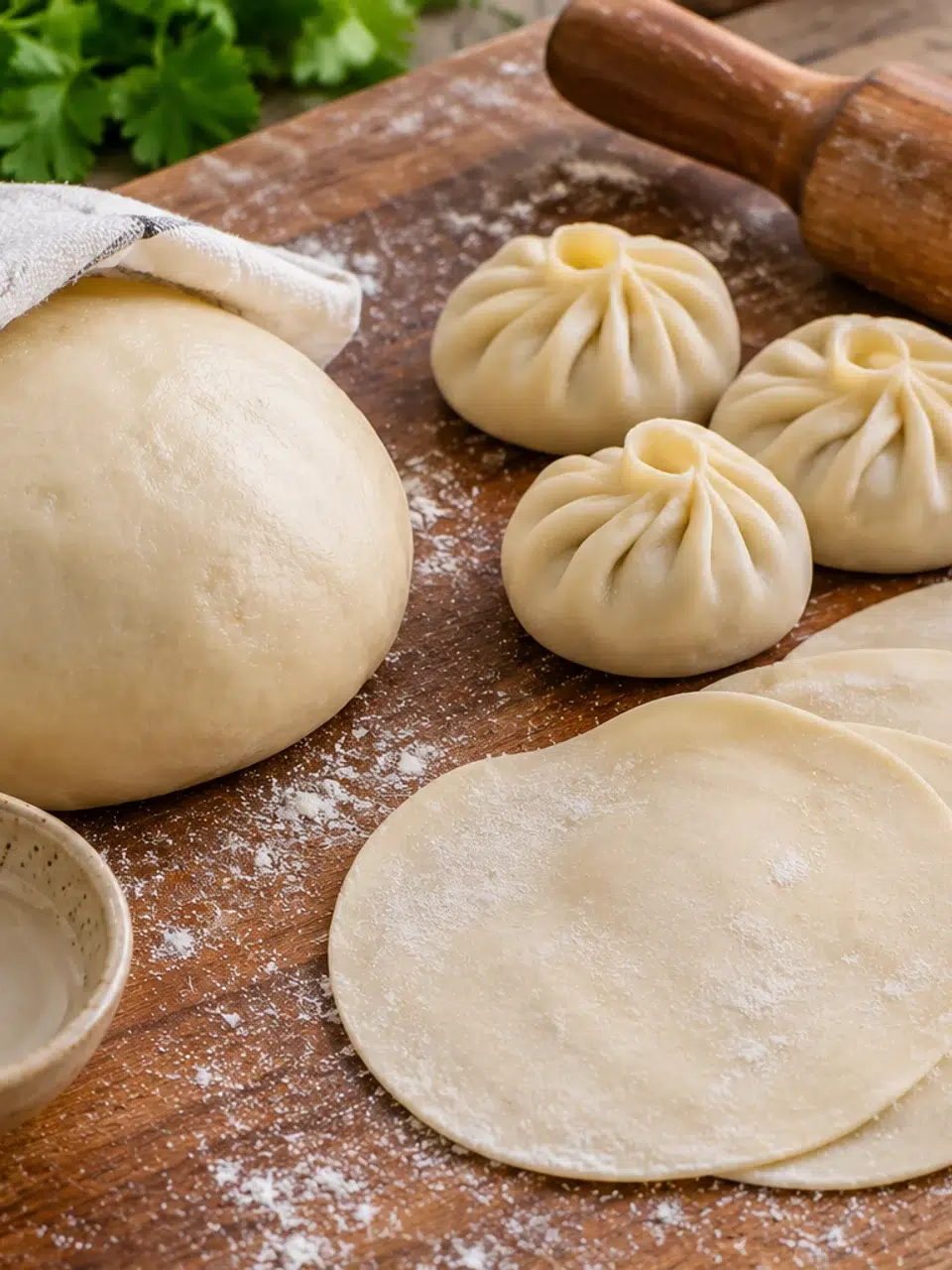
Very wet dough may spread and cling more firmly to a tray, particularly if the base is stretched thin. A dough that is too dry presents a different problem: cracks and weak folds can leak filling, which then sticks to the tray. The useful middle ground is a smooth, rested, pliable dough that can be lifted without breaking. Resting time and the type of flour both affect this feel.
Try rolling the centre strong enough to carry the filling and the perimeter slightly thinner for pleating. If the bottom becomes translucent before you have added filling, it may be too delicate for a wet vegetable mixture. If the top knot is heavy and the base is thick, cooking may be uneven even though sticking is less obvious. Our wrapper thickness guide explains these trade-offs.
Excess flour on a shaping board is also not a perfect solution. It can keep raw pieces from attaching to the counter, but loose flour may become pasty against steam or collect in folds. Use only enough dusting to roll smoothly and shake off obvious excess before placing the dumplings on the prepared steaming tray.
Leaking Filling Can Make the Steamer Sticky
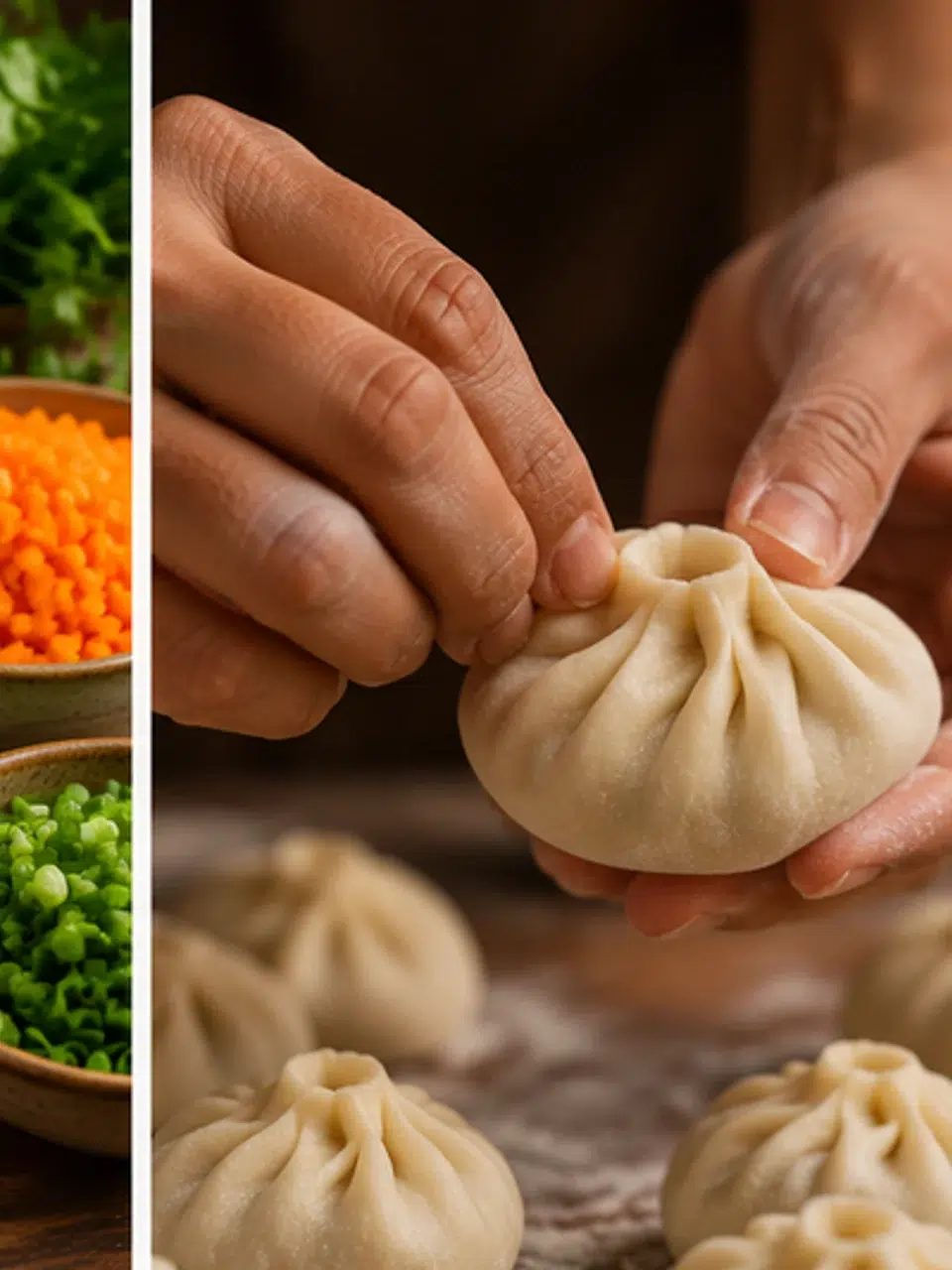
Finely chopped cabbage, onion and mushrooms may release moisture after seasoning. If that liquid reaches the seam and spills during steaming, it can act like glue between the wrapper and the tray. A dumpling with a small hole may stick even on a lightly greased surface. Before blaming the steamer, inspect the filling texture and whether any raw pieces leaked during loading.
Keep a clean border around each wrapper when filling. Season vegetables closer to folding time or manage excess water according to the recipe. Do not overstuff a round so aggressively that the seams cannot meet. If a filling is visibly wet, remove free liquid before making the next batch instead of adding more oil beneath the dumplings.
For detailed ingredient adjustments, see our watery momo filling fixes and four beginner momo folds. Both are more useful than blindly extending the steaming time when the problem began with a weak, wet seam.
A Troubleshooting Checklist for Stuck Momos
| What you notice | Likely cause | Best next check |
|---|---|---|
| Whole base adheres to bare steel | Unprepared tray | Lightly oil or use suitable perforated liner |
| Two momos pull apart together | Not enough space | Leave gaps between raw pieces |
| Wrapper tears at a steamer hole | Very thin base or unsuitable tray opening | Improve base thickness and liner arrangement |
| Sticky liquid around the seam | Leaking wet filling | Control filling moisture and seal |
| Only the first batch sticks | Tray not prepared or heated consistently | Repeat cleaning, oiling and setup checks |
Change one variable at a time. For example, if a batch of 10 momos sticks to a bare tray, test a smaller batch on the same clean tray with a light oil film and better spacing. If the wrappers still tear, inspect the dough rather than pouring more oil over every surface. This makes the process easier to learn and reduces wasted food.
When a liner is involved, check that steam can pass through its openings and that it cannot contact direct flame or an exposed heating element. Equipment safety should always take priority over a perfectly shaped dumpling.
How to Prevent Sticking When Cooking for a Group
For a family event, a large crowded steamer may appear faster, but overloaded trays can create more torn wrappers and uneven cooking. Set up smaller batches with a predictable rhythm: prepare the tray, place the dumplings apart, steam thoroughly, remove safely and start the next round. Keep uncooked perishable fillings appropriately refrigerated between batches rather than leaving everything on the worktop until service.
Have a clean receiving platter ready before lifting the cooked dumplings. Place each batch gently with some space around the pieces. If guests want sauces, serve them in separate labelled bowls to keep wrappers from softening before eating. For allergy-aware service, use separate utensils and verified ingredient information; a lightly oiled steamer tray does not remove wheat, milk or other allergens from a recipe.
If cooked momos must wait, use appropriate safe holding or promptly refrigerate and reheat. A switched-off steamer does not reliably maintain safe hot-holding temperatures. Our party momo checklist and leftover storage guide cover these decisions.
Six Mistakes That Make Momos Stick More Often
Before the next batch, compare the steamer setup with how the previous pieces behaved. Did the first dumpling attach to a bare patch of metal while the others lifted cleanly? Did several pieces tear only where they touched one another? Was filling leaking from the underside before cooking finished? Each observation points toward a different cause, so avoid making several large changes without knowing what failed.
For a new home steamer, it is useful to cook a short trial of three or four pieces. Prepare the surface lightly, leave generous gaps, then cook completely. Lift one cooked momo from beneath with a suitable utensil and examine the base. If it releases easily, repeat the arrangement for a larger batch. If it sticks, check tray material, liner placement and wrapper moisture before preparing the next round.
Use a clean, appropriately heated steaming setup rather than assuming that more oil or a longer timer solves every issue. The combination of a stable pot, a compatible tray, safe steam circulation and a well-sealed filling protects both texture and safe cooking. For a raw chicken filling, verify the centre reaches 74°C (165°F) independently of whether the wrapper looks translucent or slides easily off the basket.
1. Filling the steamer before preparing the surface
Raw dough meets unprepared metal and begins to bond as it heats. Clean the tray, oil lightly or use an approved perforated liner before loading.
2. Pressing dumplings together
Momos can attach to each other even if the tray releases well. Leave enough space to lift each dumpling without disturbing the neighbour.
3. Covering every steam hole with solid paper
The liner may prevent direct contact but block circulation. Use appropriate perforations or a liner designed for the basket.
4. Pulling the dumpling up by its top knot
The base stays attached while the dough stretches and tears. Work a broad utensil gently beneath the cooked dumpling.
5. Ignoring the filling’s free liquid
Leaks can cause sticking around seams. Use appropriately prepared vegetables and seal the rim cleanly.
6. Trying to rescue undercooked dumplings by lifting early
A partly cooked wrapper may be fragile. Finish cooking safely first, then release it gently. For raw poultry fillings, verify a centre temperature of 74°C (165°F) where appropriate.
Frequently asked questions
Can I line a steamer with ordinary baking paper?
Only use parchment that is rated safe for your steaming temperature, and provide holes for steam circulation. Do not let paper contact a flame or heating element.
Why do momos stick even when I use oil?
Crowding, leaked filling and undercooked dough at the base can still cause sticking. Use gaps and release from underneath.
Should I let the momos cool before removing them?
A brief rest can make lifting easier, but do not leave perishable cooked food sitting out for a long period.
Evidence and further reading
For a broader view of Himalayan-inspired food, explore momo styles and Momo Crown’s official menu. Opening status and availability should be checked on the locations page.