
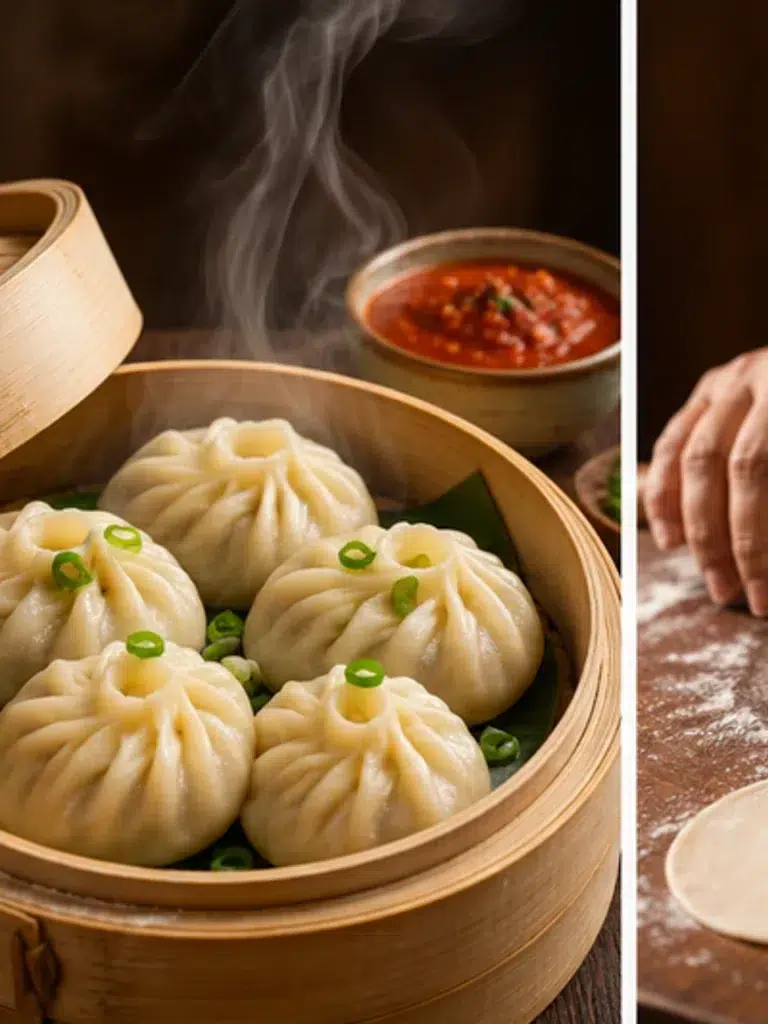
Chicken momos recipe — quick answer: Chicken momos bring seasoned minced poultry into a supple wheat wrapper. The culinary challenge is balancing juicy filling with a clean seal; the non-negotiable safety step is cooking the chicken filling to 74°C (165°F) at its centre, measured with a food thermometer. Follow the measured ingredient guide below, and check the centre of each batch with an appropriate thermometer.
On this page
Ingredients
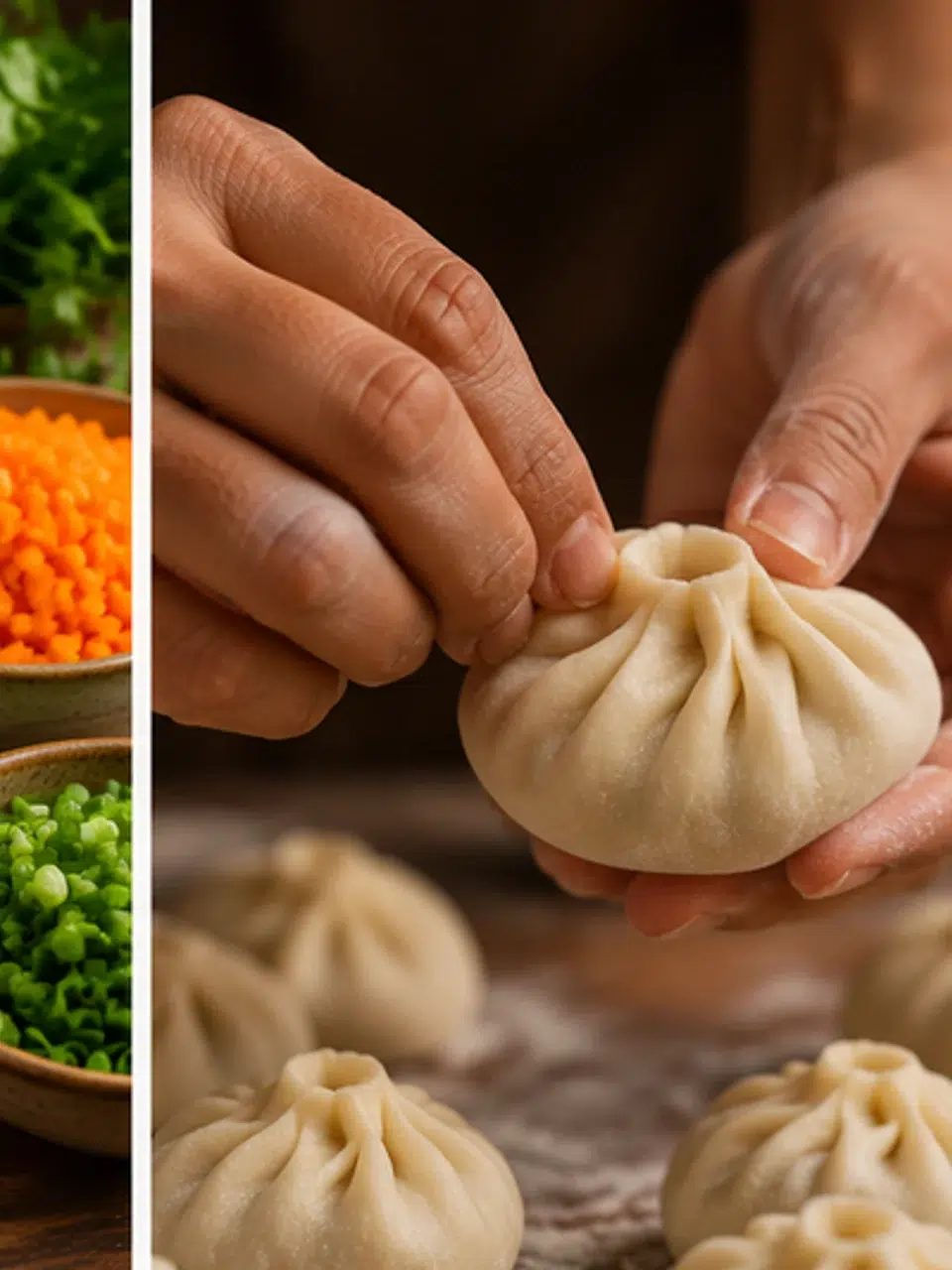
Wrapper
- 150 g plain wheat flour
- 65–85 ml water, approximately
- ¼ tsp salt
Raw chicken filling
- 200 g fresh ground chicken, kept refrigerated until use
- 30 g finely chopped spring onion
- 1 tsp grated ginger
- 1 small garlic clove, optional
- ¼ tsp black pepper
- ½ tsp soy sauce, optional
- ¼ tsp salt or as needed (avoid tasting raw mix)
- 1 tsp neutral oil, optional
Step-by-step method
- Wash hands and prepare a clean separate work area for raw poultry. Keep chicken refrigerated at 4°C or below until you are ready to fill.
- Knead flour, salt and water into a firm pliable dough. Rest covered while preparing a dedicated clean work surface.
- Finely chop aromatics on a clean board, then add them to raw ground chicken in a separate bowl with the remaining seasoning. Never taste raw chicken filling.
- Roll small dough circles; place a modest spoonful of raw mixture into the middle, seal securely and keep the assembled raw pieces chilled if there will be a delay.
- Steam with adequate separation and steady heat. Use a suitable narrow-probe food thermometer in the centre of the largest piece: chicken must reach 74°C (165°F).
- Serve cooked momos with clean utensils and sauce kept separate from raw meat equipment. Chill any cooked leftovers promptly.
Why a clock alone does not prove chicken is safe
Filling volume, cold temperature, wrapper thickness and steaming performance differ between kitchens. The FoodSafety.gov temperature chart gives 74°C (165°F) for all poultry, including ground poultry. The USDA’s ground poultry handling advice also stresses proper cleaning and separation. Split a sample piece to reach the centre with a clean, suitable probe if necessary.
Do not wash raw chicken
Washing raw chicken in the sink can spread bacteria through splashing. Instead, keep raw chicken separate from ready-to-eat foods, wash hands after handling it and sanitise the preparation area. Use a separate cutting board for vegetables or prepare vegetables first and clean thoroughly before touching chicken. FDA safe-handling guidance covers preventing cross-contamination.
The filling should be balanced, not watery
Finely chopped spring onion and ginger give flavour without large hard pieces. Avoid adding extra liquid in pursuit of juiciness; a sealed wrapper should contain moisture without leaking. Do not taste the raw mixture for salt. Cook a small spoonful fully in a pan if you need to assess seasoning before filling the wrappers.
What about freezing chicken momos?
Freeze raw pieces promptly in separated layers rather than letting raw poultry sit at room temperature during a long shaping session. Label them clearly as RAW so a later cook does not treat them as pre-cooked dumplings. When cooking from frozen, follow a method that brings the poultry filling to 74°C; see raw versus cooked frozen momos for a dedicated explanation.
Choose a suitable sauce and serve promptly
The currently published Momo Crown menu is focused on listed vegetable and related varieties; this home article does not claim a chicken momo item is offered at a location. Check verified details on the locations page before visiting.
Prepare a Chicken Momo Workstation Before Mixing
Start with a clean counter, separate utensils for raw poultry, and a dedicated bowl for the filling. Keep ground chicken refrigerated until you are ready to mix it. Chop spring onion, ginger and other vegetables on a clean board before handling raw chicken so you are not moving repeatedly between raw poultry and ready-to-eat ingredients. Set aside one spoon for the filling and another for cooked food.
Weigh the flour and prepare a covered dough bowl. Momo wrappers are most pleasant when they are flexible enough to seal without becoming thick at the pleats. Add water gradually and knead until the dough comes together, then let it rest covered. The exact water need depends on flour and humidity, so a small adjustment is more reliable than adding all the water at once. Read our soft momo dough guide if your wrapper cracks or springs back.
Before folding, make sure the steamer is ready and can be safely covered. Use a compatible raised tray with enough capacity to space each momo. Have a separate clean platter for cooked dumplings; do not place them back on the board where raw chicken was handled. Good preparation reduces both cooking mistakes and cross-contamination.
Choosing and Seasoning Ground Chicken for Momos
Choose ground chicken from a reliable refrigerated source and follow its package handling instructions. Freshly minced poultry may vary in fat and moisture, so inspect the mixture rather than promising one universal texture. A little finely chopped spring onion and grated ginger can provide brightness; optional garlic and pepper add warmth. Keep the seasoning balanced so the chicken remains the main ingredient.
A filling should be soft enough to spoon but not contain a puddle of liquid. If you add a bottled sauce, measure it: soy sauce and chilli sauce contribute salt as well as moisture, and soy sauce may contain wheat. The recipe works without such sauces if you prefer a simple ginger-and-spring-onion profile. For a guest with an allergy, inspect the exact ingredients of the filling, wrapper and dip.
Do not taste raw chicken filling to judge salt or spice. Instead, take a small spoonful, cook that sample thoroughly to the safe poultry temperature, then taste it with a clean utensil. Adjust the remaining raw mixture without transferring the tasting utensil back into the bowl. This small habit gives you flavour feedback without taking an unnecessary food-safety risk.
Roll a Wrapper That Supports a Juicy Chicken Filling
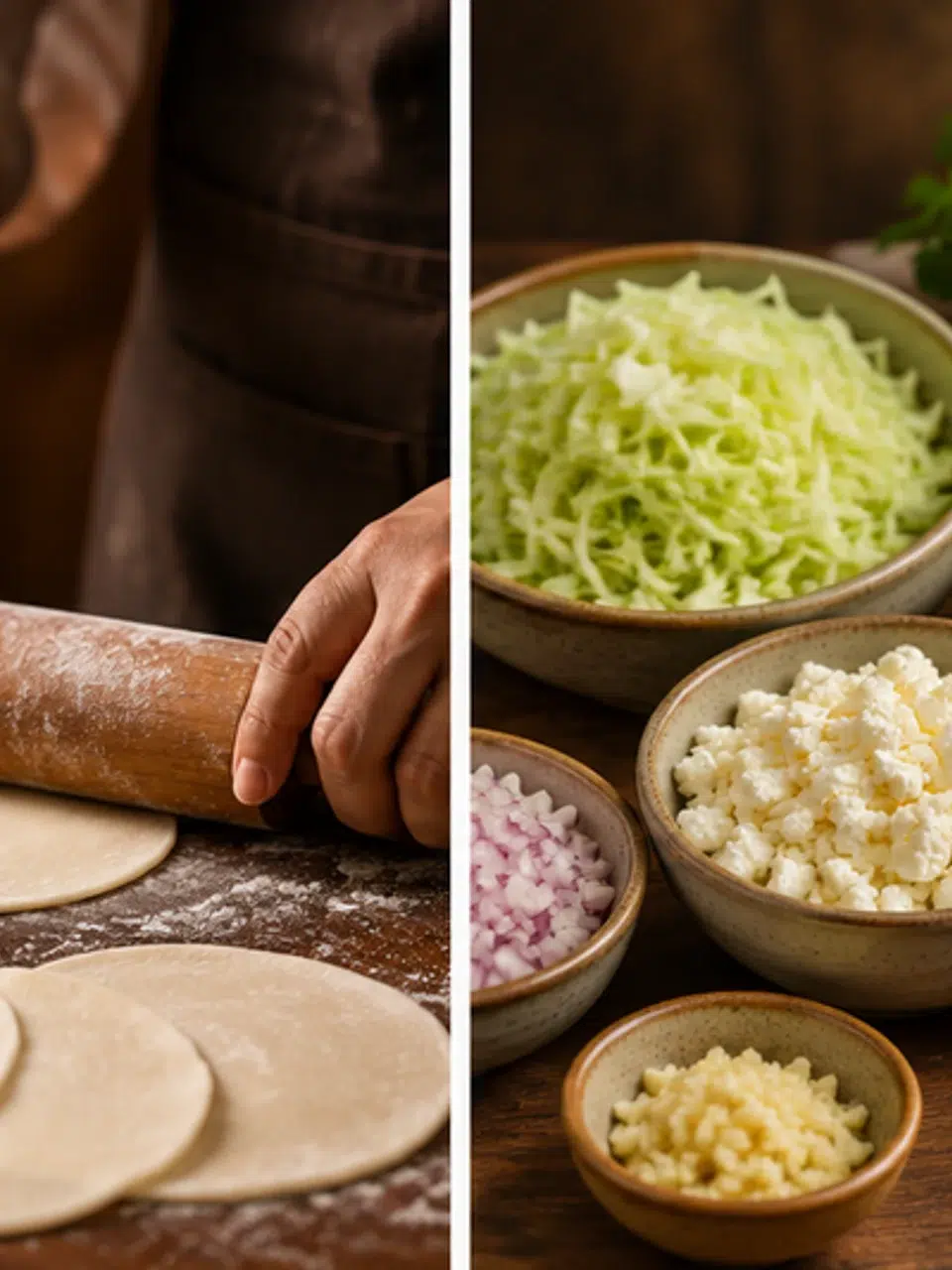
Divide rested dough into small portions so all dumplings have roughly similar thickness. Work with a few dough balls at a time while leaving the remaining dough covered. Roll the centre slightly stronger than the outer edge, which is folded into several layers when the wrapper is sealed. A very thick rim can produce a chewy pleated knot; an extremely thin middle may rupture when the raw filling warms.
Place only a moderate amount of cold chicken filling in the centre. Leave a clean border around the round, and pinch the edge firmly with dry, clean fingers. A half-moon fold is a good first attempt. If you want more decorative pleats, add small, even folds rather than gathering excessive dough into a thick crown. See four beginner momo folds for visual shape guidance.
Do not let shaped raw chicken momos accumulate on the counter for a prolonged period. Work in manageable batches and keep perishable filling chilled between rounds. Place the pieces apart on a suitable tray and avoid stacking them on top of one another. Prepared raw chicken must remain separate from the plates and utensils intended for cooked dumplings.
Steam Chicken Momos Evenly in Manageable Batches
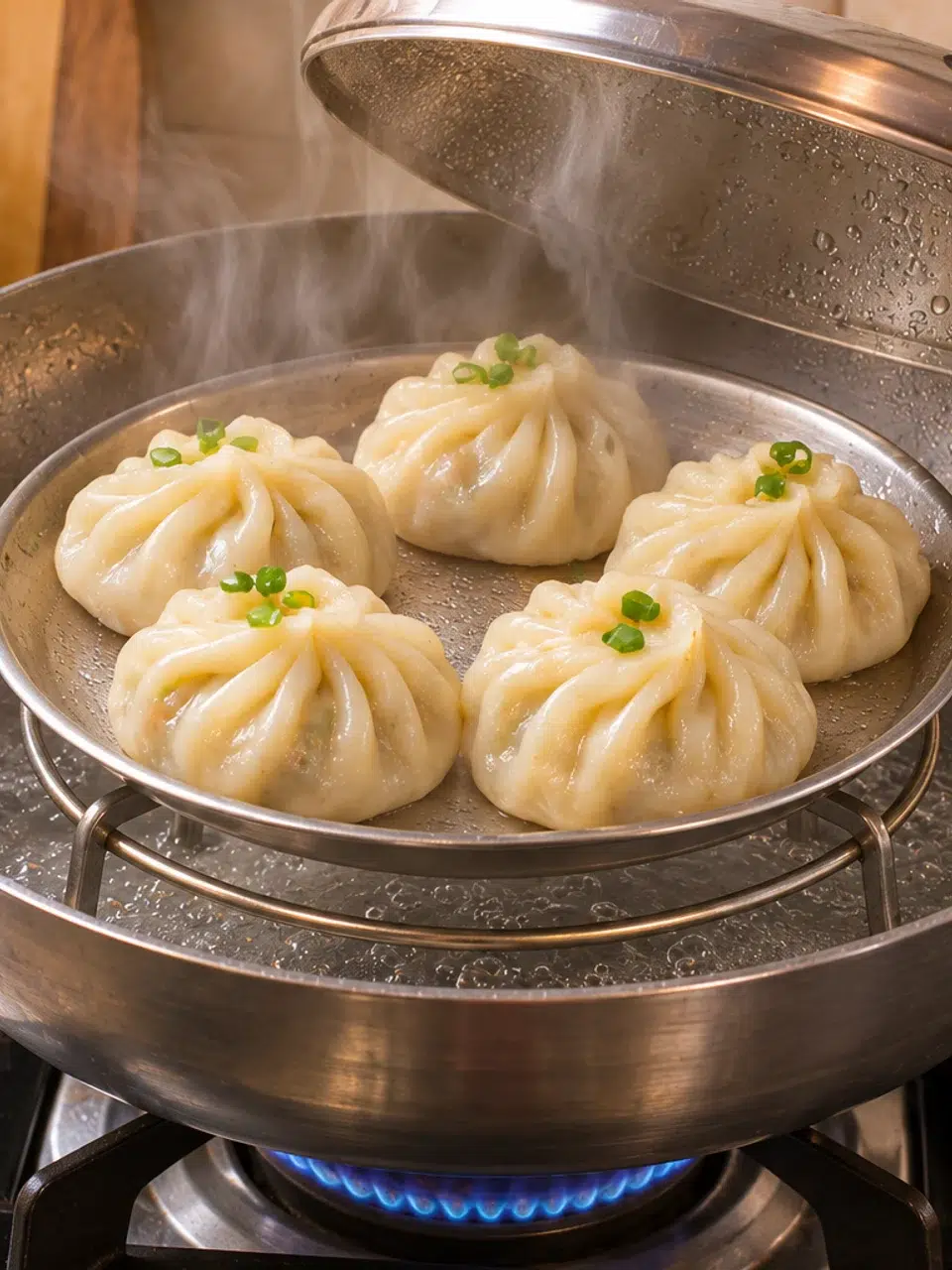
Prepare a stable pot or steamer according to the equipment instructions. Water should sit below a raised steaming tray so dumplings are heated by steam rather than immersed in a boiling pot. Lightly grease a suitable tray, or use an approved perforated liner, and leave room between pieces for circulation. Do not block all the steam holes with unperforated paper.
Cover and cook the momos completely. Avoid relying on one fixed number of minutes because wrapper thickness, the amount of raw chicken, basket size and the starting temperature all vary. Steaming should make the wrapper supple, but a translucent or glossy outside is not proof of a fully cooked filling. A thick pleated top may take longer to cook through than a thin sidewall.
Once the first small batch appears ready, use a food thermometer to confirm that the centre of the poultry filling reaches 74°C (165°F). If the filling is not there yet, continue cooking and check again. Lift cooked momos with a clean broad utensil onto a clean plate, not the raw-chicken work surface. For a basic pot arrangement, consult how to steam momos without a dedicated steamer.
How to Check Chicken Momo Temperature Correctly
Use a clean food thermometer with a probe suitable for small portions. Insert the tip into the thickest accessible part of the chicken filling, not merely the wrapper or the metal steamer tray. For very small dumplings you may need to open one piece carefully so the tip can reach the centre. Check pieces of different sizes, especially if some have much more filling than others.
USDA food-safety guidance says ground poultry should reach 165°F (74°C) internally. That temperature is a safety endpoint, not a recommended time on a clock. A pale-looking filling can be undercooked, and a hot wrapper can conceal a cooler centre. Colour and clear-looking juices are less dependable than an appropriate thermometer reading.
Keep the thermometer clean and wash it according to instructions after contact with raw or partially cooked food. Avoid using the same probe on a ready-to-eat dish without cleaning it. If you are preparing many pieces for guests, cook in batches and check the batch rather than assuming the first dumpling’s reading applies to a crowded second tray.
Prevent Raw-Chicken Cross-Contact in the Momo Kitchen
Raw poultry can contaminate hands, chopping boards, sinks and handles. Do not wash raw chicken under running water: splashes can spread microbes to nearby surfaces. Instead, handle it directly from suitable packaging, wash hands thoroughly with soap after touching it, and clean work surfaces and utensils with appropriate methods. Use a separate board or wash it thoroughly before preparing fresh herbs and sauces.
For an event with vegetarian guests, do not assume that using a different filling means the food is free from cross-contact. The same spoon, knife, tray or preparation surface can carry raw meat juices. Prepare suitable vegetarian ingredients separately with clean equipment, and label the cooked platters and sauces clearly. Verify the whole preparation when someone needs a strict dietary separation.
Raw flour is also a food ingredient that requires cooking. Do not taste the wrapper dough or let children eat raw scraps. The FDA cautions that untreated flour can carry microbes and that raw dough should not be eaten. After folding, wash hands, counters and utensils before handling ready-to-eat foods.
Freezing Raw Chicken Momos and Storing Cooked Leftovers
For raw assembled momos that you will cook later, freeze promptly on a clean lined tray with the pieces separated. Once firm, transfer them into suitable airtight freezer containers and label the filling and date. Keep them at appropriate freezer temperatures and do not treat freezing as a remedy for raw poultry that has already been mishandled or held warm too long. Our uncooked momo freezing guide explains the tray method.
Cook raw frozen chicken momos thoroughly using suitable instructions for their size and filling; they may take longer than fresh pieces. Recheck the filling’s safe internal temperature rather than stopping when the wrapper looks ready. If you are using a commercial frozen product, follow the maker’s package directions. See how to cook frozen momos to distinguish raw food from previously cooked frozen dumplings.
For cooked leftovers, move suitable portions into clean shallow containers and refrigerate promptly within normal food-safety limits. Properly refrigerated cooked leftovers are generally used within three to four days, and should be reheated thoroughly to 74°C (165°F). If a platter was left at room temperature too long, discard it rather than reheating it for another meal.
Choose a Sauce for Chicken Momos Without Hiding the Filling
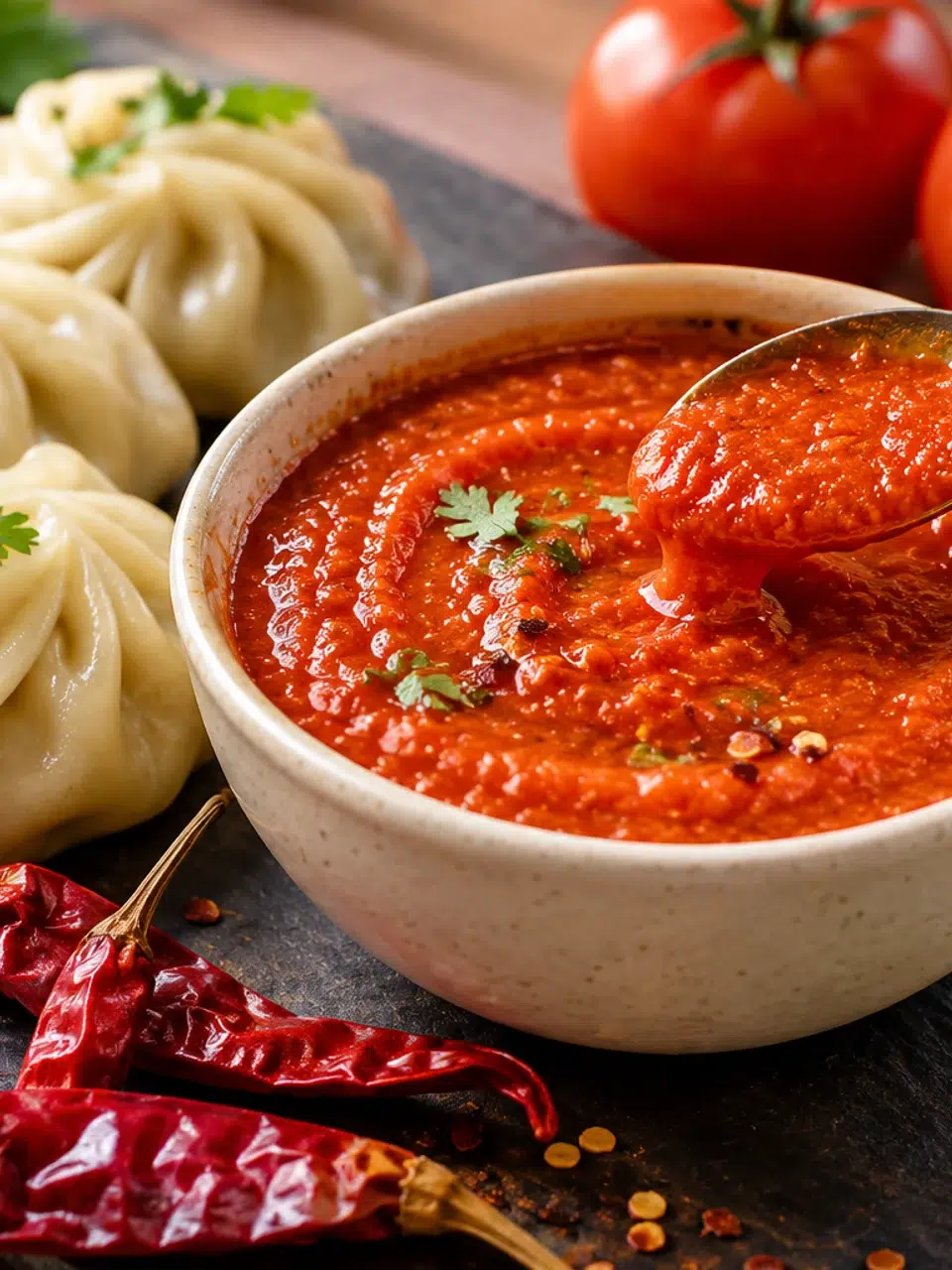
Ginger-seasoned chicken momos often work well with a bright tomato-chilli dip, which can balance the savoury filling. A milder tomato-ginger version suits diners who prefer less heat, while a sesame or peanut-based achar adds richness. Keep the dip separate so guests can control the balance. Sauce ingredients should be checked carefully because peanuts, sesame, wheat, soy and milk can appear in different condiments.
Try our garlic-free tomato-chilli chutney for a tangy option or the mild tomato-ginger sauce for a gentle pairing. If you want a warmer meal, serve the cooked dumplings with a small bowl of suitable vegetable broth rather than soaking the plate in sauce. The broth should be hot and handled safely just like the dumplings.
At the table, identify chicken-filled pieces clearly and prevent serving utensils from being swapped with vegetarian platters. If the meal is for children, a caregiver should check the temperature and texture of the dumpling and prepare it appropriately for the individual child. A tasty chicken momo is one that is both evenly cooked and comfortable to serve.
Troubleshoot Chicken Momos: Texture, Seams and Filling
| Problem | Likely cause | What to adjust |
|---|---|---|
| Wrapper tears while sealing | Dry dough or overfilling | Rest dough covered and use less filling |
| Chicken filling seems watery | Excess added liquid or unmeasured sauce | Measure seasoning and keep mix cold |
| Folds stay doughy | Thick overlapping pleats | Roll rim thinner and cook fully |
| Exterior hot, centre below safe temperature | Uneven sizing or insufficient cooking | Continue steaming and verify with thermometer |
| Base sticks to tray | Unprepared basket or crowding | Lightly grease, space pieces, lift from below |
Change one preparation variable at a time. If every dumpling has an undercooked centre, the batch needs more appropriate cooking regardless of its appearance. If only one oversized piece is cooler than others, make future portions more consistent. If the seam breaks repeatedly, inspect rolling thickness, filling quantity and moisture before changing the chicken seasoning.
Use the burst-momo troubleshooting guide and steamer-sticking fixes for separate dough and equipment problems. A home chicken momos recipe is more dependable when the cook respects raw poultry hygiene, controls filling moisture and checks the actual centre temperature.
Frequently asked questions
How can I tell chicken momos are fully cooked?
Use a food thermometer in the centre of the filling. Poultry must reach 74°C (165°F), not merely look pale.
Can I taste chicken momo filling before wrapping?
Do not taste raw chicken filling. Cook a small sample fully if you want to evaluate seasoning.
Can I store raw chicken filling overnight?
Use the raw poultry product’s safe storage instructions and refrigerate promptly at 4°C or below; do not leave it at room temperature.
Sources and further reading
- FoodSafety.gov: poultry safe temperature
- USDA: raw ground poultry handling
- FDA: preventing cross-contamination
Explore our dough fundamentals and steaming technique guide. Check Momo Crown’s published menu for confirmed product names and prices.