
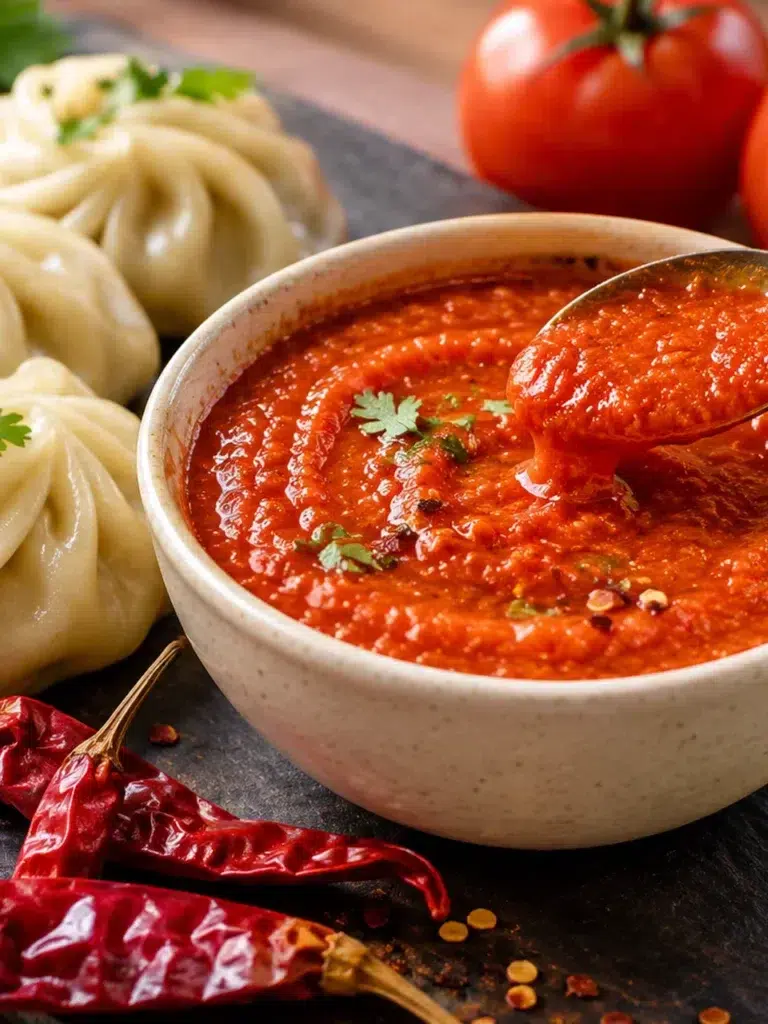
Quick answer: The best sauce for momos is one that adds contrast without overwhelming the filling. A bright tomato–chilli chutney lifts steamed vegetable dumplings; sesame-rich jhol suits a softer, broth-led presentation; a sharp dipping sauce balances a crisp pan-fried base. The right pairing is about acidity, heat, body and texture—not the reddest sauce on the table.
On this page
The four levers of a good momo sauce
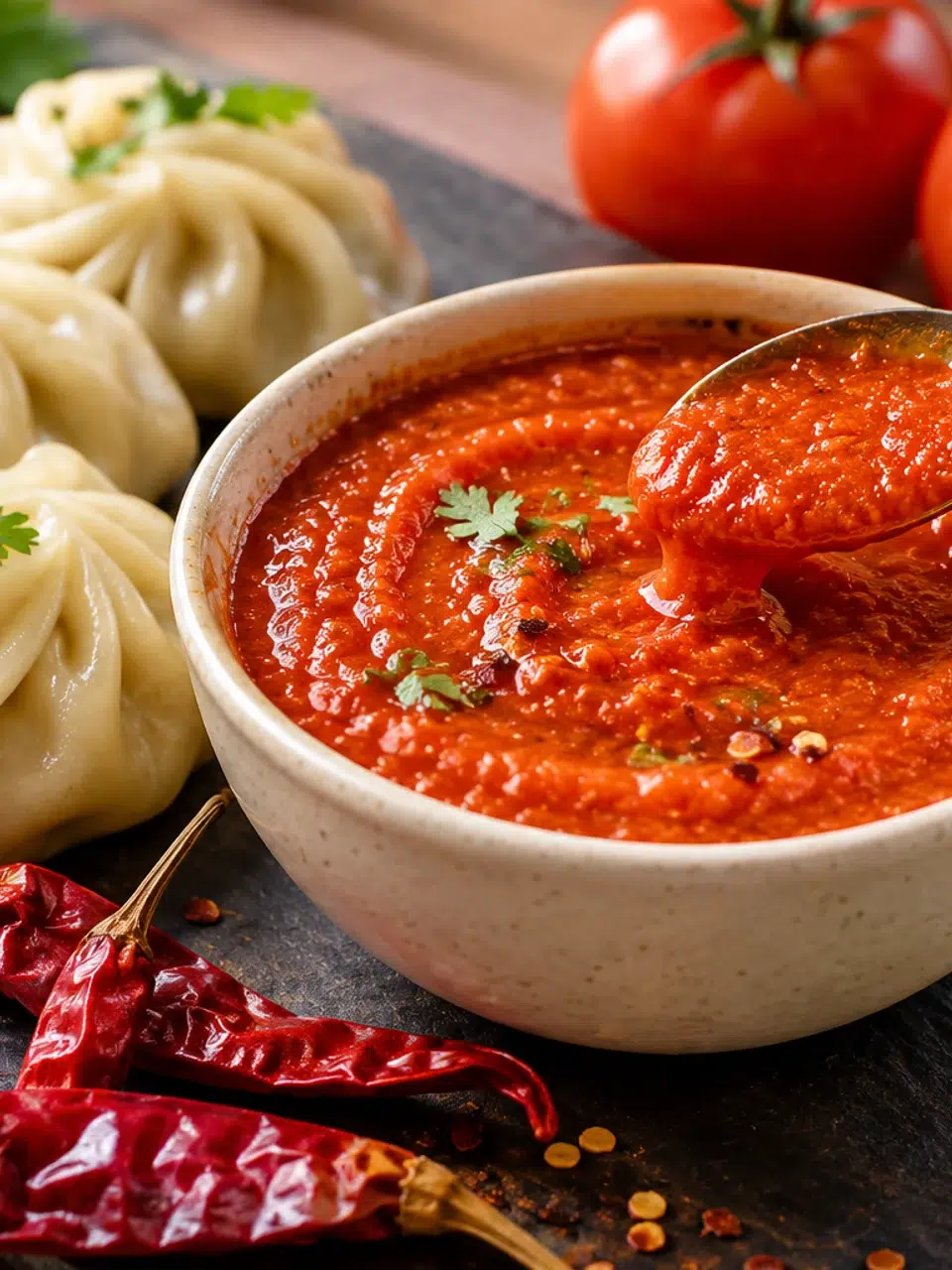
Acidity from tomato, citrus or tamarind refreshes rich fillings. Heat can come from fresh or dried chilli and should be adjustable. Body from cooked tomato, sesame, peanut or yoghurt changes how the sauce clings. Salt and savouriness finish the balance, but soy sauce and other bottled condiments need ingredient-label checks.
Try one small spoonful with a plain momo before changing the whole bowl. That small test is often more useful than copying someone else’s chilli count.
Seven pairing ideas
| Momo style | Suggested pairing | Why the contrast works |
|---|---|---|
| Classic steamed veg | Roasted tomato and dried chilli | Brightness against mild dough |
| Paneer momo | Tomato–ginger chutney | Acidity balances creamy filling |
| Kothey/pan-fried momo | Thin ginger–spring onion dip | Freshness against the crisp base |
| Fried or kurkure momo | Light, tangy sauce | Less additional richness |
| Wholewheat vegetable momo | Tomato–sesame achar | Nutty flavour and rounded tang |
| Jhol momo | Seasoned tomato–sesame broth | Sauce becomes part of the dish |
| Mild children’s serving | Gentle tomato sauce without chilli | Flavour without compulsory heat |
These combinations show how to balance flavour and texture; the Momo Crown menu lists the actual published offerings.
A sauce should follow the filling
Vegetable fillings benefit from a sauce that leaves their aromatics visible. Paneer can pair with something tangy rather than another rich cream-based dip. Fried momos already have a stronger texture; fresh herbs, acid and a thinner sauce can keep the mouthful lively. Spicy Schezwan-style filling may need less chilli on the side, not more.
Make a simple tomato–chilli base
For a small home-style bowl, soften two medium tomatoes and one or two mild dried red chillies in hot water until the tomatoes are tender. Blend with a little salt and a squeeze of lemon or vinegar, then heat the blended mixture thoroughly. Add more chilli a little at a time. These are editorial starting quantities, not a batch-tested branded formula; adjust to your ingredients and store the sauce safely.
For an alternative richer version, follow our dedicated peanut momo chutney guide. For a tomato-free option, read chilli–garlic sauce without tomato.
Allergen-aware sauce pairing
Sesame, peanuts, milk, soy and wheat can appear in dipping sauces. Even if the dumplings contain no nuts, a peanut- or sesame-based sauce changes the dish’s allergen profile. A gluten-containing soy sauce can make an otherwise wheat-free filling unsuitable for someone avoiding gluten. A restaurant cannot guarantee the absence of cross-contact simply because one named ingredient is omitted.
Check specific products and preparation practices using Momo Crown’s allergen information and the Eat Right India label-reading guide.
How to serve sauces elegantly at home
Use individual dipping bowls so people can choose their own level of heat. Put very spicy sauce at the side, not over every dumpling. For a tasting plate, offer one bright tomato sauce and one distinct mild or nutty alternative—after clearly identifying all allergens. Keep fresh or dairy-based dips refrigerated until service, and avoid returning a used communal dip to storage.
Tomato-Chilli Chutney: The Classic Bright Pairing
A tomato-chilli momo chutney adds acidity and warmth to a soft steamed wrapper. Cooking the tomato produces body, while dried red chilli can provide colour and varying heat. The aim is a sauce that clings lightly without becoming an overly sweet tomato ketchup substitute. If the tomatoes are very sharp, balance with seasoning and gentle cooking rather than adding more acid automatically.
For a simple version, soften suitable fresh tomatoes and dried red chillies, allow them to cool enough for safe blending, then process with salt and any desired aromatics. Simmer until spoonable, and taste before adding optional lemon. Do not seal boiling liquid in a standard blender unless the manufacturer’s hot-liquid instructions allow it. The finished chutney is a perishable homemade dip, not a shelf-stable preserve.
Tomato-chilli chutney works particularly well with steamed vegetable momos and pan-crisped kothey dumplings, where a tangy sauce contrasts with wheat dough. Our garlic-free momo chutney recipe provides one detailed variation with adjustable heat. For guests who dislike spice, offer a separate mild dip rather than attempting to make one bowl suit everyone.
Peanut and Sesame Sauces: Rich, Nutty Contrasts
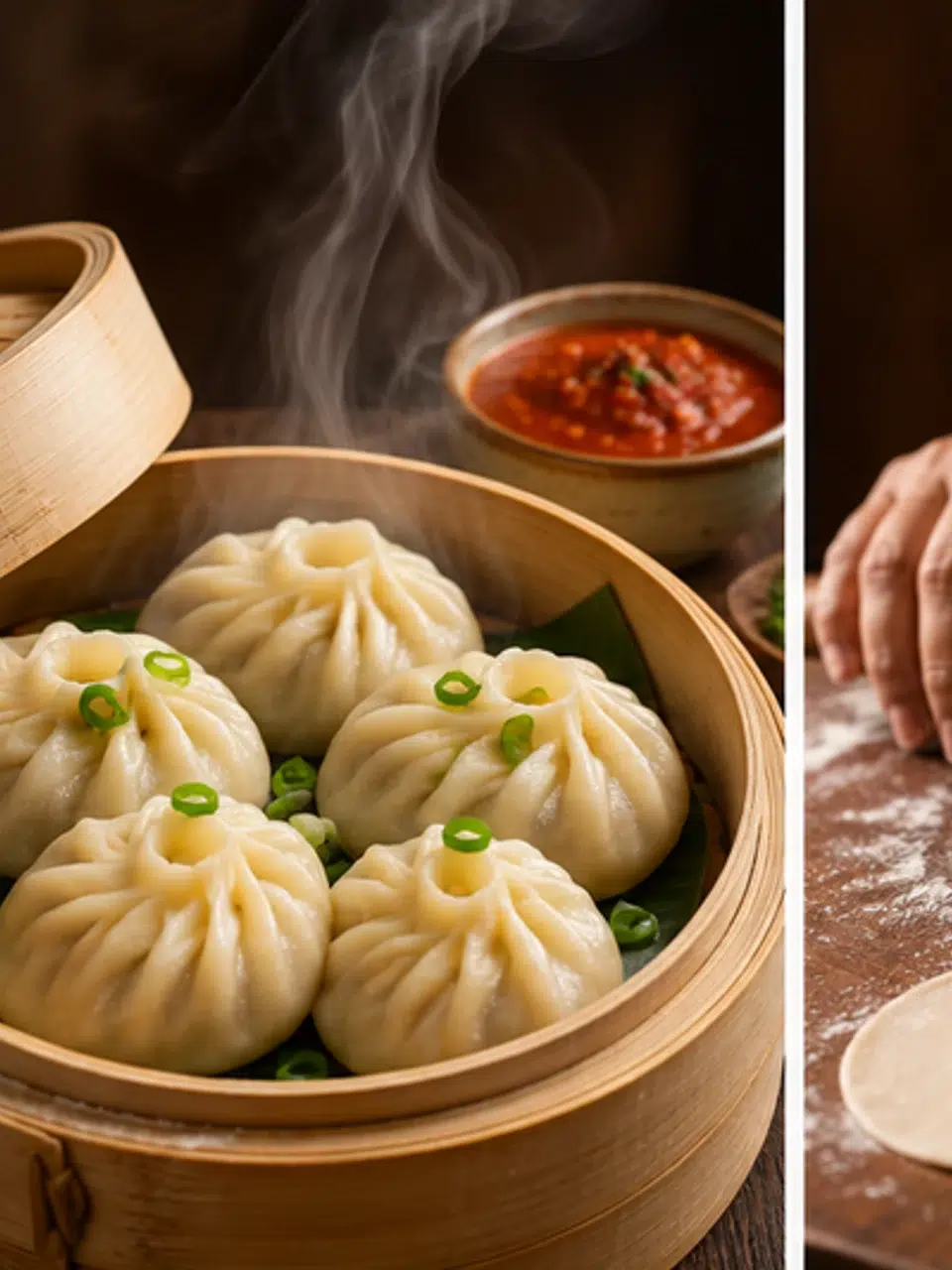
Roasted peanuts or sesame can give a dipping sauce body and a deep, toasted flavour. This can complement a simpler vegetable filling without covering the dumpling in a heavy creamy coating. A tomato component or a little acid may balance the richness, while chilli adds heat for guests who enjoy it. The thickness should suit the serving style: a concentrated dip clings, whereas a thinner jhol-style liquid can be spooned around the momos.
Peanuts and sesame are significant allergens, so never assume a nutty sauce suits the entire group. Use dedicated serving bowls and spoons, read ingredient labels and avoid cross-contact with other condiments. Someone with a serious allergy may need a verified separate preparation rather than a promise that one ingredient was simply omitted from the shared bowl.
For a homemade nutty version, our peanut momo chutney recipe explores the tomato and roasted-nut balance. For a broth-led presentation, our jhol momo guide explains a different spiced liquid format. Check ingredients and choose the dip only when it matches the specific filling and diner.
Mild Tomato-Ginger Dips for Gentle Flavour
A no-chilli dip can still have character. Cooked tomato offers a rounded base, finely grated ginger contributes aroma, and coriander or a small amount of cumin adds complexity without intense heat. Taste for acidity before adding lemon or vinegar, particularly when the tomatoes are already tangy. A sauce that is mild in chilli is not automatically bland.
Serve this kind of dip with plain steamed vegetable momos, soft paneer dumplings or a family meal where guests have different spice preferences. Keep the sauce in a small bowl so each person can choose how much to use. If adults also want a fiery chutney, put it in a separate clearly labelled container and use different serving spoons.
Our mild momo dipping sauce recipe gives a simple tomato-ginger approach. When serving children, a caregiver must also check wrapper texture, filling, temperature and choking risk; the absence of chilli does not by itself establish food safety. Ingredients can still contain allergens even if the heat level is gentle.
Fresh Herbs and Yoghurt: Cooling, Bright Pairings
Coriander and mint can make a fresh, aromatic dip that lifts richer or crispy dumplings. A little citrus can brighten the flavour, but adding too much may overpower a mild filling. Chop herbs thoroughly and use clean, washed produce. A thin herb sauce can complement a browned wrapper, while a thicker herb paste may work better for dipping individual steamed momos.
A yoghurt-based sauce adds a creamy texture and can soften the experience of spicy fillings, but yoghurt is a dairy ingredient and must be kept appropriately chilled. A cooling sensation does not mean that an allergen-containing dish has become suitable for someone who must avoid milk. Check any additional seasonings and keep sauces away from raw food surfaces.
Try a small amount of fresh herb dip alongside paneer momos or crisp vegetable dumplings, tasting the combination before serving the entire platter. If the dish is already rich, choose a lighter sauce or put the creamy dip in a separate bowl. A good pairing can mean offering contrast rather than adding more of the same heaviness.
Choose Sauce by Filling, Not Just Cooking Style
Vegetable fillings: Cabbage, carrot or mushroom momos often benefit from an acidic or aromatic sauce that adds contrast without overwhelming the vegetables. Tomato-chilli chutney or a bright herb dip can work well. If the filling already contains strong chilli-garlic seasoning, start with a milder accompaniment.
Paneer fillings: Paneer creates a soft, dairy-rich centre. A sharp tomato dip or fresh coriander-based sauce can balance that richness. A heavy creamy dip may make the whole plate feel too rich for some guests, so let them decide whether it suits their preference. Remember that paneer contains milk regardless of the sauce.
Meat fillings: Their seasoning and fat content vary. A bright sauce can complement the savoury centre, but the chosen dip should not be used to disguise undercooked food. Check the filling’s safe cooking temperature and keep utensils that touched raw meat away from finished dipping bowls. Sauce pairing comes after food safety.
Chilli-forward fillings: A very hot Schezwan-style momo may not need another fiery sauce. Try a mild tomato-ginger dip or a simple fresh side, and keep additional chilli separately for people who want it. Balanced sauce selection follows the actual filling rather than a generic “extra spicy” rule.
Match Sauce Texture to Steamed, Kothey and Crispy Momos

Soft steamed wrappers are comfortable with a dip that clings lightly, because the dumplings can be lifted without breaking apart. Very watery sauces may slip off, while an extremely thick paste may overwhelm a delicate filling. A tangy tomato chutney is a useful starting point, with extra heat offered separately. The goal is to make each mouthful more interesting without hiding the dumpling.
Pan-fried kothey-style momos have a crisp underside and softer upper wrapper. A fresh acidic dip can balance the browned dough, but avoid soaking the entire platter before serving. Let guests dip the crisp base as they eat so the different textures remain noticeable. Similarly, a deep-fried or cornflake-coated Kurkure momo often loses crunch when it sits under a heavy wet sauce.
Broth-served momos are different. Jhol or soup can become a central part of the dish rather than a condiment added at the end. Its thickness and flavour should be chosen accordingly. For texture comparisons, explore our kothey momos recipe and Kurkure momos recipe.
A Practical Sauce Allergy and Ingredient Checklist
Before preparing several sauces, identify all ingredients that guests need to avoid. Sesame, peanuts, soy, milk, wheat and other allergens can appear in sauces even when the colour is similar. Store packaged seasonings in their original labelled containers until you have recorded the ingredient information. A red sauce could be a simple tomato dip or a more complex preparation with nuts or dairy, so appearance cannot establish suitability.
Use clean boards, bowls and utensils for a verified suitable preparation. If a serious food allergy is involved, cross-contact matters as much as the recipe list. One shared spoon can transfer sauce from a peanut bowl into an otherwise peanut-free dip. For a medically significant allergy, do not rely on a casual reassurance; use verified ingredients and a preparation process that meets the person’s needs.
When ordering prepared food, check the specific outlet’s allergen information and ask about the complete dish. A sauce without chilli may still contain soy or dairy, and a vegetarian momo may have a wheat wrapper. Our Momo Crown allergen information page and publicly available ingredient labels can help frame accurate questions.
Prepare Two Complementary Sauces for a Gathering
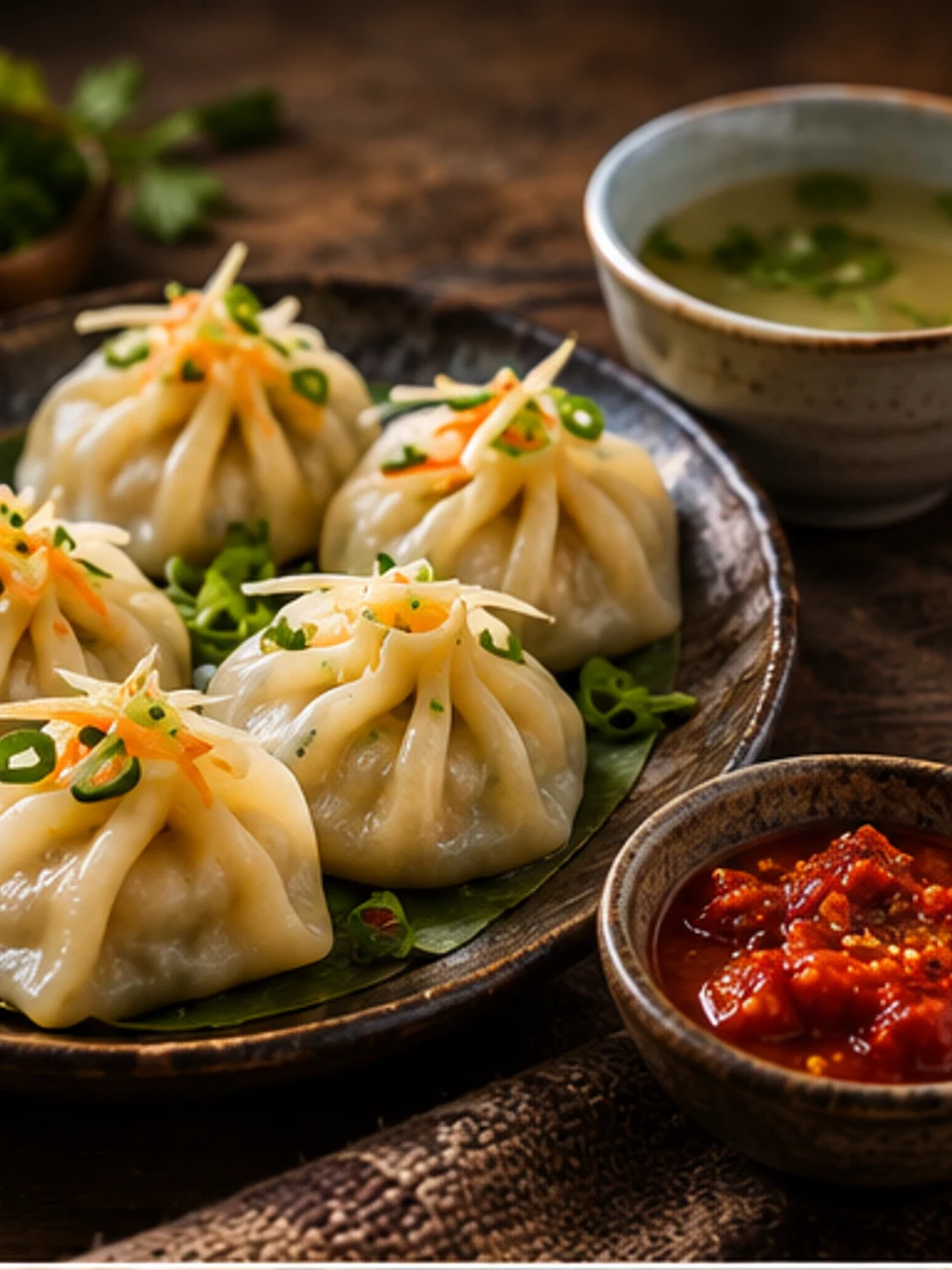
A small tasting meal does not need seven complicated sauces. Choose one bright tomato-chilli dip and one distinct gentle or nutty alternative that suits the guests. For example, a tomato-ginger dip and a roasted tomato-peanut chutney offer different textures, provided peanut allergens are properly managed. If guests have a nut allergy, select another verified suitable sauce instead of assuming a tiny amount is harmless.
Prepare clean labelled containers and serving spoons before the dumplings are cooked. Put mild sauce at one end of the serving area and stronger sauces separately. Allow guests to add dips to individual plates rather than returning partly used bowls to the kitchen. Keep perishable dairy, fresh herb or cooked tomato sauces properly refrigerated until service.
Serve momos in manageable hot batches and offer fresh sauce refills from safely stored containers. A shared platter with multiple fillings is easier to enjoy when each diner can tell what they are choosing. For a broader hosting routine, see our momo party checklist, which covers food holding and separate serving utensils.
Troubleshoot a Momo Sauce That Tastes Wrong
The sauce is too sharp
Tomatoes and citrus can create more acidity than the dish needs. Taste before adding extra lemon or vinegar. Gentle cooking can soften raw-tomato notes, while a modest adjustment in seasoning may restore balance. Do not assume that more sugar is the only solution.
The sauce is watery
Excess water may come from juicy tomatoes or over-dilution during blending. Simmer the cooked sauce gently to reduce it and stir to prevent scorching. A sauce for dipping should usually be spoonable rather than running off the momo like water.
The sauce is too hot
Offer a separate mild sauce instead of forcing every guest to use the fiery one. For a home batch, extra cooked tomato may reduce perceived heat, although the balance will change. Do not promise that any particular addition can remove an allergen or make an unsafe preparation safe.
The dip feels heavy
Nutty or creamy sauces may need less oil or a brighter acidic note. Use a smaller portion and pair it with a simple filling. If the dumplings are already rich or deep-fried, consider a fresh herb dip instead of another thick coating.
The best sauces for momos are the ones that make the filling and wrapper more enjoyable for the people eating. Taste combinations in small amounts, store each perishable dip properly and keep ingredient information clear.
Frequently asked questions
What sauce goes with steamed veg momos?
A tangy tomato and chilli chutney is a familiar choice, but a mild tomato or sesame sauce can also work.
Is peanut momo chutney suitable for everyone?
No. Peanuts are an important allergen; sesame and other ingredients need separate checks.
Does Momo Crown sell all seven of these sauces?
Explore the official Momo Crown menu to see the sauces and accompaniments currently listed.
Build a simple sauce tasting flight
For a home tasting, choose three clearly different flavours rather than several versions of the same red chutney. A mild tomato-ginger dip can show the wrapper and filling, a sharper tomato-chilli sauce can add heat, and a suitable fresh-herb or nutty option can bring a contrasting body. Serve only ingredients that meet the guests’ dietary needs and label peanut, sesame, milk and soy accurately.
Arrange a small amount of each sauce beside the cooked momos, with separate clean spoons. Invite guests to taste one combination at a time so they can understand which contrasts they enjoy. Keep larger quantities of perishable dips safely chilled until a refill is needed. A thoughtful tasting encourages discovery while preventing a shared spoon from mixing sauces and allergens across bowls.