
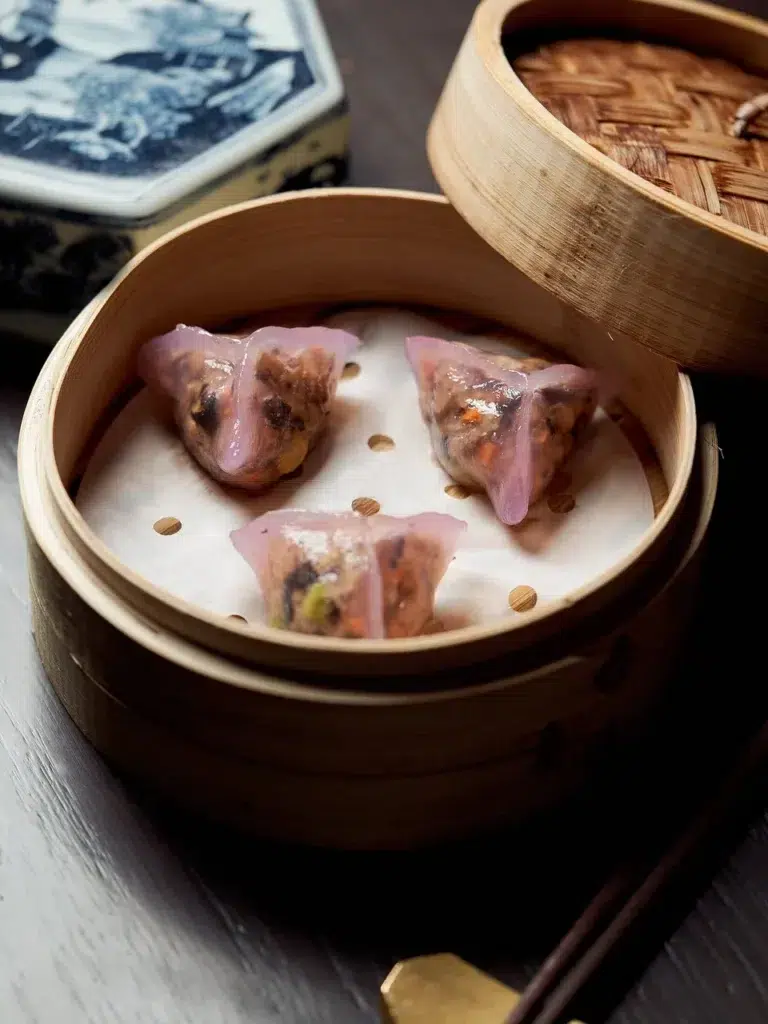
Momos vs Gyoza vs Dumplings: Comparison Table
| Feature | Momos | Gyoza | Dumplings (umbrella term) |
|---|---|---|---|
| Common cultural association | Himalayan region, particularly Nepali and Tibetan cuisines | Japanese cuisine; developed from Chinese jiaozi traditions | Many cuisines worldwide |
| Usual form | Filled thin wrapper, pleated or folded | Often crescent-shaped wheat wrapper with a pleated seam | Stuffed or unstuffed dough shapes vary widely |
| Familiar cooking method | Steamed, with fried and pan-fried variations | Pan-fried then steamed is very common; boiled/steamed versions exist | Steamed, boiled, fried, baked or other preparations depending on dish |
| Typical fillings | Vegetables, meat, paneer and regional variations | Often pork and cabbage, plus many vegetarian or seafood versions | Depends entirely on the particular cuisine |
| Usual accompaniment | Tomato-chilli achar, sesame sauces, jhol or other regional dips | Often soy–vinegar sauce, sometimes chilli oil | Anything from broth to savoury sauces or no sauce |
| Is every version vegetarian? | No | No | No |
What Is a Momo?
Momos are usually thin dough-wrapped dumplings around a filling, folded and cooked, often by steaming. They have a prominent place in Nepali cuisine and are also associated with Tibetan and other Himalayan communities. A spicy tomato-based achar is a familiar accompaniment, although sauces and seasonings differ by kitchen.The history is more complicated than a single origin story. A March 2026 Smithsonian feature notes that the exact beginnings are uncertain and discusses trade connections with Tibet. Rather than assert that one named individual invented momos, it is more accurate to discuss their development across interconnected regional food cultures.In India, momos also appear in newer forms such as tandoori, kurkure and creamy restaurant-style versions. These modern preparations need not be described as ancient recipes. See our 15 types of momos guide for examples, once published.What Is Japanese Gyoza?
Gyoza (餃子) are Japanese dumplings related to Chinese jiaozi. A particularly familiar style, yaki gyoza, is pan-fried to make the underside golden and then steamed under a lid so the upper wrapper stays tender and the centre cooks. The result combines crispness on one side with a soft, moist dough texture elsewhere.Japan’s National Tourism Organization describes the pan-fried, thin-wrapped dumplings associated with Utsunomiya. Namiko Hirasawa Chen’s Japanese home-cooking guide details the pan-fry, steam and final-crisp process and the culinary relationship with Chinese jiaozi.Is every gyoza fried?
No. Pan-fried gyoza is widely recognized, but boiled and steamed varieties also exist. Cooking method alone is insufficient to define the dish.Is every gyoza filled with pork?
No. Pork and cabbage are common in Japanese gyoza, but vegetarian, seafood and other fillings are also prepared. Just One Cookbook’s vegetable gyoza guide explains a meat-free version using a mix of vegetables and umami-rich ingredients.What Does “Dumpling” Mean?
The word dumpling is much broader than any one Himalayan, Japanese or Chinese preparation. It can refer to small portions of dough or batter, with or without filling, that are cooked in various ways. Momo and gyoza fit comfortably inside that broad description.That means “momos vs dumplings” is not a strict comparison between separate and equal categories. It is more like comparing one family of dumplings with a much larger culinary class. Chinese jiaozi, wontons, some European filled dumplings and many others are all examples of how different traditions use dough-based preparations.Did Gyoza Come from Momos, or Did Momos Come from Gyoza?
There is no good basis for claiming a simple direct line in either direction. Japanese gyoza developed from Chinese jiaozi traditions and became established in Japanese cooking. Himalayan momos have their own history tied to exchange and traditions across the Himalayas. The historical trajectories are distinct, even though both reflect a wider human practice of making stuffed dough foods.Claims such as “gyoza is just a Japanese momo” flatten real cultural differences. It is more informative to say that both are regional dumpling styles with some shared techniques and different culinary histories.Momo Wrappers vs Gyoza Wrappers
Both often use wheat dough, but wrappers can differ in thickness, diameter and handling. Japanese gyoza wrappers are commonly small, round and thin enough to pleat into a crescent and develop a crisp base quickly. Momos may use varying shapes: round gathered pleats, half-moons, and other folds depending on regional practice and the filling.Just One Cookbook’s wrapper guide discusses thin gyoza wrappers and maintaining dough moisture. For momo-specific dough troubleshooting, our soft momo dough guide explores hydration, resting and rolling. The two sheets should not always be treated as exact recipe substitutes without checking their size and strength.How Are the Shapes Different?
A common steamed momo has its pleats gathered at the top, creating a rounded pouch, while a common gyoza has a flatter crescent or half-moon form with pleats along a curved seam. But neither shape is exclusive: momos can be half-moon shaped, and gyoza folding techniques vary.Think of shape as a useful visual cue, not a definitive classification. A restaurant could serve a Japanese-style gyoza in a different shape, or a momo in a familiar crescent.Steamed vs Pan-Fried: Does Cooking Decide the Name?
Not by itself. Steaming is common with momos, and pan-frying plus steaming is common for yaki gyoza. But Himalayan-style kothey momos also have a crisp pan-fried side. What distinguishes a preparation is a combination of culinary tradition, filling, sauce, wrapper handling and cooking method.| Method | Often seen in | Result |
|---|---|---|
| Steaming above water | Steamed momo, some gyoza and other dumplings | Soft wrapper without a pan-crisped base |
| Pan-frying then steaming | Japanese yaki gyoza and kothey-style dumplings | Crunchy underside and tender upper wrapper |
| Deep-frying | Fried momo and various other dumplings | Crisp outside and added oil exposure |
| Serving in soup or jhol | Jhol momo and diverse dumpling soups | Wrapper takes on some broth during serving |
Momo Chutney vs Gyoza Dipping Sauce
One familiar momo pairing is tomato–chilli achar or a nutty sesame-based sauce. Japanese gyoza is often served with a dipping mixture of soy sauce and rice vinegar, sometimes with chilli oil. Those are tendencies, not fixed rules; sauce choices vary among homes and restaurants.If you want a detailed chilli dip recipe, see our tomato-free chilli-garlic chutney guide. The peanut momo chutney article explains a different nutty variation; pay attention to allergy warnings before making it.Which Is Healthier: Momo or Gyoza?
Neither word gives enough information. Calories, sodium, fat and protein depend on the wrapper, size, filling, cooking oil and sauce. A large paneer momo, a small vegetable gyoza and a pork gyoza are not nutritionally equivalent. Even within the same filling, pan-frying introduces different oil exposure from steaming.For a fair comparison, look at actual serving weights and ingredient lists instead of assuming one cuisine is healthier than the other. No laboratory nutrition values for Momo Crown menu items are claimed here.Vegetarian, Vegan and Allergen Considerations
Momo and gyoza wrappers frequently contain wheat, and sauces can contain soy or sesame. A vegetarian filling may still contain paneer, cheese, egg or butter, so it may not be vegan. Traditional Japanese gyoza often include meat; Himalayan momos may also contain meat, so ask about ingredients rather than inferring from appearance.Food allergies additionally require checking shared preparation equipment and cross-contact. If cooking at home, clean boards and utensils thoroughly and separate raw meat from ready-to-eat foods. FoodSafety.gov describes practical cleaning, separation, cooking and chilling guidance.Does Momo Crown Serve Gyoza and Momos?
As described on the Momo Crown menu, the brand lists a gyoza option alongside several steamed and other momo-style products. That menu is an example of how a contemporary restaurant can offer related dumpling preparations without claiming they all belong to the same culinary tradition.Availability depends on the specific outlet and launch status. For accurate updates, see the locations page. This article is a general food guide, not an assertion that stores are currently open or that the restaurant uses any particular traditional gyoza formula.Frequently Asked Questions
Is momo a type of dumpling?
Yes. Momo is a regional type of filled dumpling, generally made from dough wrapped around a vegetable or meat filling.Is gyoza a type of dumpling?
Yes. Gyoza is a Japanese dumpling style related to Chinese jiaozi, with pan-fried versions especially well known.Are momos Chinese or Japanese?
Momos are strongly associated with Nepali, Tibetan and broader Himalayan food traditions. Their precise historical origins are debated and intertwined with regional exchange; they should not simply be renamed Japanese gyoza.Does gyoza always have a crispy bottom?
No. That is typical of yaki gyoza, but boiled and steamed Japanese dumplings also exist.Are momo wrappers thicker than gyoza wrappers?
They can be, depending on the recipe, but there is no universal millimetre standard that separates all momos from all gyoza. Technique and local styles vary.What is the difference between gyoza and kothey momos?
Both may combine a crisp base with steam cooking. The culinary tradition, filling, sauce, wrapper and naming context distinguish them; the technique overlaps.Are dim sum and dumplings the same?
Not exactly. Dim sum refers to a wider Chinese dining tradition of small dishes, which can include many types of dumplings alongside buns, rolls and other items. A dumpling is one category of food that can appear within a dim sum meal.Momos and bao buns compared: See six clear differences between thin momo wrappers and fluffy filled baozi.
Momos versus Korean mandu: Explore Korean mandu fillings, folding traditions and different cooking methods.