
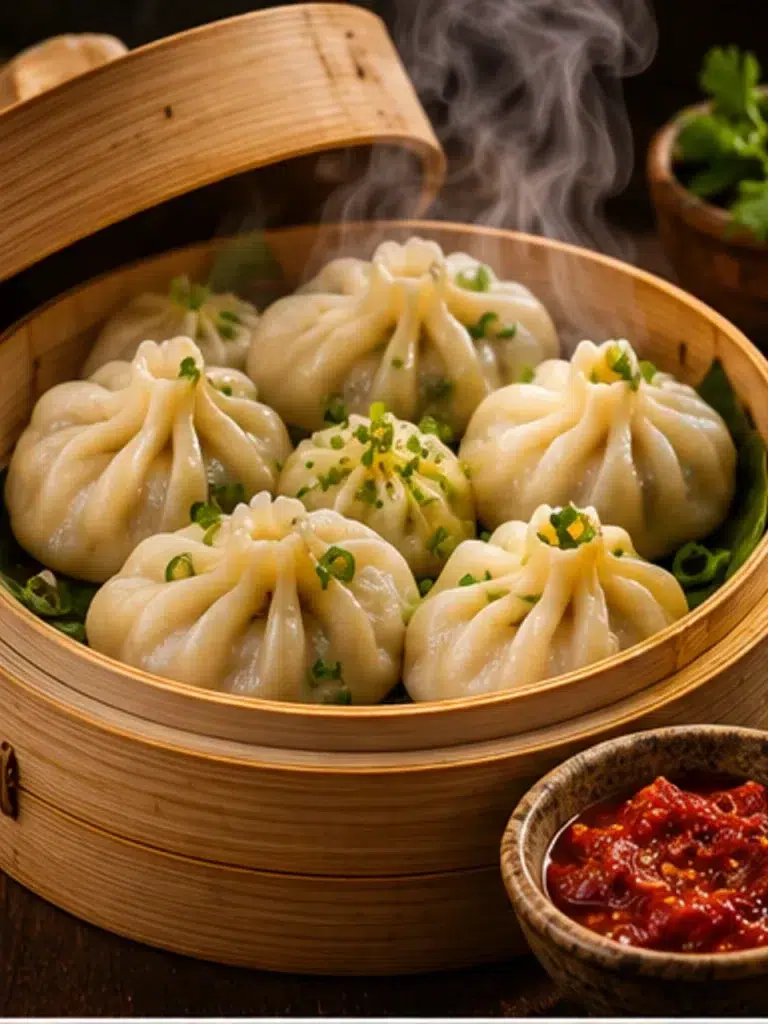
Quick answer: Momos are filled dumplings strongly associated with Himalayan food cultures, including Tibetan and Nepali traditions. They usually have wheat-flour wrappers around a seasoned vegetable or meat filling and are often steamed, though fried and pan-fried versions also exist. Their flavour is shaped as much by the filling and accompanying achar as by the dough.
On this page
There is no need to reduce this shared culinary heritage to a single definitive inventor or an exact birth year. The story is regional, interconnected and still discussed by historians and cooks.
What goes into a momo?
A typical momo begins with a dough of wheat flour and water, sometimes with a little salt. The filling might combine vegetables with ginger, onion or garlic, or feature seasoned minced meat. The wrapper is rolled into a round, filled, folded and sealed. A steamer gently cooks the parcel while keeping the shape intact.
India’s Sikkim Tourism cuisine guide describes momos as steamed dumplings with meat or vegetables served with chilli sauce. The Nepal Tourism Board similarly identifies steamed or fried momos as a popular Nepali snack.
Are momos Tibetan, Nepali or Indian?
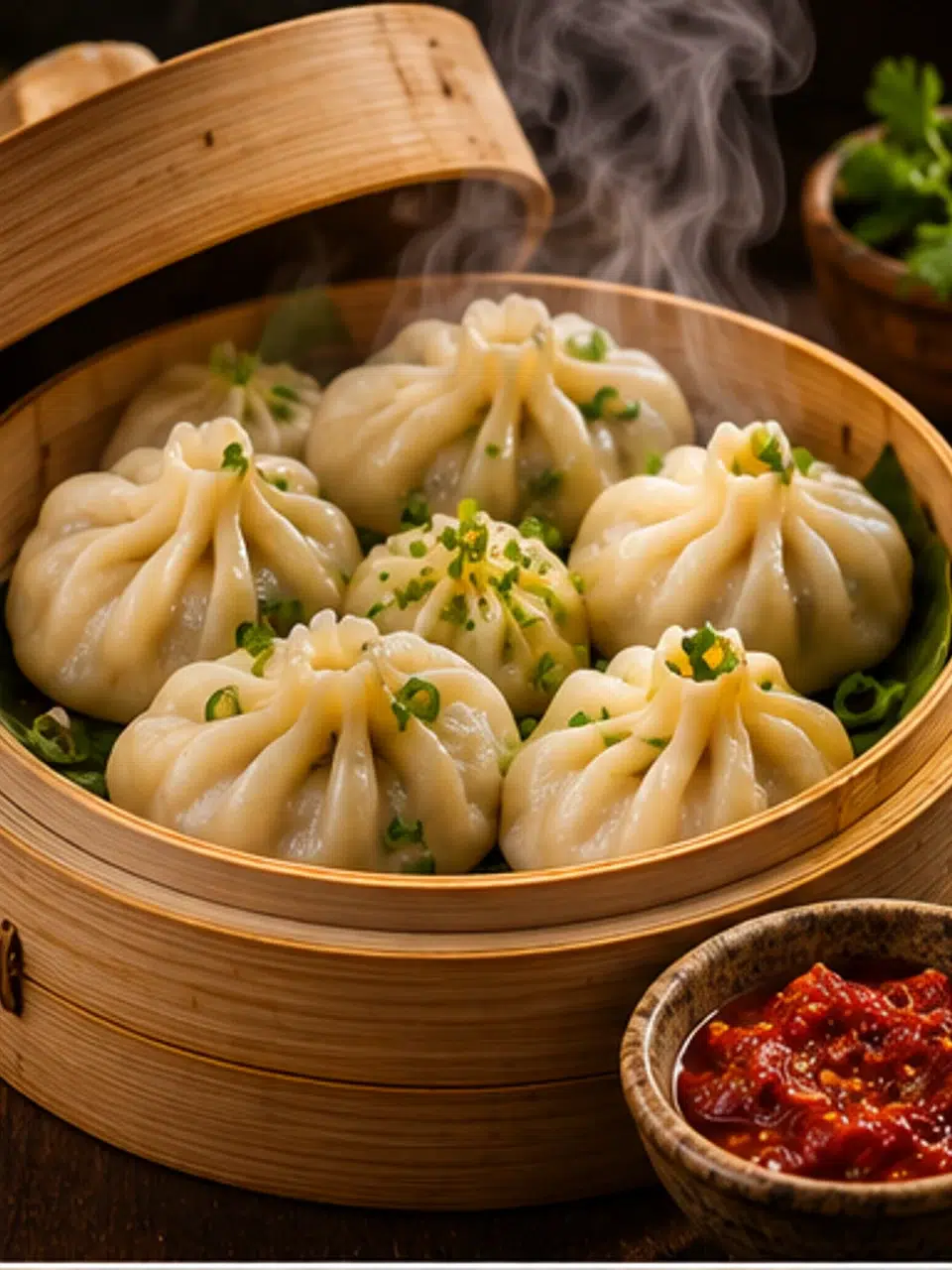
Momos have deep associations with Tibetan and Nepali foodways and are also part of regional Indian food culture, particularly in places such as Sikkim and Darjeeling. Food travels across communities through trade, family cooking and migration. Smithsonian Magazine’s 2026 history notes that the exact origins remain uncertain, while longstanding connections with trade across Tibet are part of the broader account.
It is more accurate to acknowledge related traditions and local adaptations than to insist that every momo recipe has one authentic filling or one correct fold.
What does a momo taste like?
The wrapper is mild and soft; the filling provides the body. Ginger adds warmth, spring onion adds freshness, mushrooms add savoury depth, paneer brings a soft dairy note and chilli sauces add brightness and heat. Not all momos are fiery: spice often comes from a condiment served on the side.
Very thin wrappers can put the filling at the centre of the eating experience, while thicker folds give a more substantial wheat bite. A good momo should be well-sealed and cooked through rather than simply impressive to look at.
Six common momo styles
| Style | What makes it distinct |
|---|---|
| Steamed momo | Gently cooked over water, soft wrapper |
| Pan-fried/kothey | Browned underside with a softer upper wrapper |
| Deep-fried momo | Crisp exterior and different added-fat exposure |
| Jhol momo | Steamed dumplings presented in a seasoned liquid sauce |
| Vegetarian momo | Vegetables, sometimes paneer or other fillings |
| Fusion momo | Locally adapted seasonings, coatings and presentations |
For a broader guide, see 15 types of momos explained, or learn a particular technique with our kothey momo recipe.
What are momos served with?
Achar or chutney may be tomato-led, chilli-forward, nutty, tangy or rich with sesame. The flavour and ingredients vary significantly between families and regions. A clear soup is another familiar accompaniment in the Himalayan belt; the Darjeeling district government’s culture guide describes steamed dumplings served with soup and achar.
Try a home-style tomato and peanut chutney or our jhol momo broth guide while checking any applicable peanut or sesame allergy.
How to make momos at home
- Mix a flexible, fairly firm wheat dough and let it rest covered.
- Prepare finely chopped, appropriately seasoned filling, controlling excess moisture.
- Roll thin rounds with a slightly stronger centre.
- Add a modest spoonful of filling and seal cleanly.
- Steam above water until the thickest wrapper and filling are cooked through.
- Serve immediately with a separate sauce.
For a deeper start, read our soft dough guide and steaming without a specialist steamer. If making chicken momos, the 74°C internal temperature requirement for poultry still applies.
How Momo Wrappers and Pleats Work
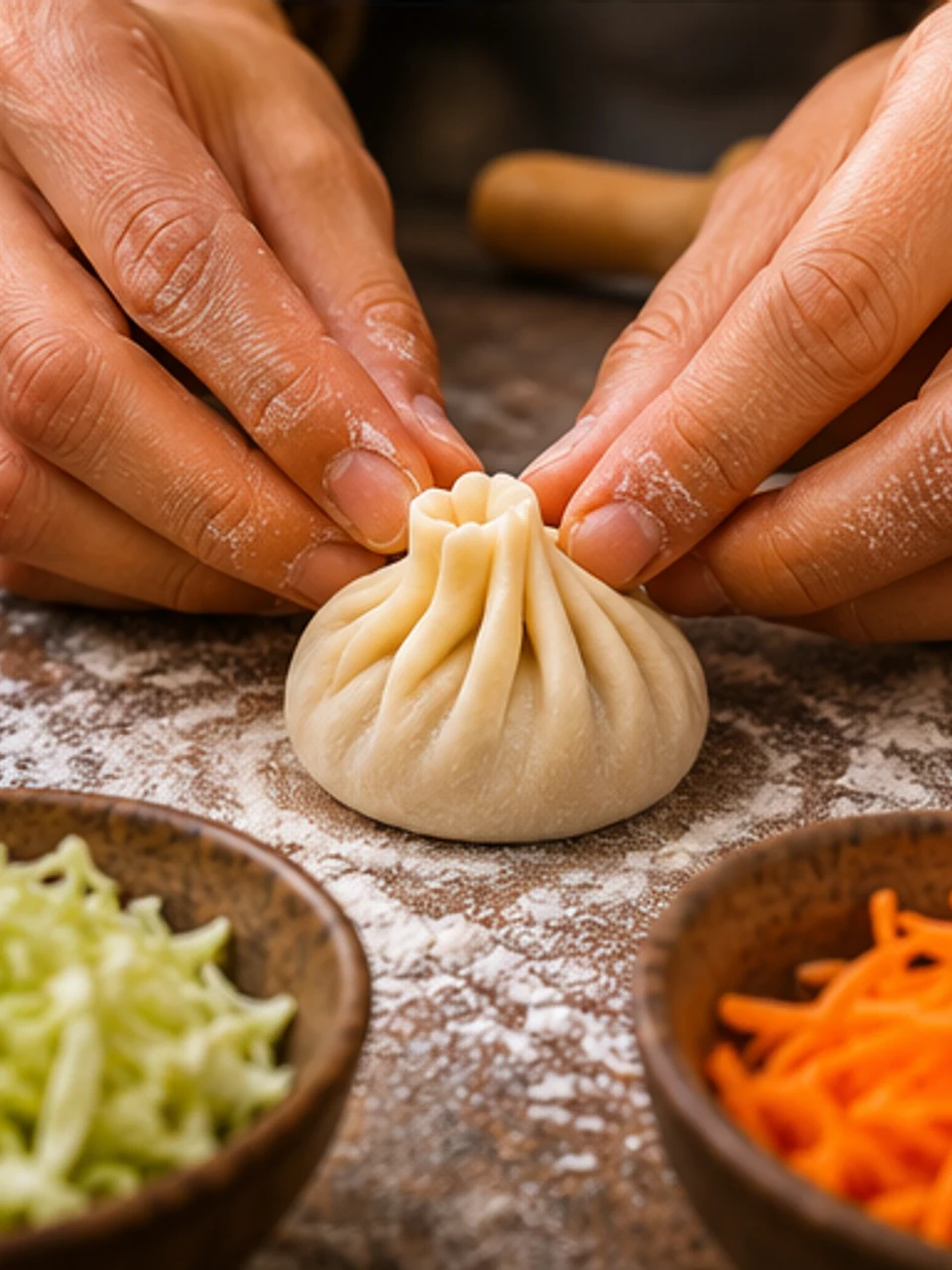
A familiar momo begins as a small piece of pliable dough that is rolled into a thin wrapper. Wheat flour and water are common starting ingredients; some households also add a little salt or oil. The centre needs enough strength to support the filling, while the edges are usually rolled thinner so they can be sealed without forming a heavy, undercooked knot. A rested dough is often easier to roll and less likely to spring back.
The wrapper is folded around a modest spoonful of filling. A half-moon seal creates an elongated shape, while gathering small pleats around a round wrapper makes a pouch-like form. Neither shape is automatically more authentic or better for every filling. The key is a clean sealed edge that holds together during cooking. Thick sections should be cooked thoroughly; an elegant fold is not a substitute for checking doneness.
New home cooks can begin with the vegetable momo recipe and practise with our four easy momo folding methods. For a basic dough troubleshooting process, see the soft momo dough guide. A modest practice batch is often easier to manage than shaping dozens of dumplings at once.
Vegetable, Paneer and Meat Fillings: What Changes?
For a step-by-step meat filling and safe cooking technique, explore our chicken momos recipe with a 74°C poultry-temperature check.
Vegetable fillings are common in many contemporary momo menus, and may combine cabbage, carrots, onions, mushrooms, ginger or other vegetables. The vegetables are finely chopped to help the filling fit inside a small wrapper. Because cabbage and mushrooms can release moisture, cooks may drain or briefly cook them before shaping. A filling should be juicy enough to taste pleasant but not so wet that it breaks the seal.
Paneer momos are an Indian vegetarian variation using a fresh milk-based cheese. The cheese gives the filling a soft, crumbly texture, but it also introduces a milk allergen. Wheat wrappers are not gluten-free even when the filling contains vegetables. If a dish is described as vegan, verify the wrapper, filling, cooking fat and sauce rather than relying only on a green menu symbol.
Meat-filled momos can contain ingredients with different safe cooking requirements, particularly poultry. Raw meat and cooked ready-to-eat foods must be handled separately to prevent contamination. The filling must be thoroughly cooked; a glossy wrapper alone is not proof. For someone dining out with a food allergy or other dietary restriction, the actual ingredient information and preparation method matter more than a broad style name.
Home cooks can explore paneer momos or moisture-control tips for vegetable filling to see how ingredients influence texture. These are different household approaches, not an exclusive definition of a traditional momo.
Steamed, Pan-Fried, Deep-Fried and Broth-Served Momos
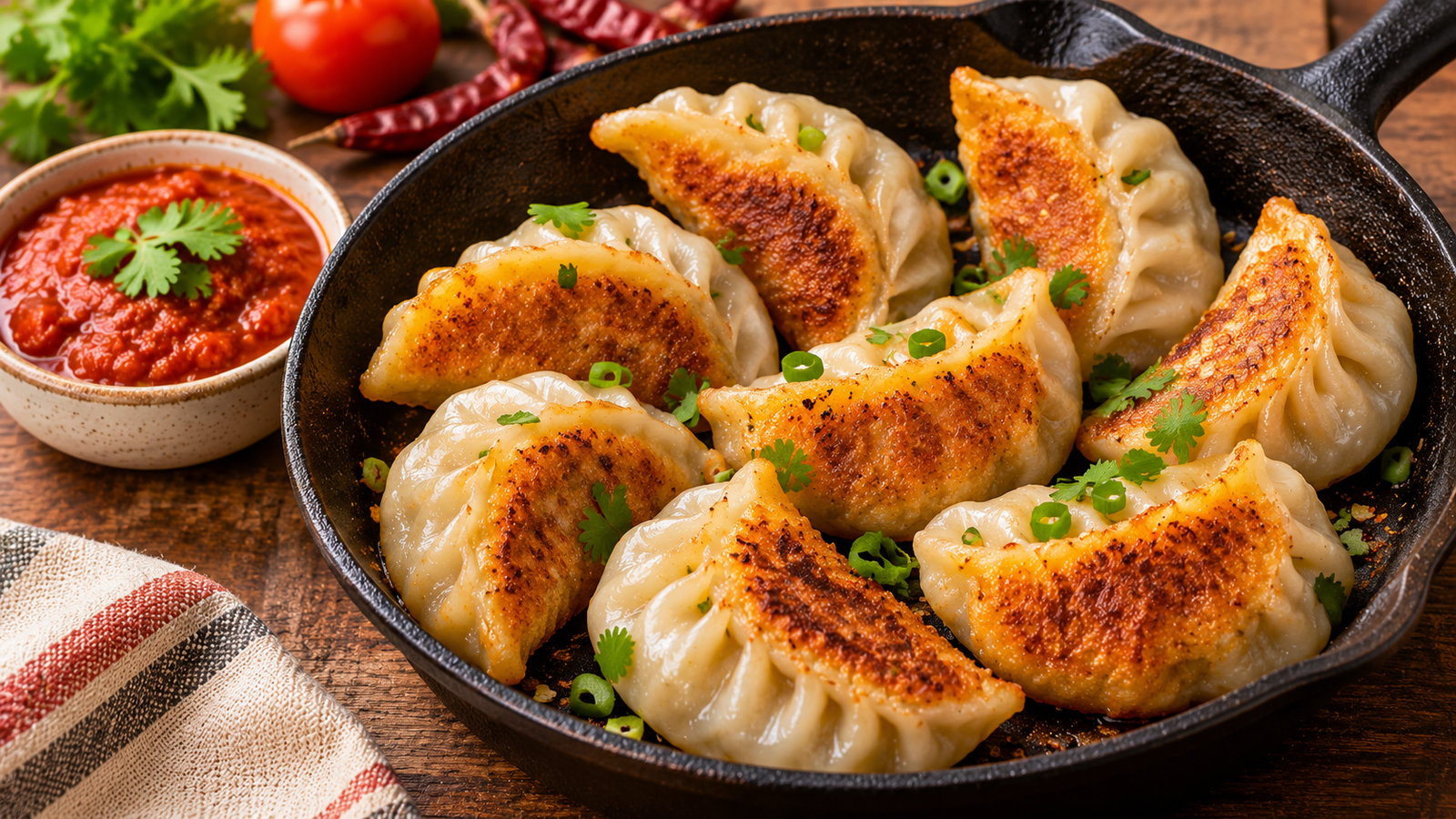
Steaming is one of the best-known techniques for momos and tends to give the wrapper a tender, slightly chewy bite. The dumplings are placed above simmering water in a compatible steamer and cooked until the filling and wrapper are ready. Good spacing makes it easier for steam to circulate and prevents pieces from sticking together.
Pan-frying creates a golden underside while leaving the upper portion relatively soft. A kothey-style finish often combines a little oil and moisture under a lid. Deep-frying produces a more uniformly crisp wrapper or coating, although the actual result depends on how it is prepared. A modern Kurkure-style momo may involve a crunchy crumb coating on an already cooked dumpling.
Broth-served momos are another branch of the dish. A clear vegetable soup highlights a gentle broth, whereas jhol momo often involves a more assertive spiced sauce or liquid, sometimes based on tomato and sesame. Recipes vary across households and regions, so the names describe tendencies rather than one mandatory formula. Our jhol momos guide explains one home variation.
For a practical texture comparison, read about steamed and pan-fried momos. Neither method alone reveals exact calories, protein, sodium or allergens; portion size, filling, sauce and oil use all affect the meal.
Why Achar, Chutney and Soup Matter
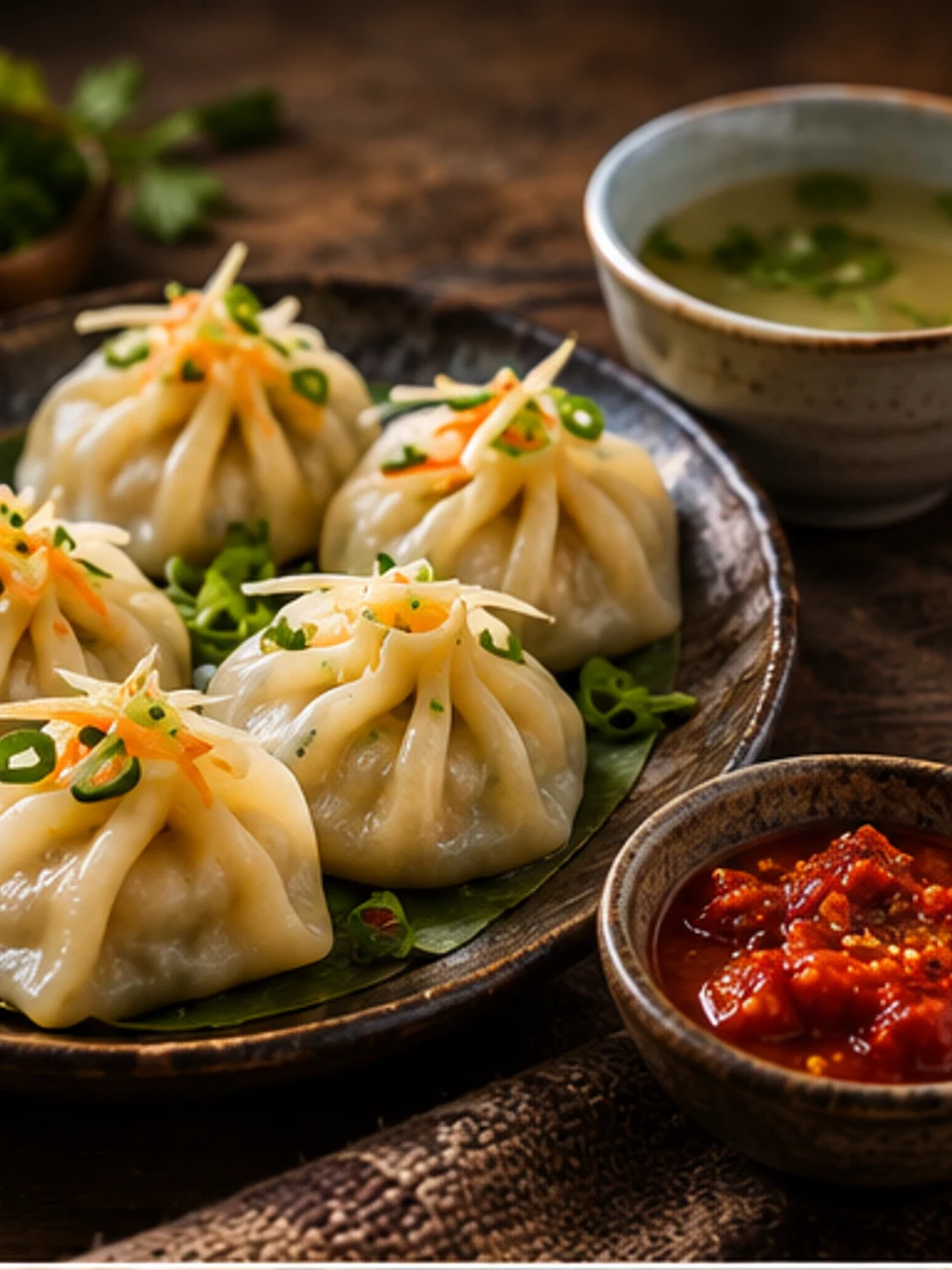
Many people first notice the sauce served beside a plate of momos. A fresh tomato-based achar brings acidity and heat, while variations may include roasted sesame, timur, coriander, chilli or other seasonings. An intense sauce can add contrast to a gently seasoned filling, but it can also overwhelm the dumpling if used in large quantities. The best balance depends on personal taste.
It is useful to ask what a sauce contains. Peanuts, sesame, milk, wheat and soy can appear in different condiments, and a red colour does not reliably identify the ingredients. If someone has a serious food allergy, confirm both the recipe and the possibility of cross-contact. A sauce described as mild may still contain allergens; a vegetarian plate is not necessarily vegan or gluten-free.
Try a small amount of chutney before coating the whole plate. For home preparation, our garlic-free tomato-chilli recipe is one option; a no-chilli tomato-ginger dip offers another. Different sauces can be placed in separate labelled bowls so diners decide how much heat they want.
A Beginner’s Checklist for Ordering Momos
If it is your first time ordering momos, start by choosing the texture you enjoy. Steamed is a useful reference for a soft wrapper and clear filling flavour; pan-fried gives a crisp base, and deep-fried or coated varieties appeal to those seeking crunch. Next, verify the filling and whether the sauce comes separately. A menu photograph should not be treated as a guarantee of portion size or ingredients.
Check the number of dumplings in a portion, the listed price, any sauce charges and the final amount at checkout. For a shared meal, choose portions based on the actual number of people and keep suitable vegetarian, vegan or allergy-aware choices separate. If you are eating at a particular outlet, confirm that the location is open and that the selected item is currently available.
Our 12-point momo ordering checklist expands on these questions. If you are preparing dumplings at home, a dependable starter sequence is simple: make a soft rested dough, choose a filling that is not watery, seal the wrappers, cook completely and serve with a suitable dip. Homemade cooked leftovers should be chilled promptly and reheated thoroughly.
Knowing what momos are makes the menu more approachable, but the enjoyable part is discovering which filling, shape and sauce you personally prefer. Food traditions are shared and adapted, and there is room for a newcomer to enjoy the dish without needing to declare one universal “best momo.”
What Momo Crown means by Himalayan-inspired food
Momo Crown’s editorial approach is “Himalayan Soul. Asian Craft. Global Crown.” Our story and published menu set out the brand’s own positioning. See the locations page for current outlet information and the menu for listed dishes.
How Are Momos Different from Gyoza, Wontons and Bao?
Momos belong to a wider family of filled-dough foods, but the word describes a set of Himalayan and related culinary traditions rather than every dumpling in the world. Japanese gyoza are often associated with crescent shapes and a pan-seared base, while Chinese wontons may use very thin wrappers and appear in soup. Baozi are usually made with a leavened dough that produces a fluffy, bread-like bun instead of a thin momo wrapper.
These are useful broad distinctions, not rigid rules for every household or restaurant. A momo may also have a crescent shape or a crisp underside, and many Asian cuisines use similar ingredients or cooking equipment. The important differences lie in the food traditions, wrapper structure, shaping and typical serving context. A shape alone cannot prove what community a dumpling belongs to.
To explore these comparisons further, read our momos versus gyoza and dumplings guide. If you see a menu item that looks unfamiliar, ask what the wrapper and filling contain rather than making assumptions from a photograph.
Why Momo Origin Stories Have More Than One Answer
The Himalayas have connected communities through migration, trade and shared food practices for generations. Nepal’s historic trade with Tibet and the role of Newar merchants are important parts of momo’s story, but a precise single inventor or date has not been established. Accounts also discuss Tibetan communities, regional movement and the gradual adaptation of seasonings and fillings. A simple claim that one modern country “invented” all momos can hide that more complex history.
A Smithsonian history of momo describes multiple origin narratives and the role of Nepal–Tibet trade, while the Nepal Tourism Board’s heritage recipe book documents one Nepali preparation and its connection to these trade traditions. Both help explain why momo has deep roots and many present-day forms.
It is fair to say that momos are closely associated with Tibetan and Nepali food traditions and are now popular throughout many parts of India, including hill communities and urban street-food scenes. It is less accurate to treat every filling, sauce and cooking technique as identical across the region. The variation is part of the story, not a problem to be solved.
What Makes a Complete Momo Meal at Home?
For a simple dinner, combine a suitable portion of fully cooked dumplings with a separate chutney or broth and vegetables that complement the filling. A lightly seasoned vegetable momo can pair well with tomato achar; a richer paneer-filled dumpling may benefit from a sharper dip; and some people prefer momos served in a warm soup. The choice depends on appetite and taste rather than a fixed cultural requirement.
Make the serving clear for different guests. Put sauces in separate bowls, identify which contain peanuts, sesame, soy or dairy, and check wrappers for wheat. If a child is eating, a caregiver should inspect the serving temperature and prepare food in suitable pieces. If the meal includes raw meat filling, use appropriate food-hygiene procedures and cook the centre to a safe temperature.
A beginner can start with a homemade vegetable momo recipe and try a light ginger-broth momo soup for a different serving style. Leftovers need prompt refrigeration; properly handled cooked dumplings can later be reheated using a suitable method rather than eaten after standing at room temperature all evening.
How to Read a Momo Menu Accurately
Menu words describe different aspects of a dish. “Steamed,” “fried” and “kothey” usually refer to the cooking finish; “paneer,” “vegetable” and “chicken” point toward a filling; “jhol” describes a sauce- or broth-led presentation. A single order may combine more than one of these descriptions, such as steamed paneer momos or a vegetable momo dish served with a spicy sauce.
Check the listed piece count and whether the accompaniments are included. “Vegetarian” does not mean vegan, and a whole-wheat wrapper still contains gluten. A photograph may show garnishes or sauces that are not part of the standard serving. If you have an allergy, request verified ingredient and preparation information before purchase. If a location is marked as upcoming, avoid treating an advance menu preview as confirmation that ordering is active.
The momo ordering checklist brings these questions together for a first purchase. The goal is to understand what is actually being offered, choose a texture and filling you enjoy, and avoid mistaking promotional illustrations for proof of a particular dish’s composition or availability.
Frequently asked questions
Are all momos steamed?
No. Steaming is common, but fried, pan-fried and broth-served presentations also exist.
Are momos always vegetarian?
No. Both vegetable and meat fillings are common, and ingredient choices vary by household and region.
Are momos the same as gyoza?
They are both filled dumplings, but their regional traditions, typical wrappers, shaping and serving styles differ. Read our momos vs gyoza and dumplings comparison for detail.